Immortal Regiment KRSU
Dear friends – teachers, staff and students of the Kyrgyz-Russian Slavic University!
79 years ago, the entire multinational Soviet people crushed a treacherous enemy who encroached on the freedom and independence of our Motherland. Everyone bore the heaviest burden of the war and accomplished an immortal feat, saving the Fatherland, determining the outcome of World War II, and liberating the peoples of Europe from the Nazis.
We – the heirs of the generation of winners – highly honor the perseverance and courage of our fathers, grandfathers and great-grandfathers, and keep in our memory our loyalty to their front-line brotherhood. Their Victory – is our Victory! Our duty – is to remember those who defended the Fatherland in the bloody battle against fascism, and to tell their contemporaries and descendants about their feat.
Let's look into family albums, into these archives of family memory, carefully storing photographs, letters, documents from the war, remember our relatives – war participants, colleagues – front-line soldiers and home front workers.
Your stories about teachers and other employees of KRSU, memories of your fathers and mothers, grandfathers and great-grandfathers who fought on the fronts of the Great Patriotic War or forged Victory in the rear, will help write a page of military courage and immortal memory into the history of KRSU. Thanks to your participation, they will all be enrolled in the Immortal Regiment KRSU. This way we will preserve the memory of the feat of our people and pass it on to future generations.
Your stories, supported by photographs and other documents, will be posted on the university website.
To learn more about the feat of your family, friends, and colleagues, use generalized data bank «Feat of the people in the Great Patriotic War of 1941–1945» and data bank about defenders of the Fatherland who died, died and disappeared during the Great Patriotic War and the post-war period.


Send your memories to Leonid Ivanovich Sumarokov by email sumarokov@krsu.edu.kg
Academic Council of the Kyrgyz-Russian Slavic University
Front roads of people's deputies
- Presentation of the collection «Front roads of people's deputies»
- Virtual exhibition «Front roads of people's deputies»
- Online exhibition «Front roads of people's deputies»
- «Front Roads of People's Deputies» – Vice-Rector of KRSU wrote a book
My dear friends! Dear university teachers and students!
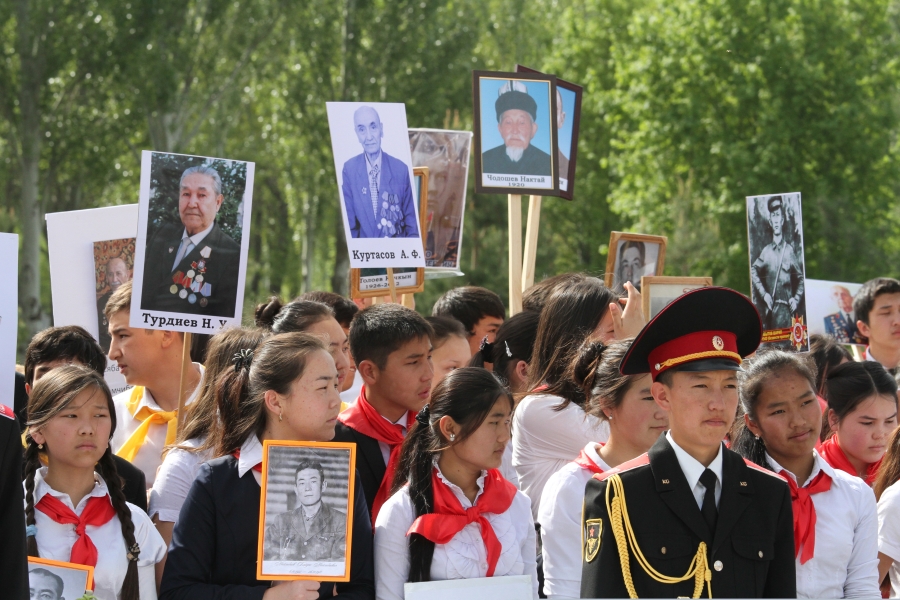
On the day of the Victory of the Soviet people in the Great Patriotic War, I address you as one of those who fought the hated and insidious enemy who invaded our land on the summer morning of 1941. We did not want war and hoped until the last that we would avoid it, but the fascist burst into our lives and tried to trample our honor, humiliate, destroy us as a people. I saw the new order that was proposed to my homeland by the Nazis and their comrades, bent in a low bow before Nazism. They left us burned villages, destroyed cities, mountains of corpses of compatriots, smoking pipes of concentration camps, thousands of orphaned children and mass graves of comrades.
It is not in the rules of our people to become slaves of monsters. We lived by different spiritual values: we loved our homeland, valued its achievements, respected work and saw the guarantee of a bright future in the unity of all peoples living in our country. Maybe that’s why all Soviet people stood up to defend the Soviet Fatherland – USSR. In the deep rear and at the front, the Soviet man forged victory. He fought and worked selflessly and courageously. In need, losing relatives and friends, he walked towards Victory, sweeping away evil along the way and giving other peoples and states the opportunity to free themselves from the yoke of the brown plague. My generation did this for the sake of future generations – for your sake, my dear children and grandchildren. In battles and engagements, it has demonstrated love for the homeland, courage and heroism, resilience and dedication, examples of camaraderie and brotherhood, humanism and compassion.
On behalf of those who did not return from the battlefields and did not live to see the glorious anniversary of the Great Victory, I conjure you: remember their feat, be proud of their military and labor achievements, keep the memory of them in your hearts. Victory – is your legacy. With him, you will value peace in a special way and respect the people living nearby. With him you will be invincible. Happy Victory Day!

Javdat Fatykhovich Yalyshev,
veteran of the Great Patriotic War,
holder of the Order of the Patriotic War, II degree, medal «For Courage»
Honor and dignity (Ivan Khavkhalyuk)

There are not many heroes of the Great Patriotic War left in the world, so it is necessary to help them, maintain and preserve the memory of those who have passed away. I would like to tell you about my great-grandfather – Ivan Savelyevich Khavkhalyuk. He and three other of my great-grandfathers defended their Motherland from «the brown plague», but, unfortunately, I did not have to see two of them, and I was lucky enough to live with Ivan Savelyevich at the same time. I remember him well – my great-grandfather nursed me as a child. Growing up, I came to visit him and listened to stories with bated breath
Ivan Savelyevich Khavkhalyuk was born on April 4, 1924. His parents were wealthy peasants, lived in Ukraine, but moved to Kyrgyzstan back in tsarist times, worked honestly, and raised children.
When the Great Patriotic War began, my great-grandfather was only 17 years old, so he was called to the front in 1942. For three years he fought on different fronts. From March 1943 to May 9, 1945, he served with the 20th Mechanized Regiment and was a squad commander. Then the service life was 5 years, so after the end of the war, he served in the Soviet Army for another two years. He finished his service with the rank of sergeant, demobilized on March 15, 1947. He was awarded two Orders of the Red Star, medals «For the liberation of Warsaw», «For the capture of Berlin», «For the Victory over Germany».
He went through the crucible of the most terrible war in human history and fought on the front line many times.
Returning home, he got married, created a strong and friendly family, raised eight children, and many grandchildren and great-grandchildren.
Ivan Savelyevich Khavkhalyuk died on March 21, 2012. He lived his difficult but happy life with dignity. We, children, grandchildren and great-grandchildren – are the heirs of those who saved the land from fascist invaders. We must remember the heroes who brought the Great Victory closer. Then their exploits will never be forgotten.
Diana Tarasova,
faculty of Humanities
Voice of victory

In 1939, my grandfather, Toktosun Baratov, was drafted into the Red Army, from where he was sent to a military school. When the war began, he went to the front with the rank of lieutenant and began to fight in the Kalinin region, in the Rzhev direction, as a battery commander.
In 1942, near the village of Uvarovo, while carrying out a combat order from the division command, he was wounded (shrapnel wound in the leg) and awarded a medal «For Military Merit». In 1945, by Decree of the Presidium of the Supreme Soviet of the USSR, he was awarded the Order of the Red Star for exemplary performance of combat missions of the command, the fight against the German invaders and the valor and courage shown. In 1985 he received the Order of the Patriotic War, II degree.
My grandfather was an artilleryman. He shot at enemies from the famous «Katyusha». On the approaches to Berlin he received a shrapnel wound to the eye.
After the war, my grandfather graduated from the Pedagogical Institute and married my grandmother, whose name was Kashimkan, but my grandfather called her Katyusha. They raised nine children, who later became teachers, economists, lawyers and firefighters.
My mother, often remembering her father, said: when they were little and asked dad to tell about the war, he agreed very reluctantly. He said: «You don’t need to know about the horrors, suffering, sadness and tragedies that the people endured». And my great-grandmother began to cry, because her grandfather’s younger brother, Toktogul, died at the front at the age of 19. And then my grandfather, calming the children, said: «Come on, I’d rather sing front-line songs to you». And he sang «Dugout», «Blue Handkerchief», «Soldier's Waltz», which he ended with the words:
«And the native stone, let us wash with a tear,
When we get home».
Grandfather sang very well and was the first singer in the platoon. He had a soulful, lyrical voice, and the children inherited it. My uncles and aunts sing well, and some grandchildren, my cousins, not only sing, but also write songs.
Grandfather worked for many years as a teacher, director of a school, and devoted his life to raising young people. Throughout his post-war life, he tried to find out about the burial place of his brother Toktogul, but in vain. He died in 1993 without knowing. I was 11 years old then.
In 2018, on the 100th anniversary of his birth, all children, grandchildren, and great-grandchildren gathered (that’s about 100 people). They sang his songs, and his grandchildren and great-grandchildren said: «Thank you grandfather for the Victory!».
Nowadays, it is very important to pass on the memory of the Great Victory to your children and the younger generation. It is important to remember and know that millions of people died giving their lives for our freedom and a bright future. The great power of patriotism united the people of one huge country, different nations in the fight against fascism.
I end my story about my grandfather with a poem by my mother, Tursunbubu Musakulova, who dedicated it to the 75th anniversary of the Victory:
Elbes regiment
Kan tegilgen kaarduu sogush artta kalyp,
Andan take 75-zhyl etip ketty,
Oshol kezde bul zheishke zhetish їchen,
Milliondogon adamdardyn jean ketty.
Al sogushka elin korgop atam bargan,
Al sogushka zherin korgop agam bargan,
Taimanbastan kegїrєgin okko tosup
Oshol zherde tibelikke agam kalgan.
Unutpaily alar tartcan azaptards,
Estebegen alarda adam barba?
Arabizda zhere takes the sezelie depot,
Al maidan kelbey kalgan agalardy.
9th of May Zheyish keny baarybyzga
Eu bir sonun ardaktagan mayram baldu.
Birokta blvd zheishke zhetish chen
Oiloluchu kancha adam kurman baldoo.
Kanyn tegip, zhashyn tegip dalaidyn
Oshol sogush al aalamdy kurutkan.
Zhetim, zhesir yylap bozdop carcass tushta
Adam barby al azapty unutkan.
Єrt aralap al kaarduu maidanda
Atamda Korgogon elin, jerin.
Octor uchup, projectile jarilganda
Oilogondur kєєmbi dep tuulgan zherin.
Estegende atamdyn kaarmandygyn
Yrlarymdy dagi ele zhaminda.
Tarykhta єchpєs bolup kala bersin
Tukumdary danazalap kylymdarga.
Kender etip mezgil alga zhylgan sayyn
Ardagerler azayishat zhyldan zhylga.
Sїрєttєєєєєрїр baratyshat
Urpaktar «Elbes polktun» katarynda.
Zhyldyz Musakulova,
associate Professor of Mathematical Methods
and Operations Research in Economics
He fought with Japan, raised virgin soil (Nikolai Ivanov)
 Unfortunately, I did not find my grandfather alive. The idea of him was formed from documents and photographs preserved in our family, from the stories of my grandmother and mother.
Nikolai Stepanovich Ivanov was born on May 12, 1918 into a large peasant family in the village of Novoye-Zaselye, Balakhonovsky village council, Shumyachsky district, Smolensk region. He was the youngest, tenth child in the family, so it was possible to realize himself in life only through constant work and study.
From 1927 to 1931, Nikolai studied at the Novo-Zaselskaya primary school, then outside his native village – in the 5th grade of the Ryazanovskaya school of collective farm youth (1931-1932) and the Shibnevskaya junior secondary school (1932-1934).
Nikolai Stepanovich dreamed of becoming a doctor, and his dream, thanks to determination and desire for knowledge, became a reality. In 1934, he entered the Roslavl Medical College, from which he graduated in 1937 with a degree in paramedic«. In July of the same year, he was sent to work as the head of the first aid station of the Military Construction Works Site № 77, where he worked until November 1938.
In November 1938, he was drafted into the Red Army and sent to serve in the Far East. Nikolai Stepanovich began his military service as a paramedic, but thanks to his education he was simultaneously entrusted with Komsomol work, and from June 1942 he became a political worker.
In February 1941, Nikolai Stepanovich joined the ranks of the Communist Party.
Nikolai Stepanovich took part in the battles during the liberation of China from Japanese occupation in August 1945. At that time he was a senior lieutenant and party organizer of the 1628th anti-tank artillery regiment.
The award sheet describes his feat, for which he was awarded the Order of the Red Star: «In fierce battles with Japanese militarists, he showed examples of courage and dedication. I was always with advanced units. More than once he personally participated in battles with the enemy. On 15.08.45, under enemy fire, he ran over to the 3rd gun of the 5th battery, raised the spirits of the soldiers, restored the position, the gun opened fire again».
Nikolai Stepanovich Ivanov's participation in the defeat of militaristic Japan was awarded a medal «For Victory over Japan», among the awards one should also note a medal from the Chinese government for the liberation of China from Japanese occupation.
After the end of the war, Nikolai Stepanovich continued to serve in the ranks of the Soviet Army and graduated from the Military-Political Academy named after V.I. Lenin, was awarded the Order of the Red Star. Another significant award was the medal «For the development of virgin lands».
From July 1953 to April 1955, he served as deputy division commander for political affairs and secretary of the party organization of the 134th artillery brigade, located in the city of Port Arthur on the territory of the People's Republic of China.
After retiring from military service, he and his family moved to the city of Frunze, where he worked in the civil defense department of the Central Statistical Office of the Kyrgyz SSR. Nikolai Stepanovich passed away in May 1981.
Pavel Dyatlenko,
associate Professor of the Department of History and Cultural Studies
It couldn't have been any other way! (Khalil Kadzhiev)
 Each family has a history associated with relatives and friends who went through the Great Patriotic War. There are many memories, different stories, but one thought runs through them as a red thread – liberation of the Motherland.
The heroism of the Soviet warrior, responsibility for the country and people, duty, honor, conscience, and finally, the lives that the soldiers gave without thinking for a minute to destroy the enemy – all this is inscribed in the history of those terrible days.
I have the opportunity to tell a story about the fate of a loved one who brought such an important and necessary Victory closer – the story of my grandfather Khalil Abuzarovich Kadzhiev, who honorably went through all the hardships of the war. We, his children and grandchildren, will proudly celebrate the 75th anniversary of Victory Day, remembering the true history of the Great Patriotic War.
In those days of hard times there was no division along ethnic lines; the Soviet Union acted as a multinational army.
My grandfather was born in 1914 in Azerbaijan, into the family of a wealthy peasant. Like tens of thousands of other families, his family was deported from their historical homeland. In 1933, my grandfather’s family reached the village of Kant. This path can be compared to the circles of hell – on the way, his mother and two brothers died. Khalil steadfastly accepted these blows; in his new place he began to work the hardest jobs, uprooting thickets of reeds, and digging drainage collectors.
When the Great Patriotic War began, my grandfather was 27 years old. By that time he already had his own family – wife and little daughter. First, he was called to the artillery training school in the city of Tokmak, where he underwent training for two months. Then he left to defend his homeland. For two years he fought courageously at the fronts.
Grandfather was a Muslim believer, studied in madrassas since childhood, and even in war he did not forget to turn to God. Death was nearby, the soldiers were sometimes overcome by despair, but they promised to return alive and defeat the fascist horde, so talking with God in war was extremely important. Fellow soldiers asked my grandfather to show him how to do prayer and what to say. In the company he was an example – he knew the suras of the Koran, Muslims, at the request of fellow soldiers, he gave land according to Islamic canons.
In November 1943, near the Kursk Bulge, Red Army soldier Kadzhiev was seriously wounded – blindly wounded his right hand by a mine fragment, and after a year of treatment, as a war invalid, he was demobilized.
My grandfather returned home immediately after discharge. He arrived by train in his village, the way home passed through the local market, where at that time his wife, my grandmother, was selling milk. What was left to feed the family.
That day, from the very morning, her heart beat in a special way, her thoughts were only about her husband. Is he alive? Standing at a homemade wooden counter, thinking, she looked up and saw a skinny soldier with his hand tied to his chest. The grandmother’s heart began to beat stronger, she leaned forward, and only by her green eyes could she recognize the soldier as her husband. He reached out to his daughter, who was standing nearby, and she burst into tears, not understanding what was happening...
Home, family, dear lands – the best medicine. A day after returning, my grandfather went to work on the state farm, essentially with one working hand.
He devoted his entire life to Kyrgyz soil, working with a ketmen in his hands until he was very old. Our family keeps his awards from peacetime – for high harvests, valiant work, tireless assistance to the front, including the medal «Veteran of Labor».
For his heroism at the front, his grandfather was awarded the Order of the Patriotic War, II degree (in honor of the 40th anniversary of the Great Victory of the Soviet people), and for courage in the rear he received medals «For long-term conscientious work», many certificates and gratitude.
Grandfather almost never talked about what he had to endure. But children are children. They asked questions all the time. And only when everyone was watching Soviet films about the war together, he pointed to the screen and said: «But here I am, children, shooting at tanks!». The children believed and were proud of him.
Grandfather celebrated Victory Day in his small homeland. When asked by the children whether the grandfather believed in the victory that his fellow soldiers remained «to forge», while he himself was demobilized home, he proudly and without the slightest delay said: «...it could not have been any other way!».


Kamilla Kadzhieva,
student of the FMO
Artillerymen – gods of war (Ivan Kornienko)

I don’t know much about my grandfather (not my grandfather, but my grandfather) – Ivan Danilovich Kornienko. When I was one year old, he moved to the North Caucasus. Since then I have only seen him five times. During our meetings we talked about many things, but when I asked questions about the war, he either fell silent or said that it hurt him to remember that time, and that he still dreams about the war. And I tried not to hurt him.
What can I tell you about my grandfather today?
Ivan Danilovich Kornienko was born in 1908 in the village. Vorontsovo-Alexandrovskoe, Ordzhonikidze Territory (now Zelenokumsk, Stavropol Territory).
In the early 30s, my grandfather moved to Central Asia. In 1932 he joined the Communist Party, and in 1935 he graduated from the Samarkand School of Middle Commanders of Central Asia. At school, he met the only woman who studied there – Maria Pavlovna Slepneva, whom he later married. So it was a family of NKVD – People's Commissariat of Internal Affairs employees. Before and after the war, my grandfather was the head of the police department in Frunze.
He was mobilized into the Workers' and Peasants' Red Army (RKKA) in 1941.
From 4 November 1941 to 23 August 1943 he served in the 923rd Rifle Regiment, which had the 75th Separate Artillery Battalion (1941), commanded a gun crew and rose to the position of temporary deputy battery commander (1943).
With his regiment, my grandfather went through the most terrible years of the war – 1941-1943. He took part in the Battle of Stalingrad.
He was wounded, from December 25, 1943 he was treated in evacuation hospital (EG) 4074, declared unfit for military service and on February 17, 1944 he left his place of residence in Frunze.
Ivan Danilovich Kornienko was awarded the Order of the Red Star, Red Banner, Patriotic War, 1st degree; medals «For military merits», «For courage», «For the defense of Stalingrad», «For victory over Germany in the Great Patriotic War of 1941-1945», and the badge «Guard» was awarded «for special courage and fortitude in military battles».
After the war, my grandfather was awarded anniversary medals «20 years», «25 years», «30 years», «40 years» of Victory in the Great Patriotic War; anniversary medals «50 years», «60 years», «70 years» of the USSR Armed Forces; anniversary medal «50 years of Soviet police».
Ivan Danilovich lived a long working life and was awarded a medal «Veteran of Labor». Died at the age of 82. He was a very kind and sympathetic person.
Of his war photographs, only this – one has survived, which is located above. What happened to others – unknown.
My son Ivan is named after his beloved grandfather. The life of our victorious ancestors continues in their descendants, isn’t this the best memory of the exploits of the heroes!

Elena Nosova,
associate Professor of the Department of History and Cultural Studies
My grandfather – hero!
 Grandfather died before I was born, but thanks to my mother’s stories and documents preserved in the family archive, I have the opportunity to touch the history of my ancestors, the history of one big country.
Ibrakhim Khamzeevich Zhabarov was born on January 15, 1923, received four classes of education, after which he worked as a laborer, and at the age of 17, a few months before the start of the Great Patriotic War, he was accepted into the workers' and peasants' Red Army.
He took the military oath on January 1, 1942, as evidenced by entries in the military book.
For six years he served his homeland, held the rank of sergeant, received Stalin's gratitude, and took part in the assault on Berlin. He worked on a transport vehicle, loaded and delivered ammunition for divisions, and helped the command in detecting German soldiers and small arms hidden in houses.
Most likely, due to the difficulty of pronouncing the name, my grandfather from Ibrahima Khamzeevich became Ivan Mikhailovich. As you know, errors in Soviet documents – are common, especially in wartime.
After the end of the war, soldiers led by G.K. Zhukov's economy was restored, the consequences of the fascist regime were eliminated, and the necessary conditions were provided for the reconstruction of everything destroyed by the Nazis. My grandfather was one of these soldiers.
He served in Germany for two years until a decree was issued on the return of Soviet soldiers to their homeland.
The words «as a keepsake» left on the back of the photographs of the time are awe-inspiring. Of course, this is an invaluable memory addressed to descendants, thanks to which we have the opportunity to feel the atmosphere of the war years.
After returning from the war, my grandfather got married (he was 24 at the time), and a year later he became a father. Raised four daughters and nine grandchildren.
Until his death, he was awarded medals for military merits, sent postcards, and invited to various events dedicated to the Victory in the Great Patriotic War.
Ibrakhim Zhabarov died at the age of 77. Our whole family is proud of our grandfather – after all, he saved the lives of many people whose children and grandchildren now see a peaceful sky above their heads.


Angelina Kolorkova,
student of the FMO
Family of heroes
 My dad – Pyotr Fedorovich Frolov – after graduating from school, in 1942 he was drafted into the Red Army. First, he was sent to the Tambov Military Infantry School, stationed at that time in Semipalatinsk, and after graduating from the school – to the Volkhov Front. Commanding a mortar platoon, he took part in battles during the breaking of the siege of Leningrad as part of the 2nd Shock Army, 372nd Rifle Division, and 1236th Rifle Regiment. He took part in the battles near the village of Nizhnyaya Naziya, on the Sinyavinsky Heights.
On February 13, 1943, near Sinyavino (working village №2), Pyotr Frolov was seriously wounded in the head (shrapnel wound in the back of the head, closer to the right ear) and sent for treatment to an evacuation hospital in Vologda. From July to August 1943, he was in the reserve of the Arkhangelsk Military District, and then, for health reasons, he was transferred to the reserve and worked in the direction of the regional military registration and enlistment office as the military director of two secondary schools in the Kurchum region of Kazakhstan.
In January 1945, Lieutenant Frolov was drafted from the reserves into the active army on the 2nd Ukrainian Front. After May 9, he continued to serve in the Military Commandant's Office in the Hungarian city of Eger.
The Pope was awarded the Order of the Red Star and the Order of the Patriotic War, 1st degree. His older brother – Yakov – was drafted into the Red Army even before the start of the war. The commander of the machine gunner squad of the 8th Guards Rifle Brigade, Sergeant Yakov Fedorovich Frolov, died in the battles for the city of Novorossiysk in 1943. He was posthumously awarded the Order of the Patriotic War II and buried in a mass grave in the cemetery of the village of Stanichka, Krasnodar Territory.
Eternal memory to everyone who fought for the Motherland!
Galina Frolova,
associate Professor of the Department of GTS and VR FADiS
Fought criminals
 Nikolai Petrovich Kucheryavyi was a veteran of World War II and a veteran of the Kyrgyz-Russian Slavic University. At the university, Professor N. Kucheryavy worked in the last years of his life at the department of criminal law and procedure. He met the Great Patriotic War on June 22, 1941 on the western border of the USSR, although the war for him began long before this date.
Since 1939, N. Kucheryavyi served in the Belarusian city of Bialystok, in the 58th NKVD Regiment of the USSR. In December of that year, the regiment took protection of the Bialystok Railway facilities, and its individual units assisted the Border Troops in protecting the state border and took part in the liquidation of anti-Soviet armed detachments.
On June 23, 1940, the regiment's task force defeated an armed bandit group, destroyed 9 and arrested 5 of its members, captured 1 machine gun and 12 thousand rounds of ammunition. Another underground detachment of nationalists was destroyed on July 10, 16 armed bandits were detained.
In the first months of the Great Patriotic War, Nikolai Petrovich Kucheryavy fought on the Western Front as a squad commander of the 58th, then 60th NKVD regiments of the USSR, and at the end of 1941 he defended Moscow and was awarded the medal «For the Defense of Moscow». Since 1943, he served as a foreman in the 1st Motorized Rifle Order of Lenin Division named after F.E. Dzerzhinsky VV NKVD of the USSR. The formation performed tasks of national importance: it provided security for government delegations of the USSR, USA and Great Britain during the Yalta Conference in 1944. It was the soldiers of this division who were entrusted with carrying enemy banners and standards across Red Square and throwing them at the foot of the Lenin Mausoleum during the Victory Parade on June 24, 1945.
After the war, Nikolai Petrovich became a lawyer and defended his dissertation. In 1961, he became one of the developers of the Criminal Code of the Kyrgyz SSR. In 1962, he was awarded the title «Honored Lawyer of the Kyrgyz SSR». All his life Nikolai Petrovich Kucheryavy fought with criminals. This was forced to do by the war that Nazi Germany unleashed against our country, which committed unprecedented crimes against humanity.


Andrey Kucheryavy
Tank battle ace
 The situation that developed on December 19, 1942 in the Kalmyk direction of the Stalingrad Front was reported by the operational report of the General Staff of the Red Army dated December 20, 1942 № 34: «28th Army, 34th Guards Rifle Division and 6th Guards Tank Brigade repelled an attack by an enemy motorized detachment from the direction of Chapchachi. After suffering heavy losses, the enemy withdrew towards Nyukyun».
According to a combat report from the command of the 28th Army, on this day units of the 34th Infantry Division, in cooperation with the tank battalion of the 6th Guards Tank Brigade, fought a two-hour battle against enemy tanks, artillery and infantry in the area of the village of Chapchachi. In a massive attack, the German command used tanks. As a result of the battle, three of them were shot down.
If on the scale of the 800-kilometer Stalingrad Front the destruction of three German tanks – is only a separate episode from the front report, of which there were many on December 19, then within the framework of human life this is a feat, one of those that made up the victory. It was carried out by the crew of the Soviet KV-1 tank, in which the gun commander was Guard Senior Sergeant Pavel Ivanovich Simakov. For this fight, the hero was awarded a medal «For Courage».
On October 21, 1943, the 6th Guards Tank Brigade stormed the village of Tashchenak, Melitopol district, Zaporozhye region. In this battle, the tank crew of P. Simakov, who adjusted the fire, destroyed 2 cannons, 3 heavy machine guns and 40 enemy infantrymen. During the battle, the tank was hit, the driver and radio operator were seriously wounded. Then Pavel Ivanovich sat down by the levers of the combat vehicle. He led the tank off the battlefield and delivered the wounded and the shell-shocked company commander to the dressing station. For the courage and resourcefulness of the guard shown in this battle, Senior Sergeant Pavel Simakov was awarded the Order of the Red Star. This was my father, whom I remember, love and am proud of.
Yuri Simakov,
head of the Department of Non-Traditional
and renewable energy sources, associate professor
Military doctor
 Rafa Imanalievna Aidarbekova – participant in the Great Patriotic War, colonel of the medical service, graduate of the 1st Moscow Medical Institute, associate professor, candidate of medical sciences, honored doctor of the republic. In 1941, she was one of the first Kyrgyz women to volunteer for the front. She was the first Kyrgyz woman at the front to be promoted to lieutenant colonel.
Rafa Imanalievna was born in 1918 in Pishpek. Her father, Imanaly Aidarbekov, was an outstanding statesman, the first leader of our state, one of the founding fathers of Kyrgyzstan, prime minister, chairman of parliament, mayor of the capital, chairman of the Supreme Court. Imanaly Aidarbekov was arrested on a false denunciation in 1937. He refused to betray his comrades, for which he was tortured for a year in the NKVD, after which he was shot in 1938. In 1957, Imanaly Aidarbekov was rehabilitated, and then his ashes, along with the remains of other repressed great sons of Kyrgyzstan, were buried in the memorial complex «Ata-Beyit».
Rafa Imanalievna, as the daughter of Imanala Aidarbekov, who was considered «an enemy of the people», was denied access to education. With the help of friends, Rafa Imanalievna was able to secretly leave for Moscow from the NKVD, hiding in a box under the carriage in which the dogs were transported. Thus, having arrived in Moscow, she saved her life. In Moscow, Rafa Imanalievna got a job as a nurse in a hospital. After some time, she entered the 1st Moscow Medical Institute, where she studied morning and afternoon, and worked as a nurse in a hospital at night. When the Great Patriotic War began, Rafa Imanalievna graduated early, in 1941, from the medical faculty of the 1st Moscow Medical Institute and volunteered for the front. Before leaving for the front in 1941, Rafa Imanalievna wrote a letter to her mother: «Dear mother, I thought that I would see you after graduating from college, but this did not happen. I'm going to the front. Please don't cry. I – a part of our people. We must save the lives of our soldiers and officers, and may my hands do everything possible to achieve this! Our victory depends on each of us. I hug and kiss you warmly. Your daughter Rafa».
Rafa Imanalievna Aidarbekova was at the front until the last day of the war. She spent all the years of the Great Patriotic War in the active army. She began her military activities as a surgeon in the 58th medical battalion of the 2nd division, working in difficult sectors of the front. Together with her colleagues, she saved the lives of Soviet soldiers – defenders of the Fatherland. Always on the front line, she remembered that her main task was to save lives. Bravery, literacy, professionalism, determination and perseverance allowed the fragile Kyrgyz girl to become the head of the surgical department of the 4th Ukrainian Front.
She had to endure many difficulties, like all those who were on the front line. Rafa Imanalievna recalled that when the Soviet Army advanced towards Berlin, they had to swim across the Dnieper. Rafa Imanalievna did not know how to swim, but needed to move forward, and here her strong character and the support of the soldiers played a role. Soldiers helped her swim across the Dnieper – the entire battalion took turns supporting the young surgeon so that she would remain alive. This is how Rafa Imanalievna learned to swim. After the end of the war, she constantly went to the pool, and once even swam across Lake Issyk-Kul.
Rafa Imanalievna fought on the fronts of Moscow and Leningrad as part of the 4th Ukrainian Front. As part of the active Soviet Army, she directly participated in the liberation of Moscow, Kyiv, Austria, Bulgaria, Hungary, Poland, Romania, Yugoslavia, Czechoslovakia and, as a military surgeon, reached Berlin.
During the war, surgeon R.I. Aidarbekova performed thousands of surgical operations. She saved the lives of many Soviet soldiers and officers. Rafa Imanalievna was awarded the Order of Lenin, the Order of the Red Star, 14 medals, as well as many other orders. Rafa Aidarbekova was demobilized only in 1946, since the surgical hospital where she was the head provided medical assistance to returning Soviet soldiers and officers in Poland for another year after the end of the war.
At the front, military surgeon R.I. Aidarbekova met her only love. This was the military surgeon Zyfar Igemberdievich Igemberdiev, who, as the head of a surgical hospital in the active army, saved the lives of thousands of soldiers and officers by performing more than three thousand surgical operations. He also reached Berlin as part of the active army, meeting there end of the war. After the war, Rafa Imanalievna married him. Zyfar Igemberdievich defended his doctoral dissertation in Moscow under the guidance of the famous academician A.V. Vishnevsky. Subsequently, Professor Z.I. Igemberdiev was appointed Minister of Health of Kyrgyzstan. He opened the first burn center in Kyrgyzstan. Their son Azamat also became a surgeon.
After the war, Rafa Aidarbekova defended her dissertation. Over 40 years of work as an associate professor-surgeon at the Kyrgyz State Medical Institute, she has trained many competent and qualified specialists who still work for the benefit of our people.
Rafa Imanalievna Aidarbekova passed away in 1996. Blessed memory to her and everyone who defended our Motherland in the Great Patriotic War!


Aizhana Aidarbekova
Memory as a reward
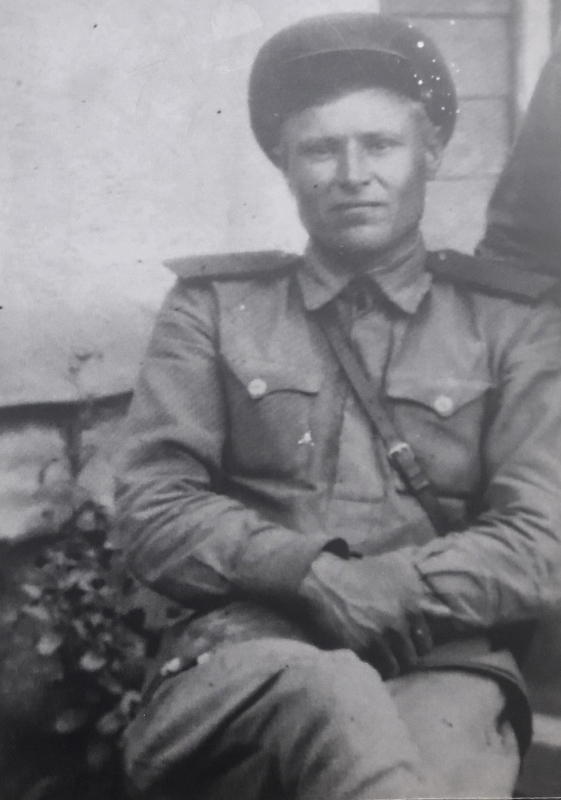 My father – Alexander Stepanovich Yurikov – went to the front in the fall of 1941. He fought as part of the 385th Krichev Rifle Division, which was formed in Frunze. The day he was escorted to the front was remembered forever. There is still a feeling of bitterness, emptiness and anxiety in my soul. Then it seemed that life had slowed down and time had stopped. After hugging my father and wiping away my tears, my mother, brother and I went home. What a joy it was when we saw our father on the threshold of the house. It turned out that the departure of the train was postponed to the next day, and all those leaving were released on leave.
My father fought on the Voronezh, Southwestern, and 3rd Ukrainian fronts, liberated Ukraine, Moldova, Romania, took part in the assault on Bucharest, was wounded, and was awarded a medal «For Military Merit».
My father did not like to remember his everyday life at the front. And we didn’t really need to know the details. Although there was no war as such in our city, it was all around, we saw and felt it. I remember one conversation between front-line soldiers, when they gathered in our house at the festive table and talked about respites between battles. My father then told me one incident that occurred in the summer of 1944 – at that time there were offensive battles in Romania. Red Army units took up positions on the Prut River, and German troops retreated to the Siret River. This fact was immediately noticed by wits, becoming part of the soldier’s humor: «If ours are on the Prut, then the German is on S...!». According to his father, this joke in a front-line newspaper took the form of a caricature.
After the war, my father worked at the Ministry of Motor Transport of the Kyrgyz SSR and raised 5 children. All children received higher education. For his many years of peaceful labor, he was awarded the «Veteran of Labor» medal. But an even greater reward for him – is the memory that his children, grandchildren, great-grandchildren, and now great-great-grandchildren keep about him, who every year in Bishkek, Moscow, Maloyaroslavets carry a portrait of Alexander Stepanovich Yurikov in columns «of the Immortal Regiment».


Vladimir Yurikov,
professor of the Department of Non-Traditional and
renewable energy sources
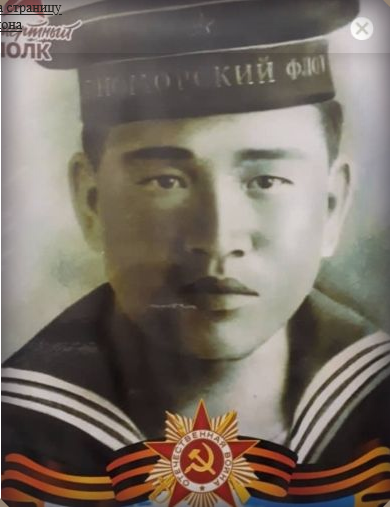
Myrzabek Borchubaev, red Navy man, private (18/05/1914 - 18/09/1978)
The story of a soldier
My grandfather Murzabek Borchubaev was a history teacher by training. He began his career in 1939 at the Nizhne-Alarchinskaya secondary school. Having moved in 1941 g. to Naryn region, he began teaching at a pedagogical school. Then in the fall of 1941 he was appointed director of Frunzenskogo NSS. In March 1942, as director of the Chaek secondary school, he was drafted into the ranks of the SA and sent to the front. He served from 10 April 1942 to 5 March 1943 as Red Navy 143-th rifle Brigade of the Black Sea Fleet. In the battle for the Soviet Motherland on December 4, 1942, he was seriously wounded by a through bullet wound to the left shoulder with damage to the humerus. On March 3, 1943, according to the certificate of the hospital commission of 1693, Petrovsk was discharged from service in the SA and sent to his place of permanent residence in the Kyrgyz SSR, Frunze region. Voroshilovsky district, k-z named after. Kirov. After returning home, despite being wounded, already in April 1943, he began working at the school of his native collective farm and was appointed director of the Kairminskaya secondary school. He celebrated the victory of 1945 in his homeland. The manager worked. department of the Voroshilovsky RKKP KSSR. He was a student at the Republican Party School in 1946, headI ate department of the Kyzyl-Asker RCMP of the KSSR. In 1947, he was appointed director of the Naryn orphanage. From 1950 to 1961 gg. was again appointed director of the Kairminskaya secondary school. IN 1961-1971 gg. worked as a head teacher, history teacher at the secondary school for the Third International; in 1971-1974 gg. history teacher at the School of Economics of the Republic of Moldova at p/o 36/1.
My grandfather’s whole life was devoted to work and service to the Motherland; he loved his profession very much, in the cold, in the rain, and in the heat, on foot or by bicycle (he did not have his own transport) he was going to work «to sow the reasonable and the eternal»! He was married, his grandmother was a home front worker, in those harsh years they had 7 children, four children remained and grew up – one daughter and three sons. Had awards. He passed away suddenly on September 18, 1978– an old wound and a bad heart took their toll... In our memory he remained a kind and generous father and grandfather! Eternal memory to him, may he rest in peace!
Elmira Osmonova,
director of the Center for Turkology
Victory news
The portal «Rhythm of Eurasia» published an article by Vice-Rector for Information and Public Relations Leonid Sumarokov «Kyrgyzstan: a historical place in the Great War».
In 1975, Chingiz Aitmatov in the magazine «Ogonyok» spoke about how his fellow countrymen – residents of the Kyrgyz village of Sheker participated in the Great Patriotic War. In his essay he wrote: «And therefore, when we say: “before the war”, “after the war”, “during the war”, –these are not just colloquial phrases. For me, they contain something more than everyday chronology, for me, in them, in these words, – a time of harsh knowledge of life, a time of acquisition by our society of experience that has become a property of world significance. For the war was not only a global historical milestone that divided the 20th century into two parts – into the pre-war and post-war periods of human development, but also was the fate, the fate of every person who lived at that time, the measure of his actions and moral values. The war appeared before the face of literally every person, I don’t know anyone who would bypass the war in one way or another. Those who tried to do this inevitably encountered the people themselves, for this was the common destiny of the people, and there could be no exception for anyone... The war presented the maximum account of the era to everyone on their life path...»
See the original source page...
- We invite you to participate in the festival-competition «Test!»
- Interuniversity conference «Heirs of the Great Victory for the preservation of historical memory. To the 75th anniversary of Victory in the Great Patriotic War»
Forever alive. KRSU employees tell us...
- Moments of military glory. Vsevolod Tarasov.
- Memory as a reward. Egor Finko.
- My father's diary. Nikolay Pak.
- From Moscow to Berlin. Biryukov Ilyas Sharipzhanovich.
Video project "We live in the hope of victory..."
Children of War (Mikhail Rudov)

Author of the video <TAG1> Varvara Rudova, 5a grade school at KRSU
About the 108th Bobruisk Order of Lenin Red Banner Rifle Division (Vera Kobzar)