KRSU presented joint programs with Russian universities and the project «Eurasian Trail» at the International Educational Forum in Tashkent
28 october 2026
Category: Education
Share:
A delegation of the Kyrgyz-Russian Slavic University, led by Rector Sergei Volkov, takes part in the International Educational Forum of Central Asia in Tashkent. At the plenary session, the rector presented the results of cooperation with Russian universities, a new educational model and a project «Eurasian Trail».
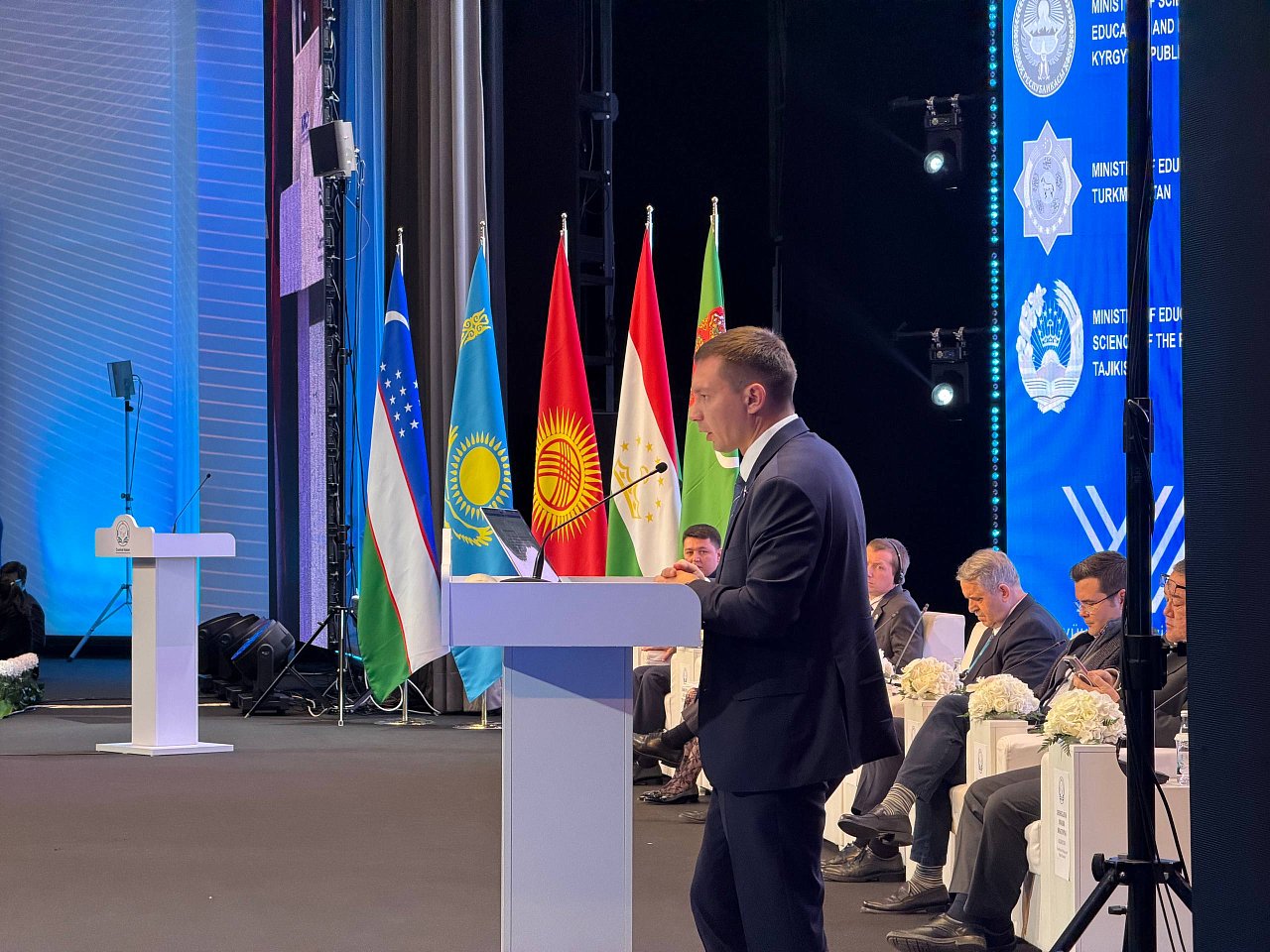
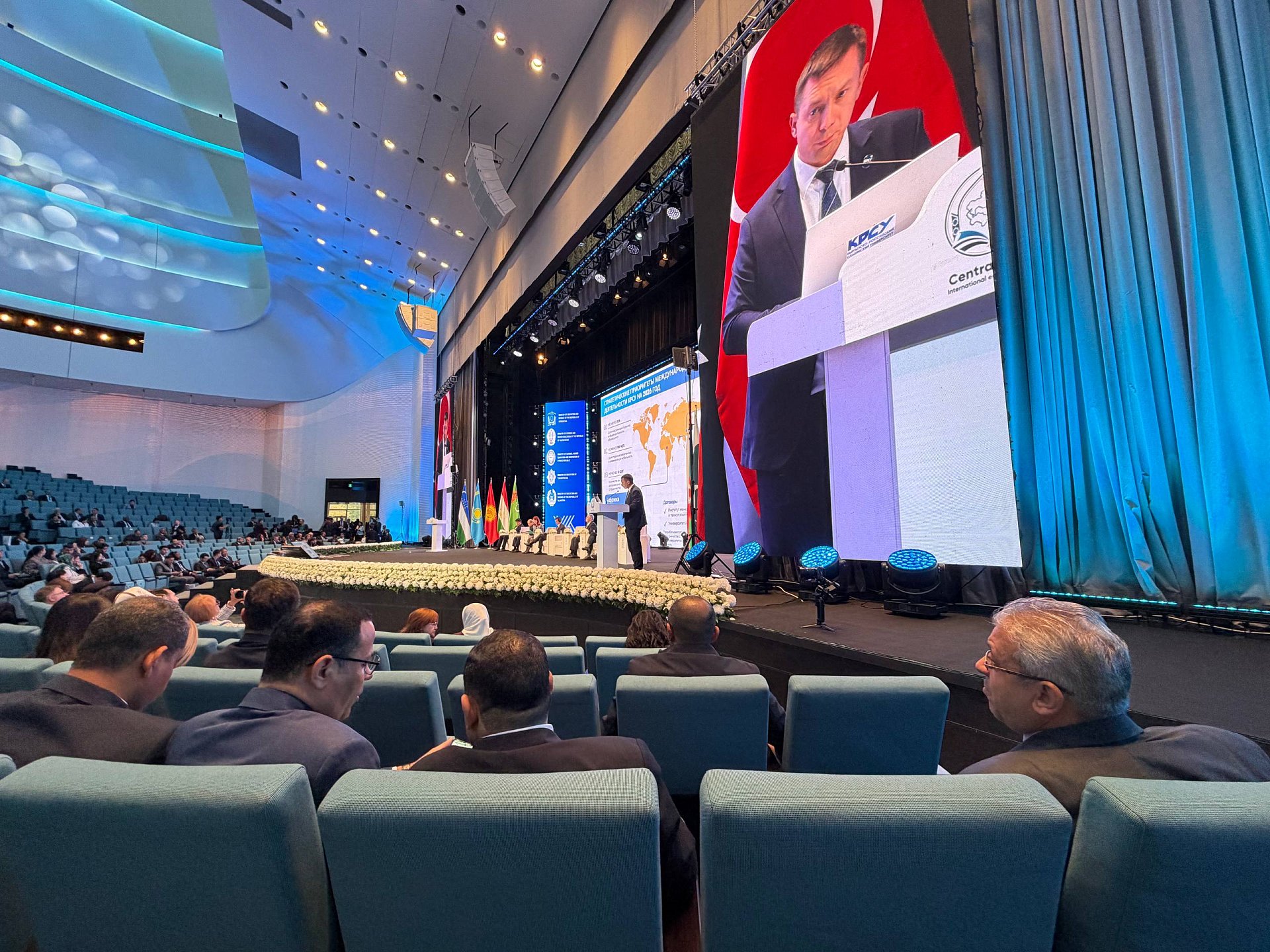
The forum is held in Russian and brings together more than 1.5 thousand participants, including representatives of authorities, universities, international organizations and experts. The opening was attended by heads and representatives of relevant ministries of Uzbekistan, Kazakhstan, Kyrgyzstan, Tajikistan and Turkmenistan, representatives of other countries and the diplomatic corps.
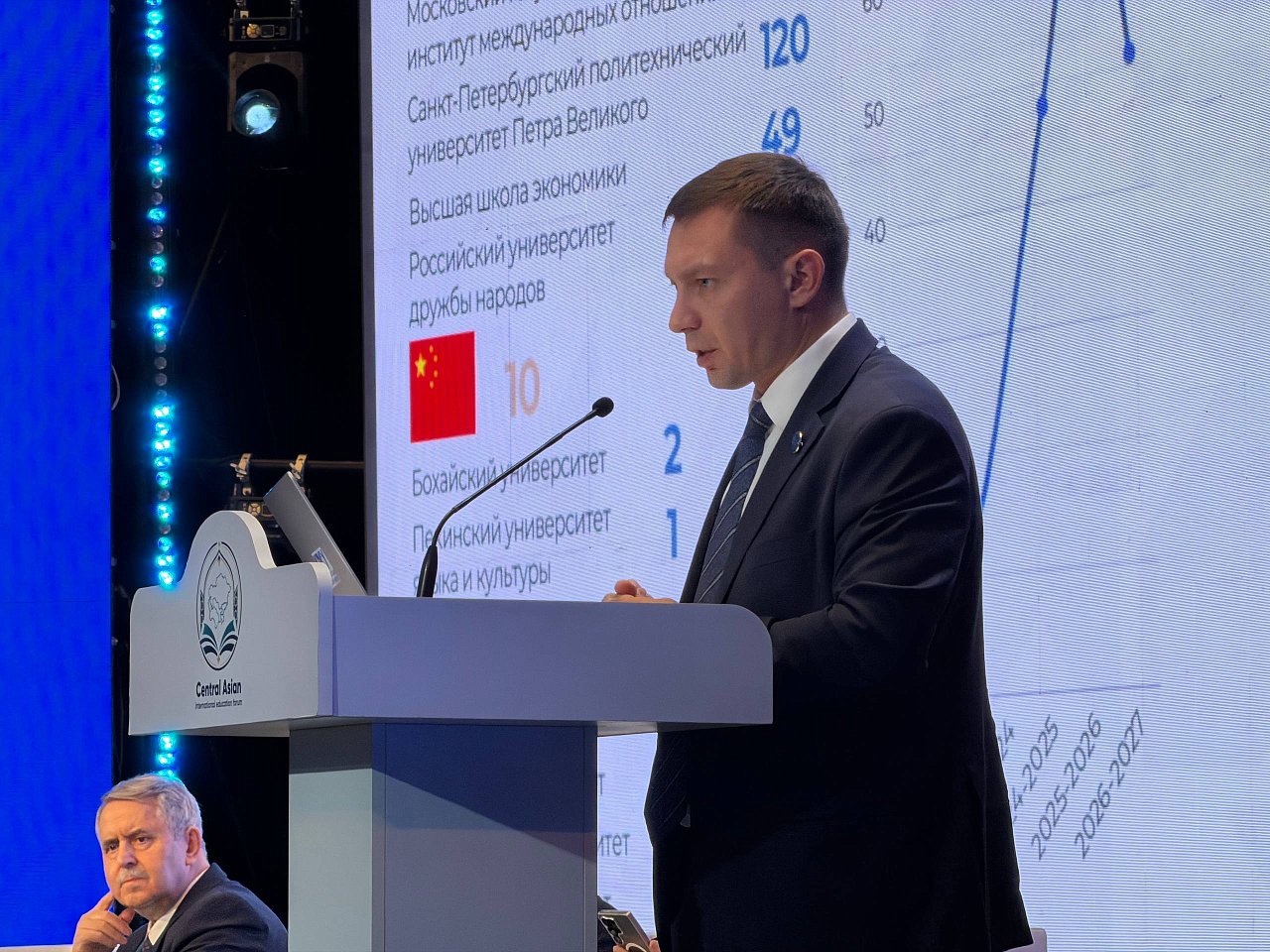
Sergey Volkov made a report at the plenary session «Central Asia – new space of education, science and innovation» «KRSU as a unique interstate model». The rector emphasized that university cooperation should provide training for specialists taking into account the needs of the economies of Russia, Kyrgyzstan and the common labor market of the Eurasian Economic Union.
<TAG1> The programme should begin not with a list of disciplines but with a real task for the State or the employer. Then university partnerships become a tool for technological development, and not just academic exchange», – the rector noted.
In 2025, Slavic University began the transition to the educational model «4 = 3 + 2 + 1». It provides for obtaining three educational documents in four years, mastering two specialties and a year of participation in design, research and internships in partner companies. Preparation is built around engineering, technical, biomedical and socio-humanitarian study programs.
According to data provided by Sergei Volkov, the university’s contractual framework includes 264 agreements, of which 178 are in Russia.
In the 2025–2026 academic year, 133 students participated in an economics network program with Amur State University. Another 50 KRSU students completed a semester of training at Peter the Great St. Petersburg Polytechnic University in nine engineering areas. In the 2026–2027 academic year, another 38 students of the Slavic University are studying in these areas at the Polytechnic University.
To continue the education of graduates, 21 budget places have been allocated in the master's program at Bauman Moscow State Technical University and nine places at MGIMO.
Sergei Volkov paid special attention to the Russian language as the basis of a common educational and professional space.
<TAG1>A single educational space is impossible without high-quality command of the Russian language«, » the rector emphasized.
Pedagogical expeditions conducted by the university together with the Patrice Lumumba Peoples' Friendship University of Russia covered 44 educational organizations, 263 teachers and 1,174 schoolchildren. The classes were devoted to bilingual education, interactive techniques and the use of artificial intelligence in teaching. Together with the company «Alliance Altyn», teachers of the Talas region were also given 480 copies of textbooks on the Russian language, developed by the team of authors KRSU.
The rector also presented plans for the development of scientific training. Among them are the opening of the dissertation council of the Higher Attestation Commission of Russia, certification of 12 councils of the Higher Attestation Commission of Kyrgyzstan and the launch of English-language PhD programs in medicine.
The university also develops educational programs in digital engineering, operation of unmanned aircraft systems, and collection and processing of spatial data. They provide for the training of specialists in solar energy, intelligent irrigation systems, laser scanning, 3D and BIM modeling, and the creation of digital twins of buildings and territories.
The infrastructure basis for expanding joint programs and research should be a new campus. According to the rector, its development is associated with training personnel for joint economic projects and creating conditions for engineering and biomedical research.
One of the initiatives presented at the forum was the project «Eurasian Trail», which the Slavic University is developing together with Innopolis University. It provides for the creation of a pedestrian route with an initial length of about 450 km from the future KRSU campus through the natural and cultural territories of Kyrgyzstan, including the southern coast of Issyk-Kul. In the future, the route is planned to be expanded to other countries of Central Asia.
According to Sergei Volkov, the project should become an international scientific and educational platform that combines travel, research, preservation of natural and cultural heritage, personnel training and the development of local communities. The rector outlined the possibilities of cooperation with universities of Uzbekistan in organizing scientific expeditions, student practices, developing educational programs and creating cross-border tourist routes.
Other members of the delegation will also speak at relevant sessions of the forum. Deputy Vice-Rector for Scientific and Innovation Kanayim Baktygulova will present a report «Startup ecosystem and technological entrepreneurship of the Kyrgyz-Russian Slavic University» at the session «Science, innovation and research consortia».
Director of the Department for Digital Infrastructure Development Alexander Yudin will make a report «Two years instead of ten. Experience of accelerated transformation of the university» at a session dedicated to the digital transformation of higher education and artificial intelligence.
The forum programme includes a round table of education ministers and parallel sessions on academic mobility, joint educational programmes, mutual recognition of diplomas and qualification documents, scientific projects and grants.