International Conference «City and Transport: Advanced Projects and Development Potential»
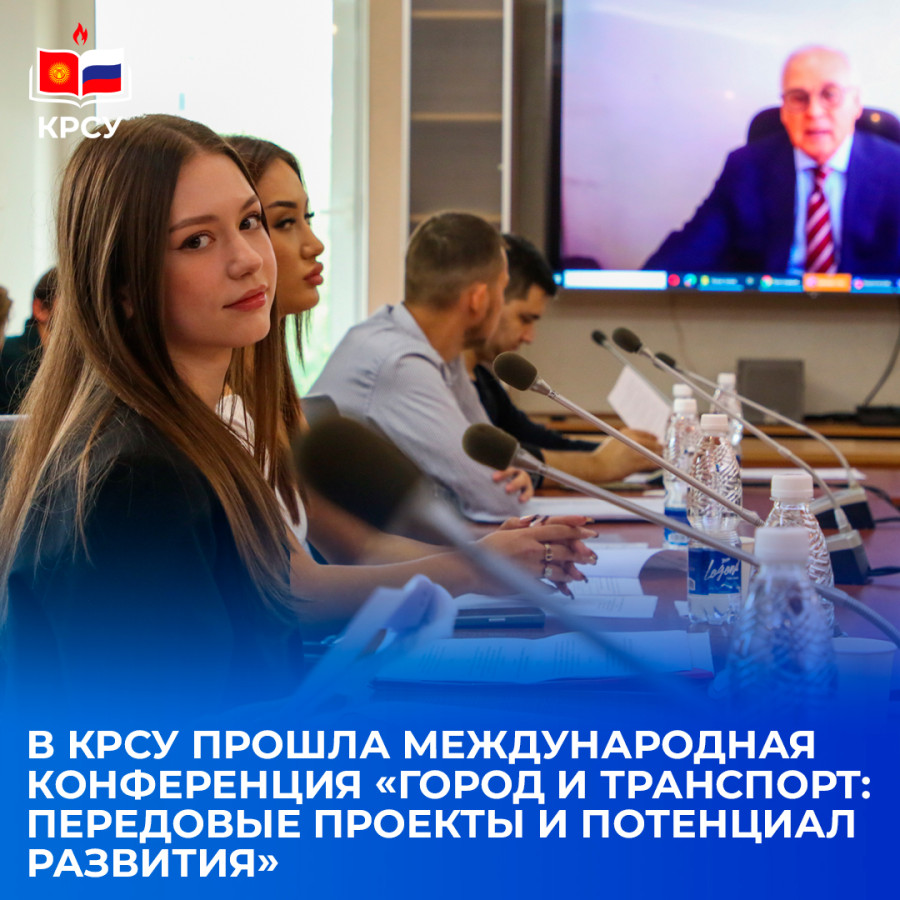
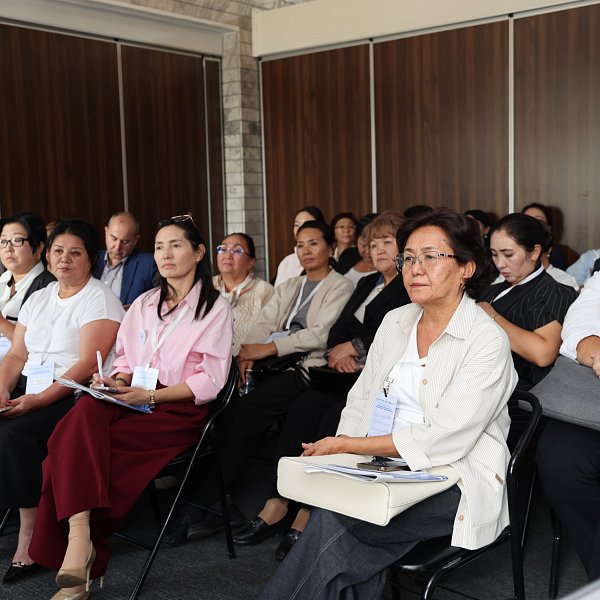
On September 18, 2025, an international conference «City and Transport: Advanced Projects and Development Potential» was held at the Kyrgyz-Russian Slavic University. The organizers were the Executive Committee of the Coordination Transport Meeting of the CIS–member states, KRSU and the Russian Academy of Transport. Representatives of government agencies, the Bishkek mayor's office, the academic community and experts from Russia, Belarus and Kyrgyzstan took part.
Chairman of the CIS CTS Executive Committee Gennady Bessonov delivered a greeting via video link:
«Continued urbanisation and motorisation require concerted policies — integration of town planning and transport planning, introduction of digital services and development of electric transport. It is important to share best practices and turn them into applicable solutions for specific cities».
Rector of KRSU Sergey Volkov emphasized the practice-oriented nature of the discussion:
«University — is not only a theory. Together with students, we are ready to measure passenger flows, analyze the operation of traffic lights, design parking solutions and “green corridors”. The city should become our living laboratory».
He specifically focused on the future logistics of the new KRSU campus (Baytika district — Kashka-Suu):
«On 30 hectares there will be educational and living spaces for 15 thousand students and 3 thousand employees. Already today it is necessary to calculate public transport routes, cycling infrastructure and multi-level parking —convenience and ecology depend on this».
President of the National Academy of Sciences of the Kyrgyz Republic Kanatbek Abdrakhmatov outlined the severity of the problems of the road network:
«There are more and more vehicles in the city, but there are practically no interchanges —. What is needed is not general reasoning, but specific measures: where and how to change traffic light modes, where to build interchanges and how to relieve congestion on key highways».
On behalf of the CIS Executive Committee, Director of the Department of Economic Cooperation Mikhail Evgenievich noted the regulatory and environmental contours of the changes:
«The formation of sustainable urban transport systems is impossible without improving the legal framework, integrating transport and urban planning and taking into account environmental aspects. The outcome of our discussion should be practical recommendations».
Attache of the Russian Embassy in the Kyrgyz Republic Mikhail Alexandrov emphasized the importance of cooperation:
«Success in solving transport problems — in joining forces at the international and national levels. The Embassy traditionally supports projects that improve the quality of life of our citizens».
Deputy Chairman of the CIS CTS Executive Committee Sergei Andreev emphasized the role of exchange of practices:
«It is important to build the urban system so that residents quickly and comfortably get to their destination with minimal environmental damage. This requires regular exchange of experience and applied recommendations».
A representative of the Bishkek City Hall spoke about the city’s priorities:
«We are strengthening the bus fleet, preparing to launch electric buses, introducing “smart” traffic lights and developing digital services for passengers. Objective — to increase the capacity and convenience of urban mobility».
The sessions discussed the legal framework and transportation safety, «smart» parking, adaptive traffic light regulation, emissions reduction and decarbonization, cost-effectiveness of electric transport, transport modeling and IT solutions. A separate block was devoted to urban logistics and the integration of cargo flows, including the prospects for unmanned technologies.
At the same time, a student section was held «Environmental and infrastructural aspects of the development of urban transport systems: challenges and solutions». Young researchers presented projects on multimodality, cycling and SIM infrastructure, optimisation of stops and routes, and on traffic flow measurement.
Sergey Volkov addressed the students:
«Don't be afraid to take responsibility. You — driving force. Collect data, offer solutions at a specific location —and we will help bring them to implementation».
The participants agreed to prepare a package of application proposals for Bishkek — from rapid targeted improvements to medium-term infrastructure projects. An initiative was made to make the conference an annual platform where expertise systematically turns into practice with the participation of universities, the state and business.