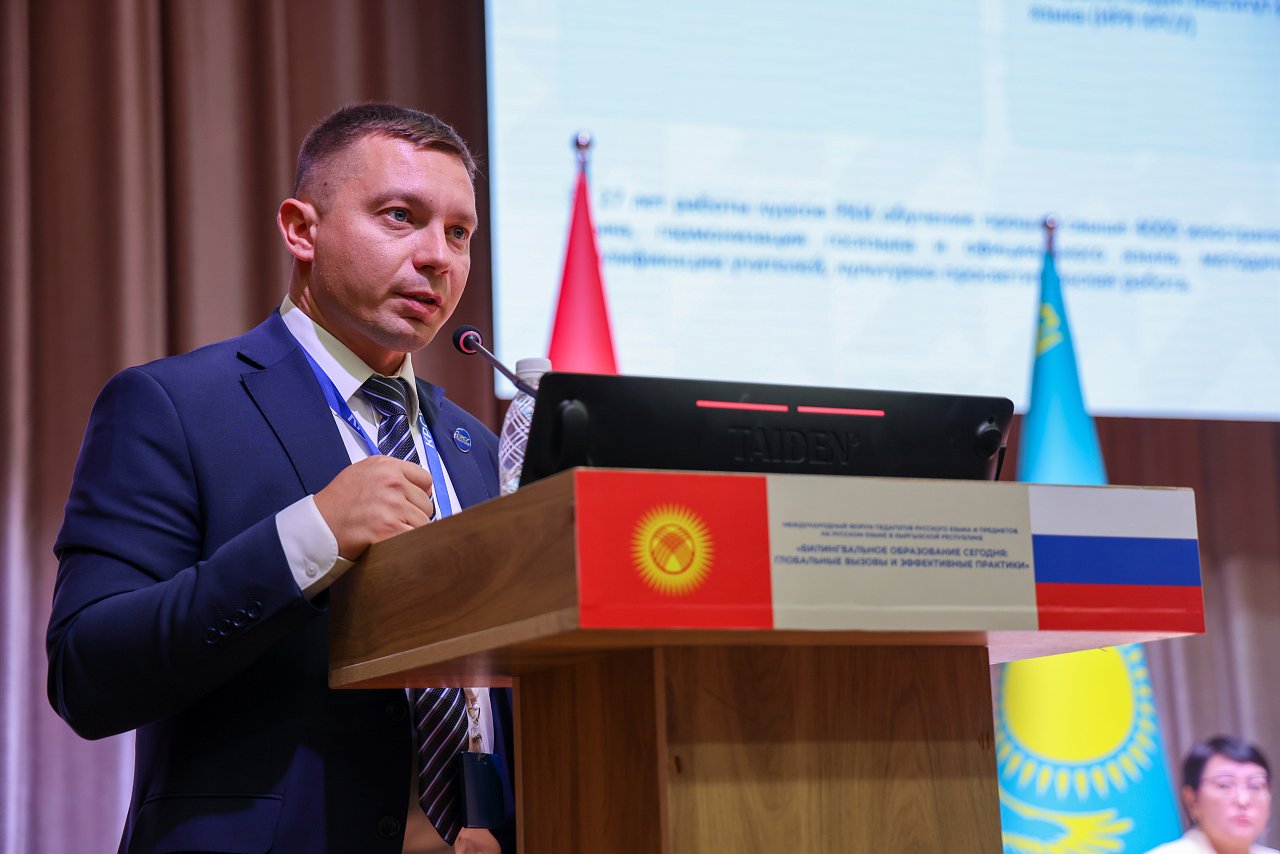
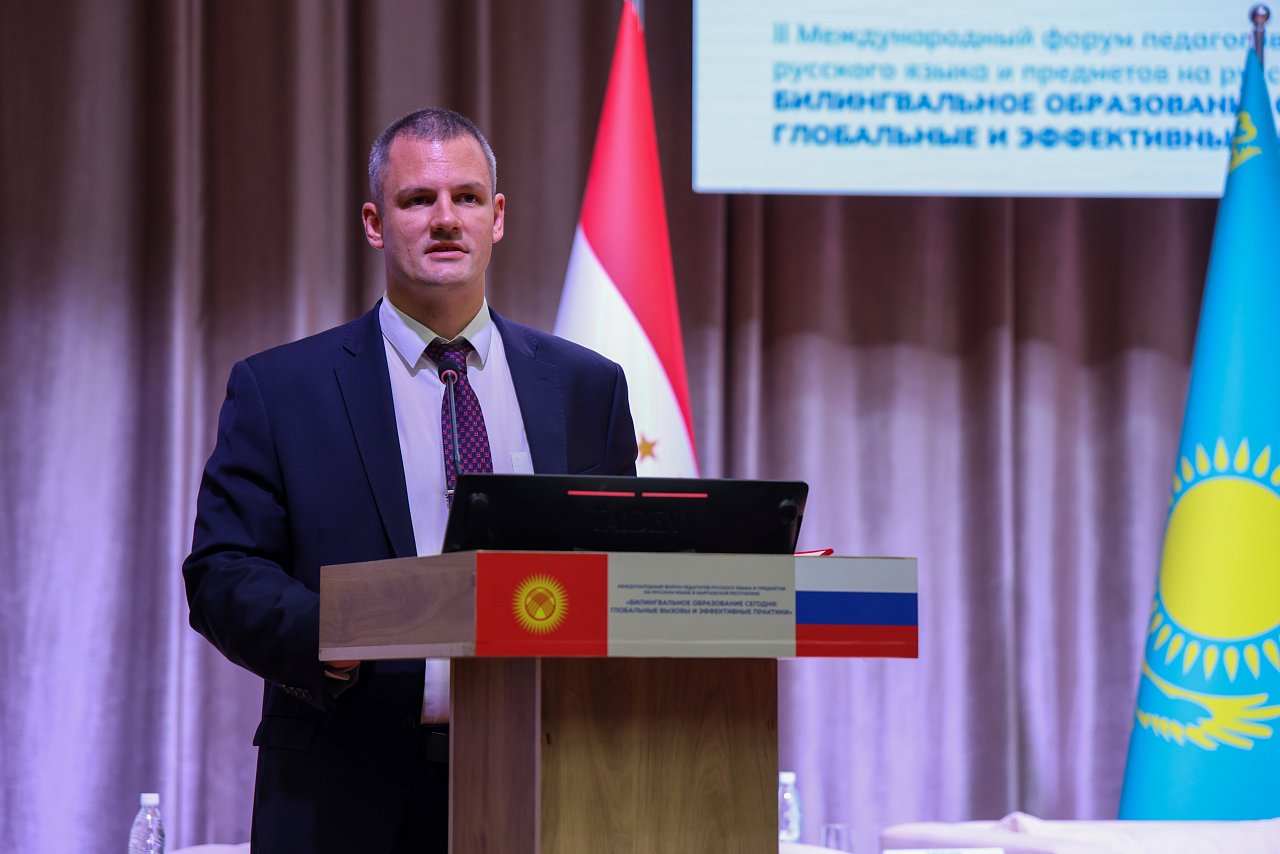
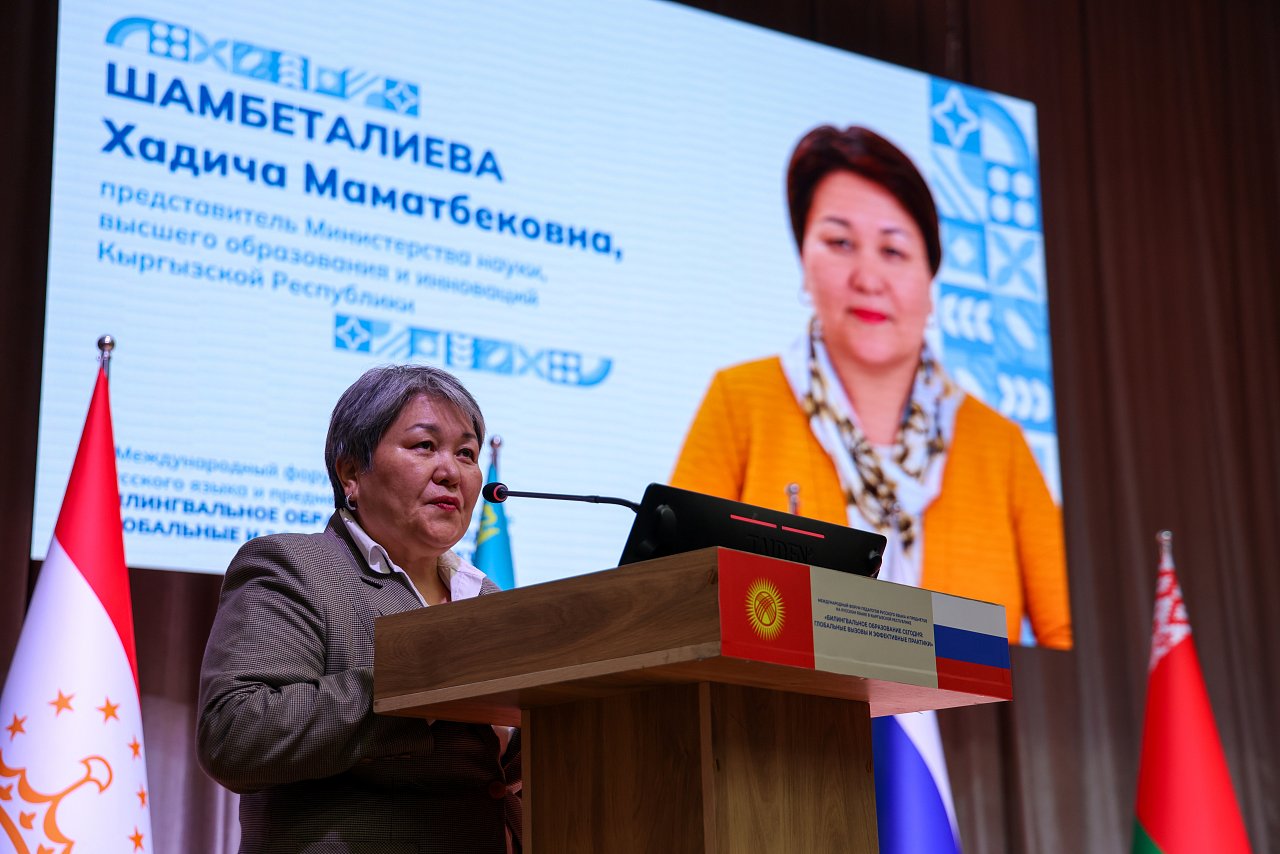
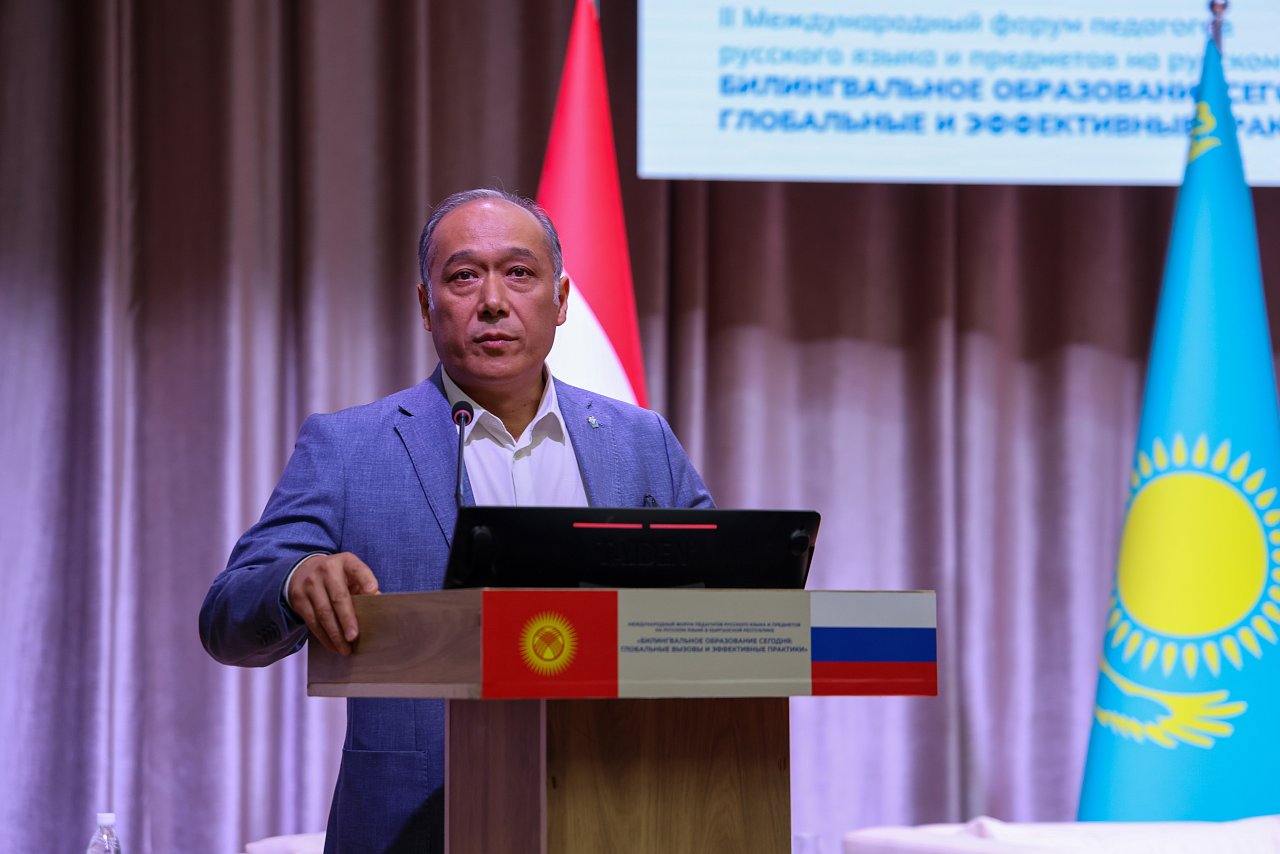
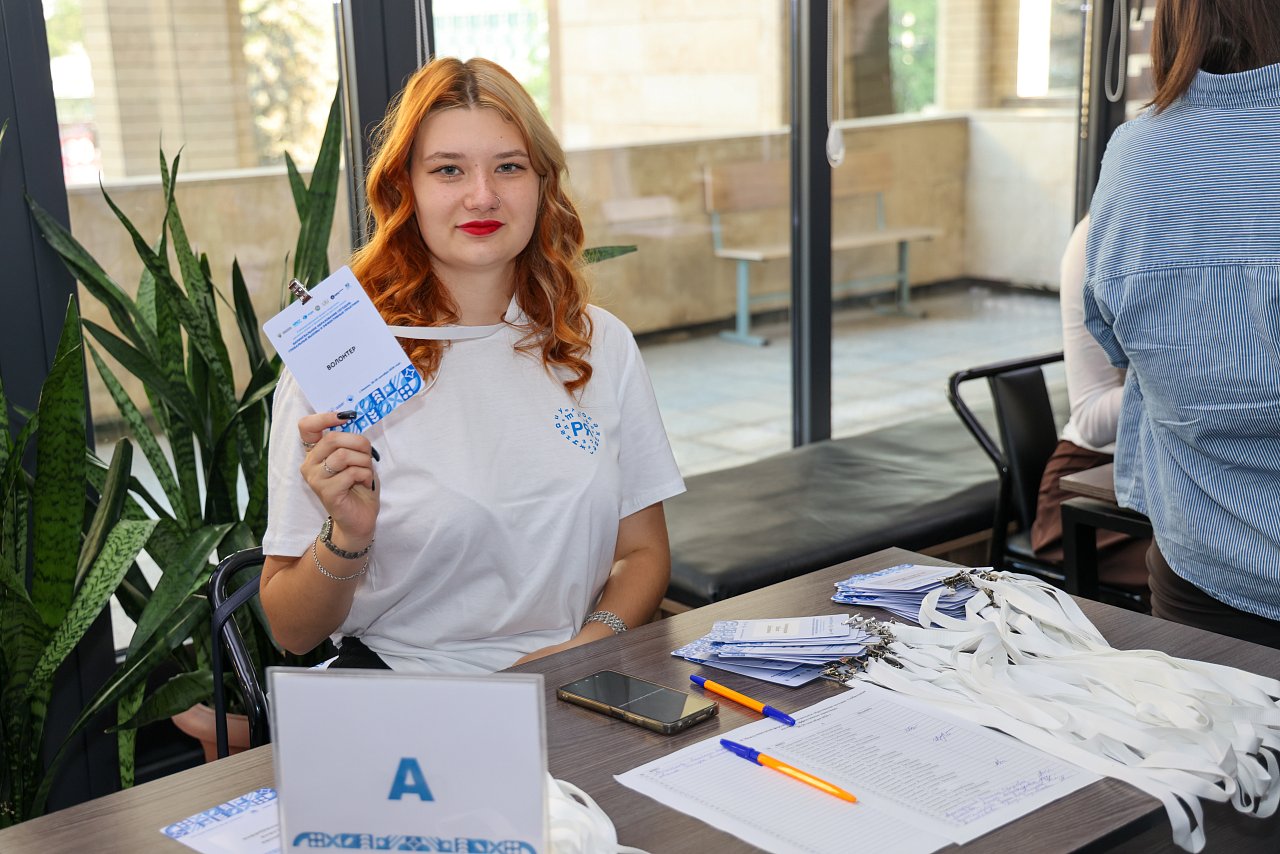
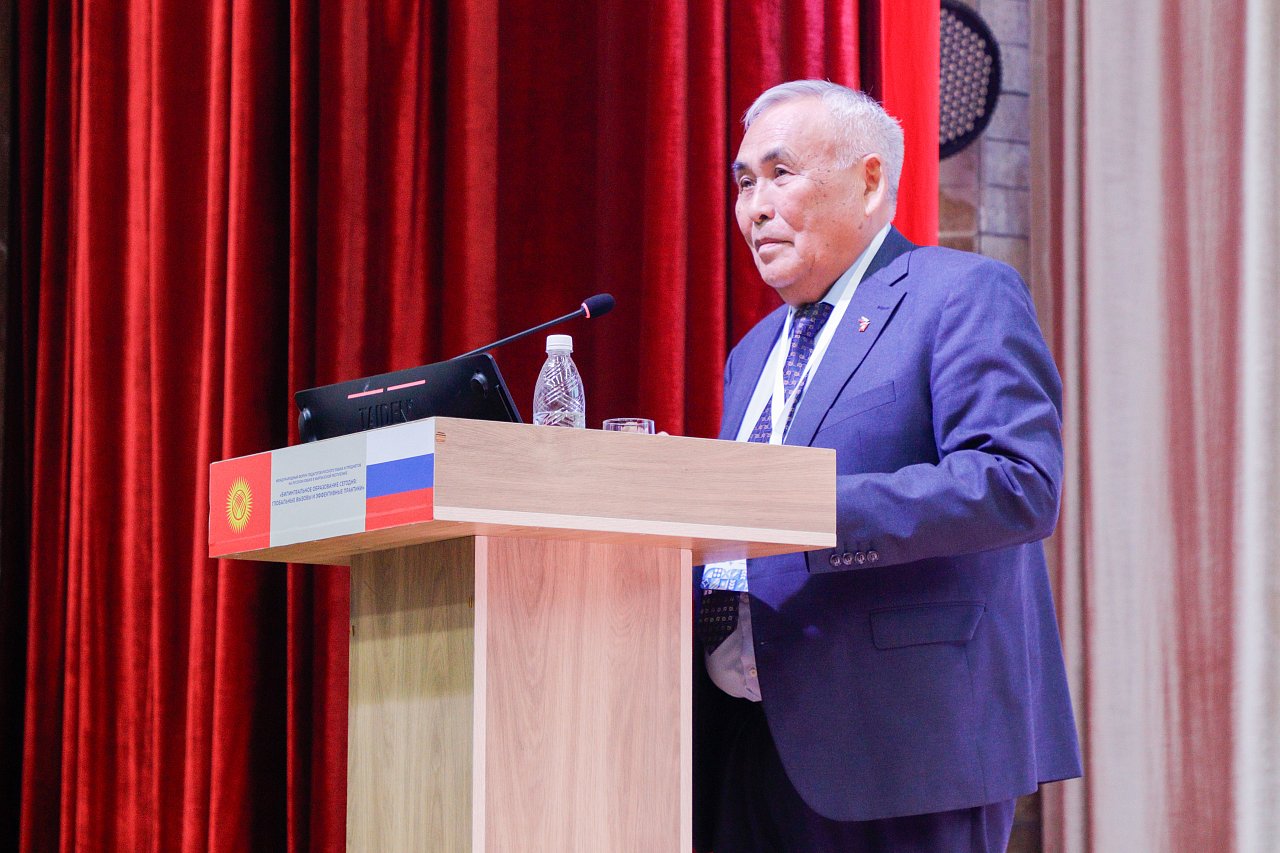
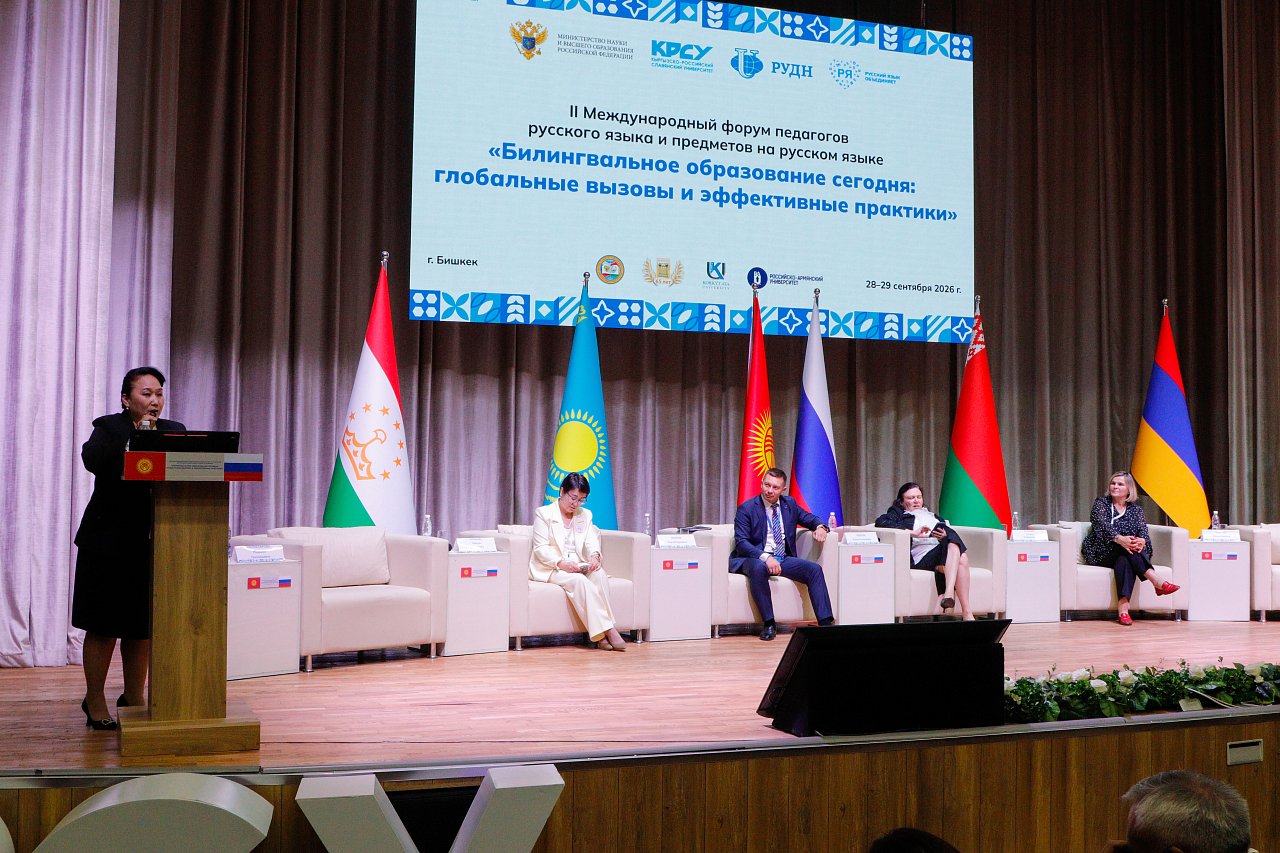
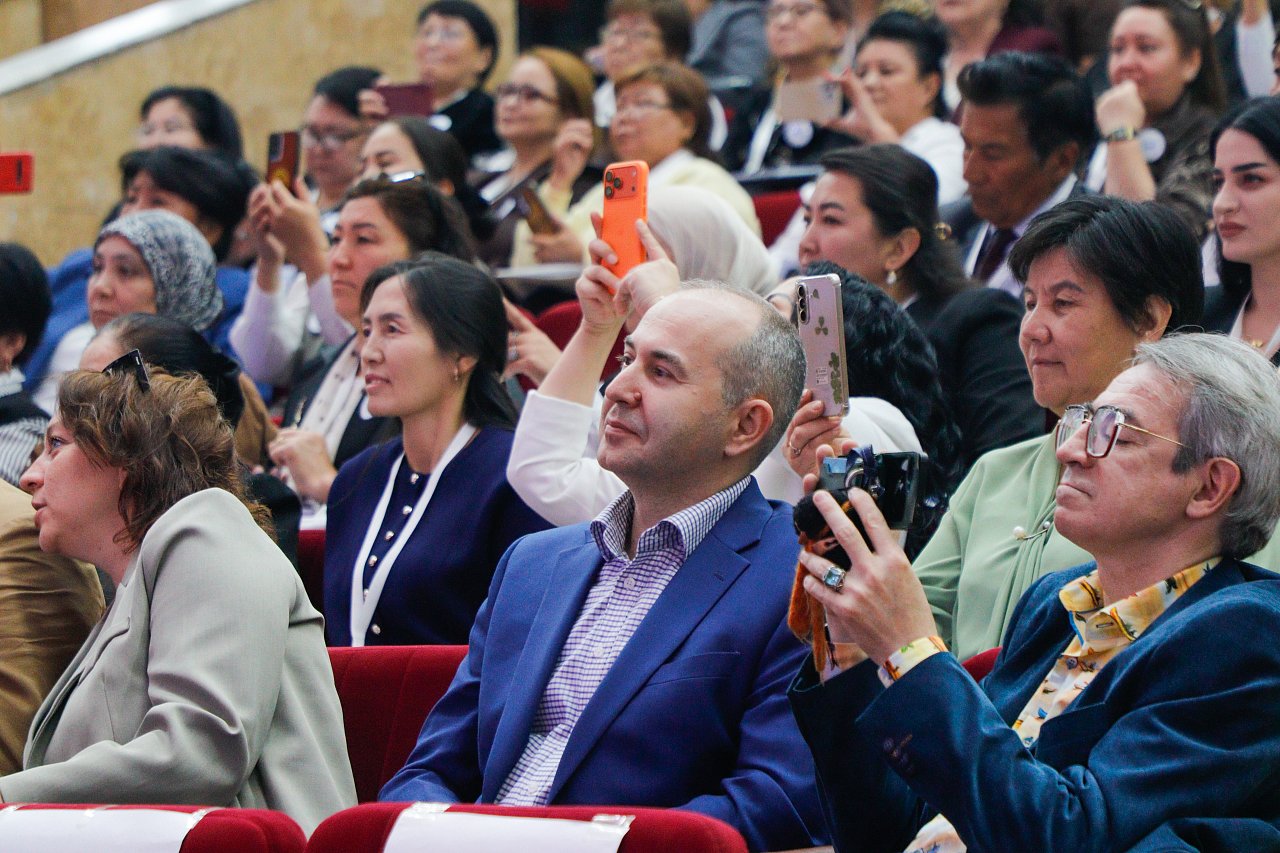
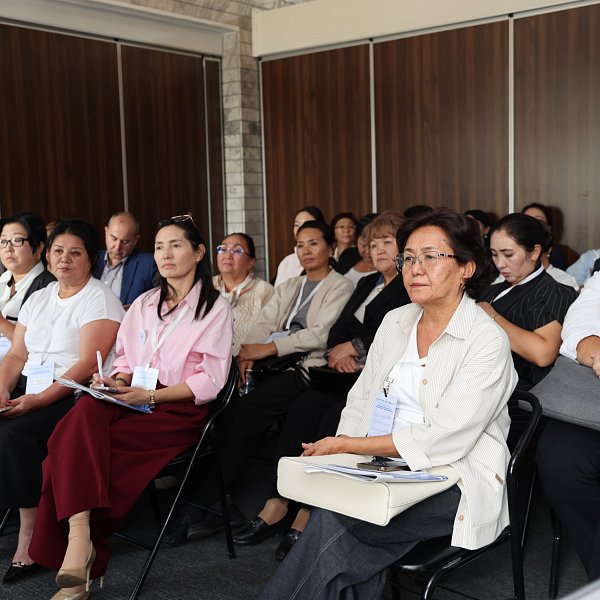
The II International Forum of Teachers of the Russian Language and Subjects in Russian in the Kyrgyz Republic started in Bishkek «Bilingual education today: global challenges and effective practices».The forum was organized by the Kyrgyz-Russian Slavic University together with the Patrice Lumumba Peoples' Friendship University of Russia. Its participants included teachers, lecturers, scientists, methodologists and experts from Kyrgyzstan, Russia and other CIS countries.At the opening ceremony, the rector of KRSU Sergei Volkov thanked his colleagues from RUDN University and teachers who came to Bishkek to exchange experiences and discuss current issues of bilingual education.He recalled that the first forum brought together more than 900 participants, over 300 of whom came to Bishkek in person. After its completion, teachers from KRSU and RUDN University conducted master classes for teachers and career guidance meetings with schoolchildren in the regions of Kyrgyzstan.«For our schoolchildren and students, speaking two languages is not only an opportunity to communicate, but also access to knowledge, educational programs, scientific literature and professional opportunities», Volkov said.According to him, about 400 students study in the pedagogical and related programs of KRSU. Last academic year, 422 students completed teaching practice in schools in different regions of Kyrgyzstan. Another 100 people entered pedagogical fields at the expense of Russian budget funds.The university has created the Academy of Education named after L.S. Vygotsky, combining pedagogy, psychology and philology. In its structure, the Higher School of Russian Language and Bilingual Education is developing, which trains teachers for a multilingual educational environment.Chairman of the National Commission on State Language and Language Policy under the President of the Kyrgyz Republic Melis Murataliev noted that the topic of bilingual education is especially relevant for Kyrgyzstan, where the Kyrgyz and Russian languages are developing in a common educational and cultural space.He emphasized the need to expand the use of the state Kyrgyz language, including in science and education, while maintaining the accumulated experience of teaching and scientific activities in Russian.«The Russian language has opened up new horizons for us, the breadth of the world of science. Today it is important to develop languages in such a way that they complement each other, enrich the culture and worldview of our peoples», Murataliev said.The representative of the Ministry of Science, Higher Education and Innovation of the Kyrgyz Republic, Khadicha Shambetalieva, said that bilingual education is of particular importance for the future of the country. According to her, the linguistic and cultural diversity of Kyrgyzstan should become a resource that expands a person’s ability to gain knowledge, participate in international cooperation and build a professional career without losing touch with his native language, history and culture.«We want a graduate of a modern school and university to be competitive, open to new knowledge, able to freely interact with people of different cultures and at the same time maintain a connection with their native language, their history and culture», Shambetalieva said.The greeting from Deputy Minister of Science and Higher Education of Russia Elena Tumakova was read by the special representative of the Ministry of Education and Science of the Russian Federation on joint Russian-national universities, Advisor to the Rector of KRSU Nikolai Kudryavtsev. The appeal noted that high-quality command of the Russian language expands educational, professional and career opportunities, and teaching in a bilingual environment requires a constant exchange of practical experience.At the plenary session, Volkov presented a report «Russian language as a factor in Eurasian integration: the role of Slavic universities in the formation of a common educational and humanitarian space in the CIS».He noted that the Kyrgyz language performs a state and identification function, while Russian retains an important role in education, science, interethnic communication and professional communication. According to the rector, these functions should not be opposed.«The common goal is to ensure that the Russian and Kyrgyz languages are not opposed, but work as complementary resources for quality education, professional growth and social integration», Volkov emphasized.Scientific director of the Higher School of Russian Language and Bilingual Education KRSU Mamed Tagaev presented the concept of transition from simple proficiency in two languages to the formation of a bilingual personality.«The task of education is not to pit languages against, or to displace, one language against the other. The task is to create conditions for their functional interaction», he noted.Tagaev proposed implementing two projects: «Language map of Central Asia: state, dynamics, prospects» and «Ethnically oriented educational complexes of the new generation». The first involves a comparative study of the linguistic situation and the processes of multilingualism in the states of the region. The second provides for the creation of a partnership of Slavic universities to develop educational and methodological complexes in the Russian language, taking into account the linguistic, cultural and educational characteristics of national audiences.Tagaev also proposed establishing a scientific and methodological journal «Russian language in Central Asia», which could combine research and practical experience of specialists in the region.First Vice-Rector - Vice-Rector for Educational Activities of RUDN University Yulia Ebzeeva made a report «University of the Future: new models of education in a changing world». She noted the importance of combining fundamental student training with early vocational guidance and internships.Over the course of two days, forum participants will discuss modern models of bilingual education, teaching the Russian language and subjects in Russian, training teachers, the use of digital technologies and artificial intelligence in teaching, as well as the development of research work of young scientists.