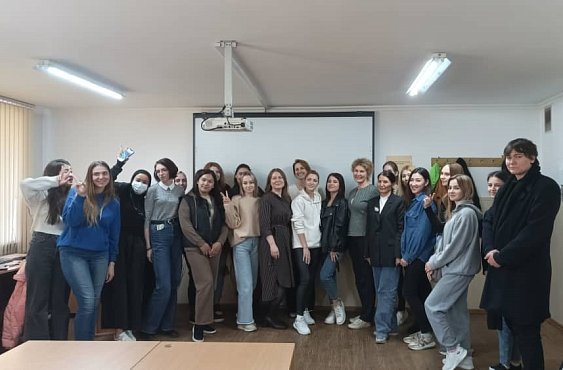
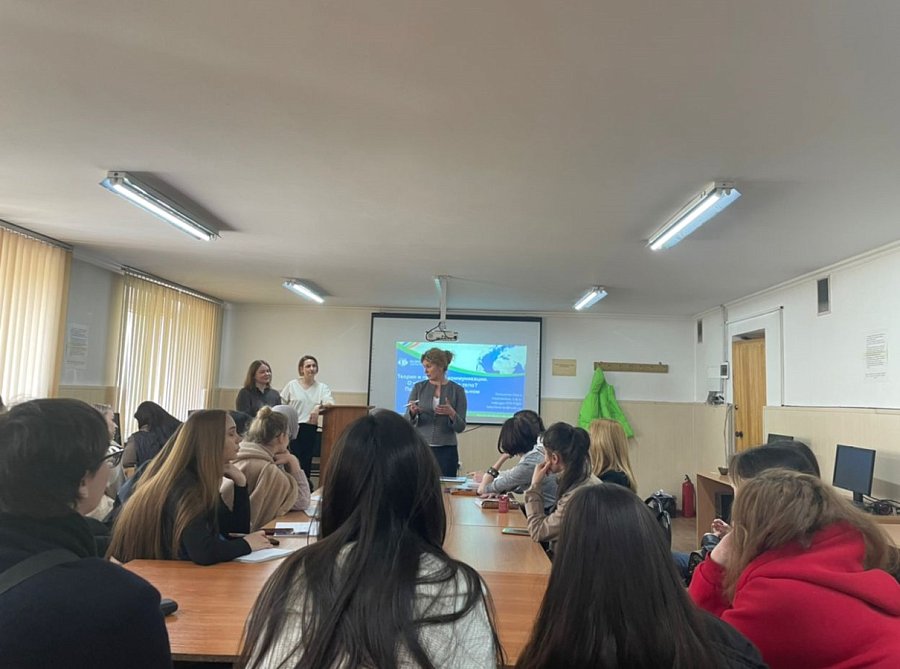
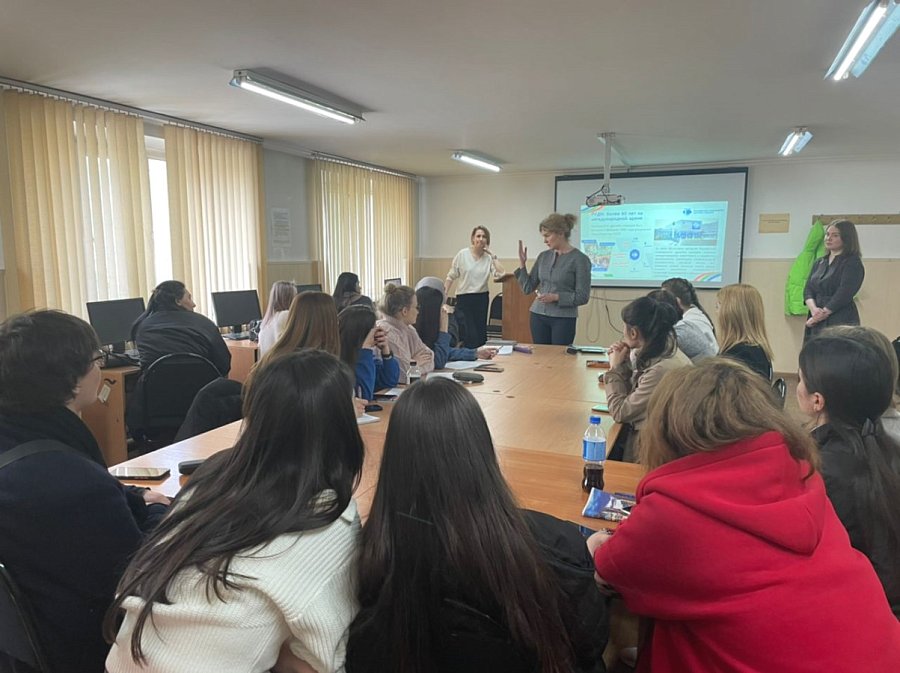
On April 19, at the Department of Russian Language KRSU, a meeting was held with teachers of the Department of General and Russian Linguistics of the Peoples' Friendship University of Russia (Moscow) as part of a joint program of the CIS Network University.
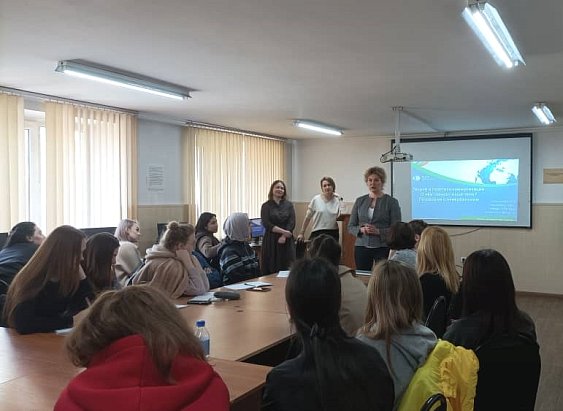
The delegation was headed by the head of the master's program «Russian language and literature» at the Faculty of Philology of RUDN University, associate professor Elena Smoliy. Together with her colleagues – candidates of philological sciences O. Kolysheva and P. Povalko –, she told our philology students about the possibilities of studying in RUDN according to the master's program of the CIS Network University «Russian Language and Literature», in particular about philological disciplines, practices, a scholarship program and the prospect of obtaining a master's degree from two universities.
O. Kolysheva reported on how to continue her improvement after graduating from her master's degree and become a brilliant teacher and scientist: how to enroll in graduate school, engage in research activities and participate in grant support for young scientists.
P. Povalko shared her experience of how to engage in science in a group research project and presented a collective project on linguocultural research on campus and conducted a small test so that students could hypothetically join the project and determine their research role in such a project.
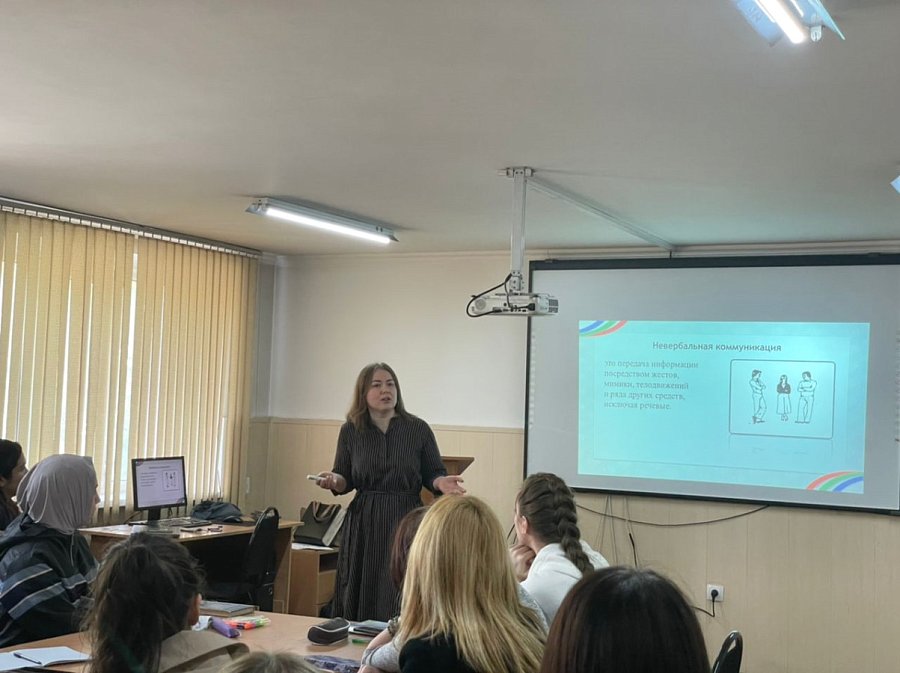
For 4th year students, O. Kolysheva gave a lecture «Theory and practice of communication. What is our body talking about? Let's talk about nonverbal». Students enjoyed taking part in a conversation about how body language affects communication successes or failures; whether they really are greeted by their clothes, but seen off by their minds; how through nonverbal behavior one can understand the mood, experiences, expectations, feelings, intentions, as well as the moral and personal qualities of communicating people.
After the lecture, the guests held a quiz with the audience, inviting students to guess the riddles of the peoples of the world, selected by RUDN University students, literally translated into Russian. It turned out that this is not just an understanding of the world of another language and culture, reflected in the riddle, but it is possible!