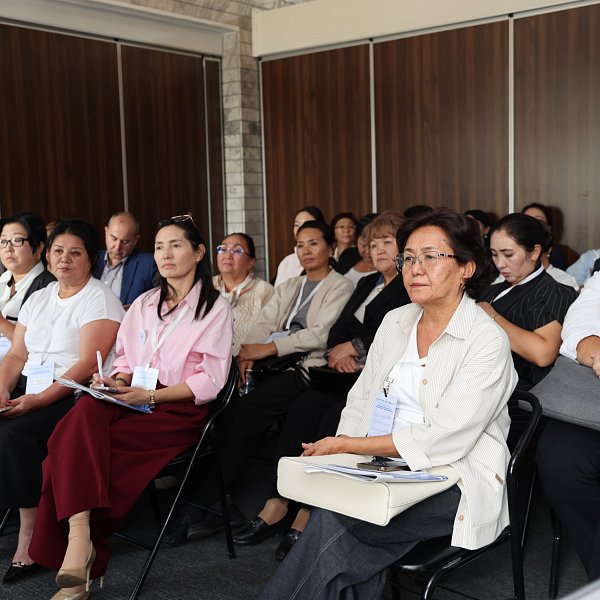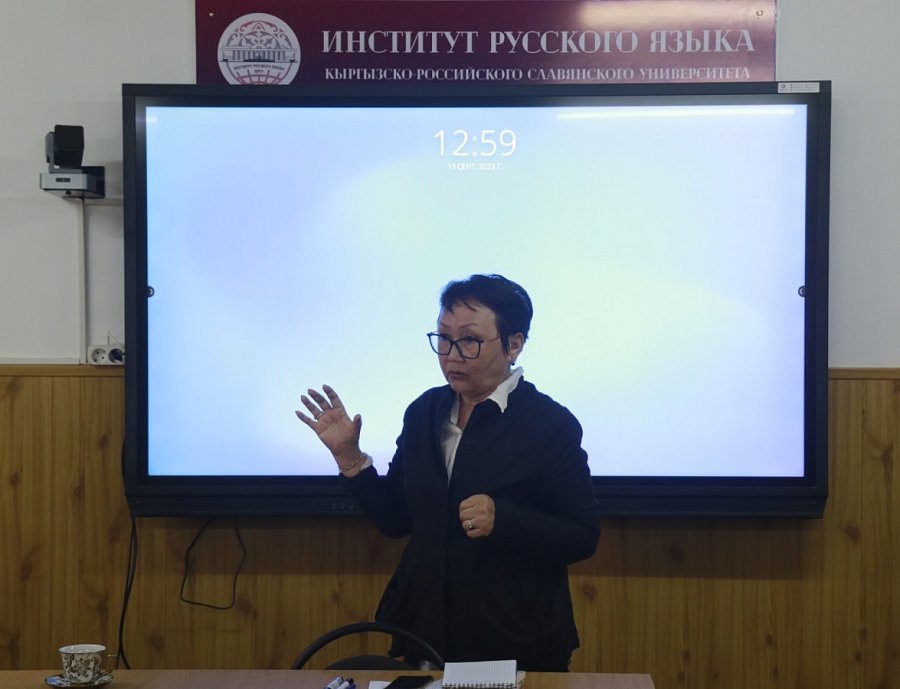
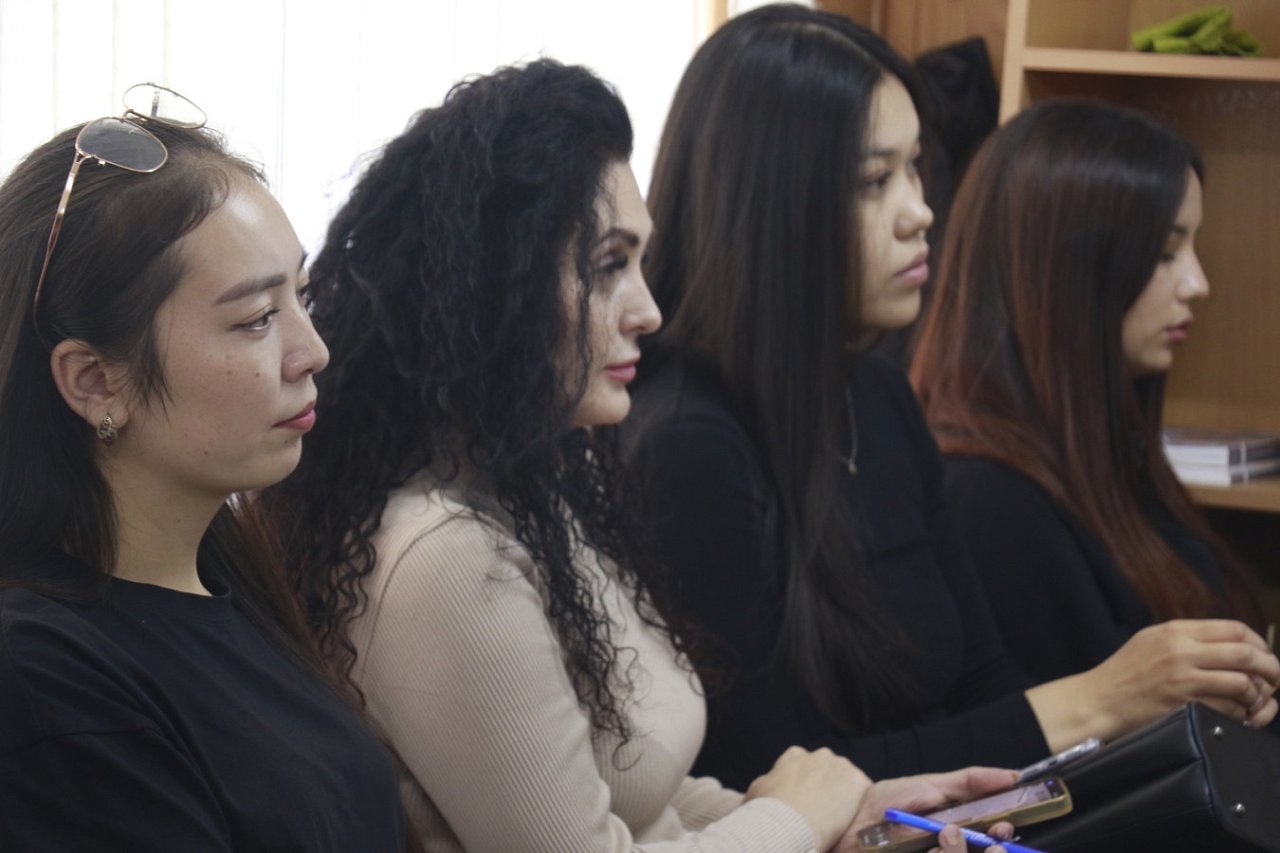
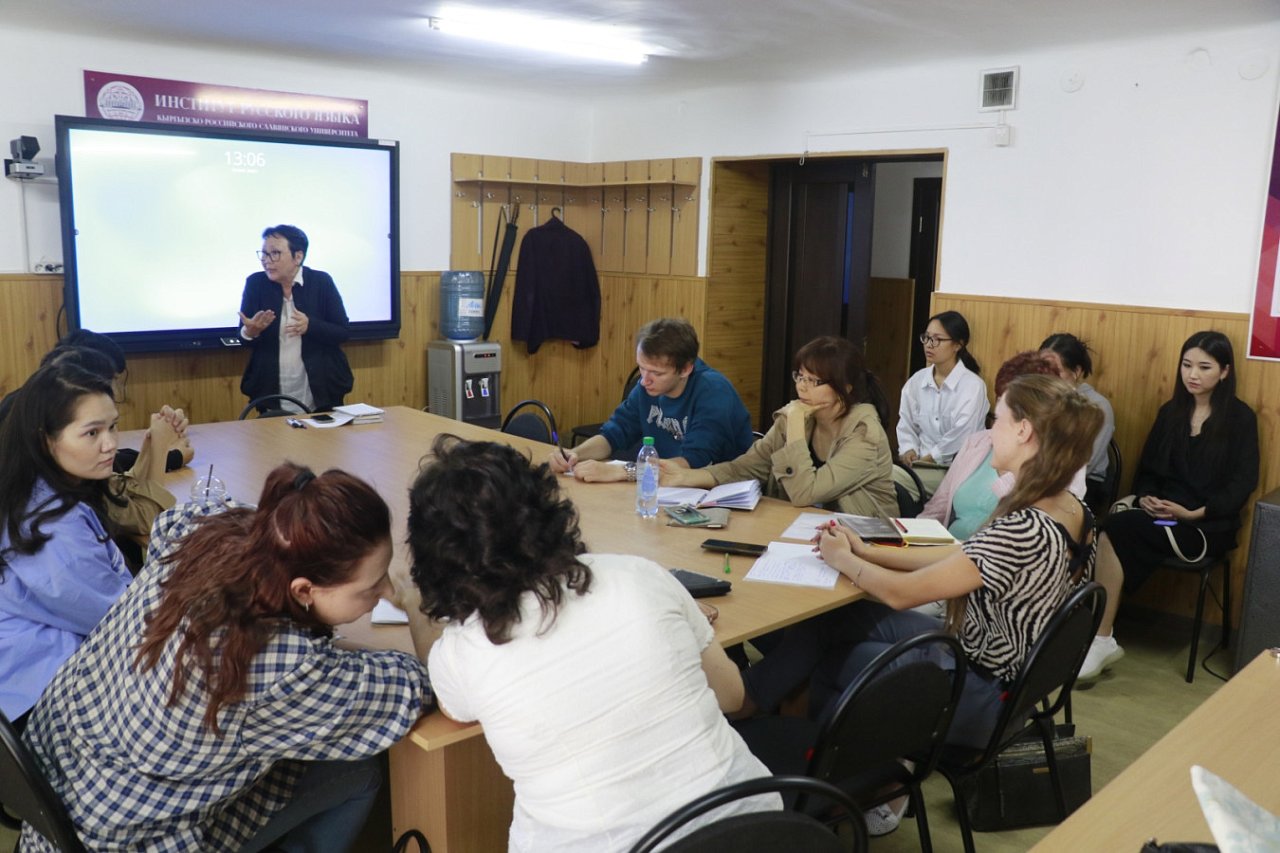
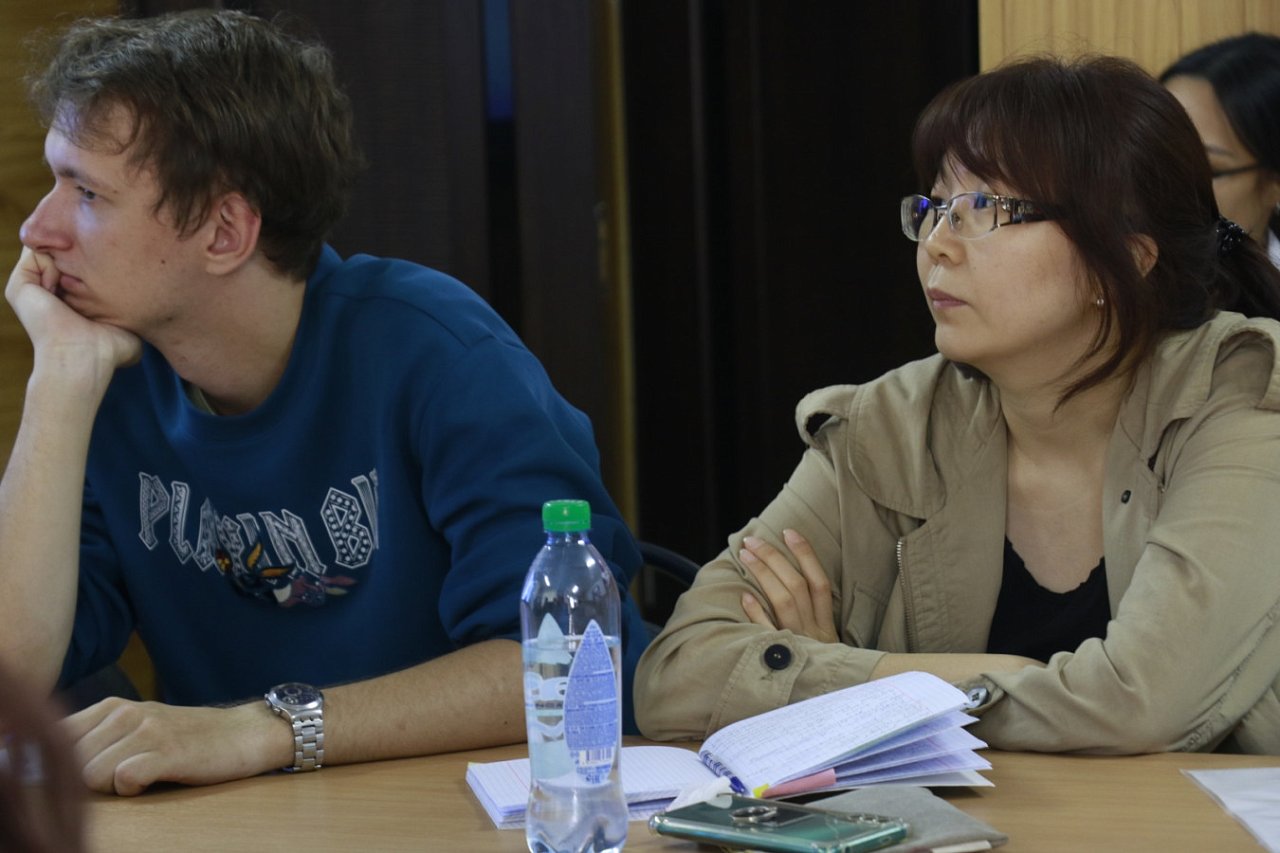
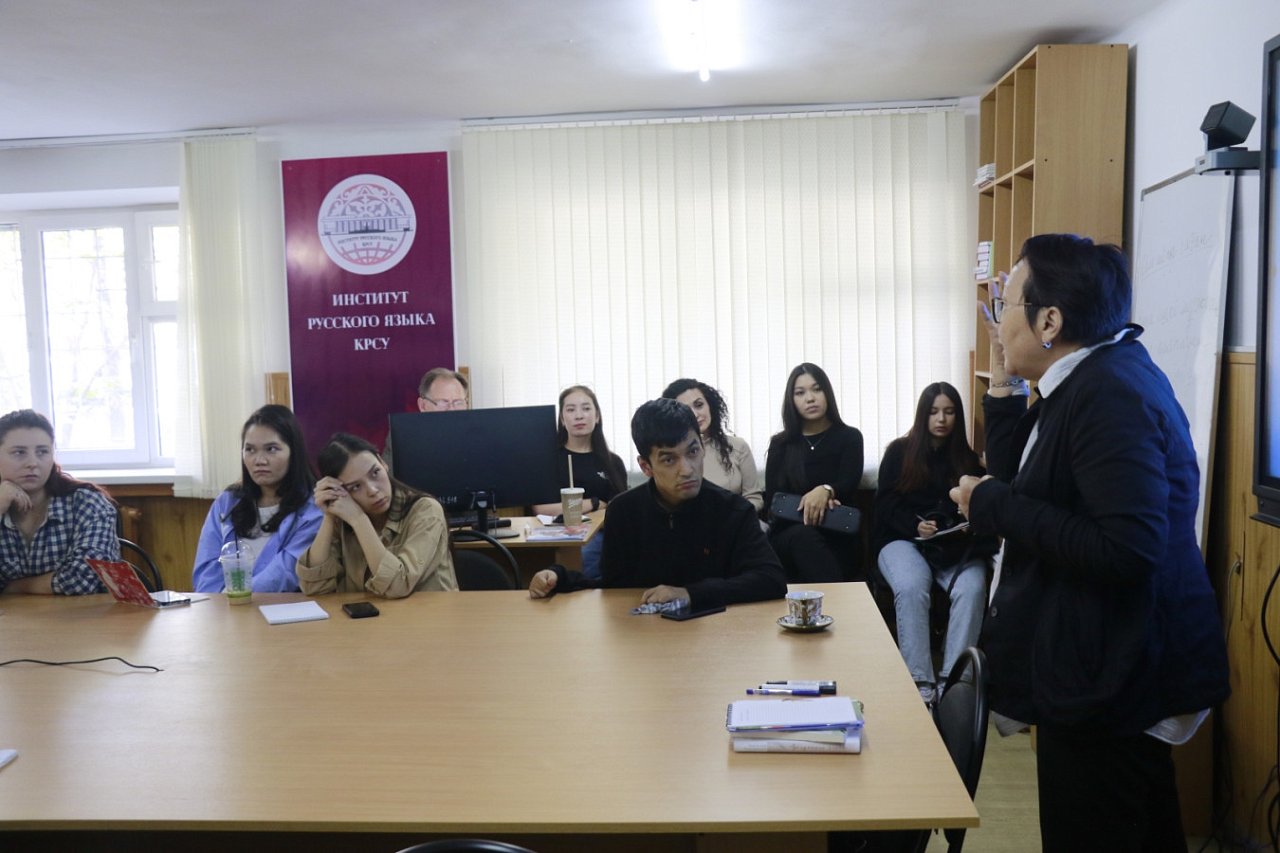

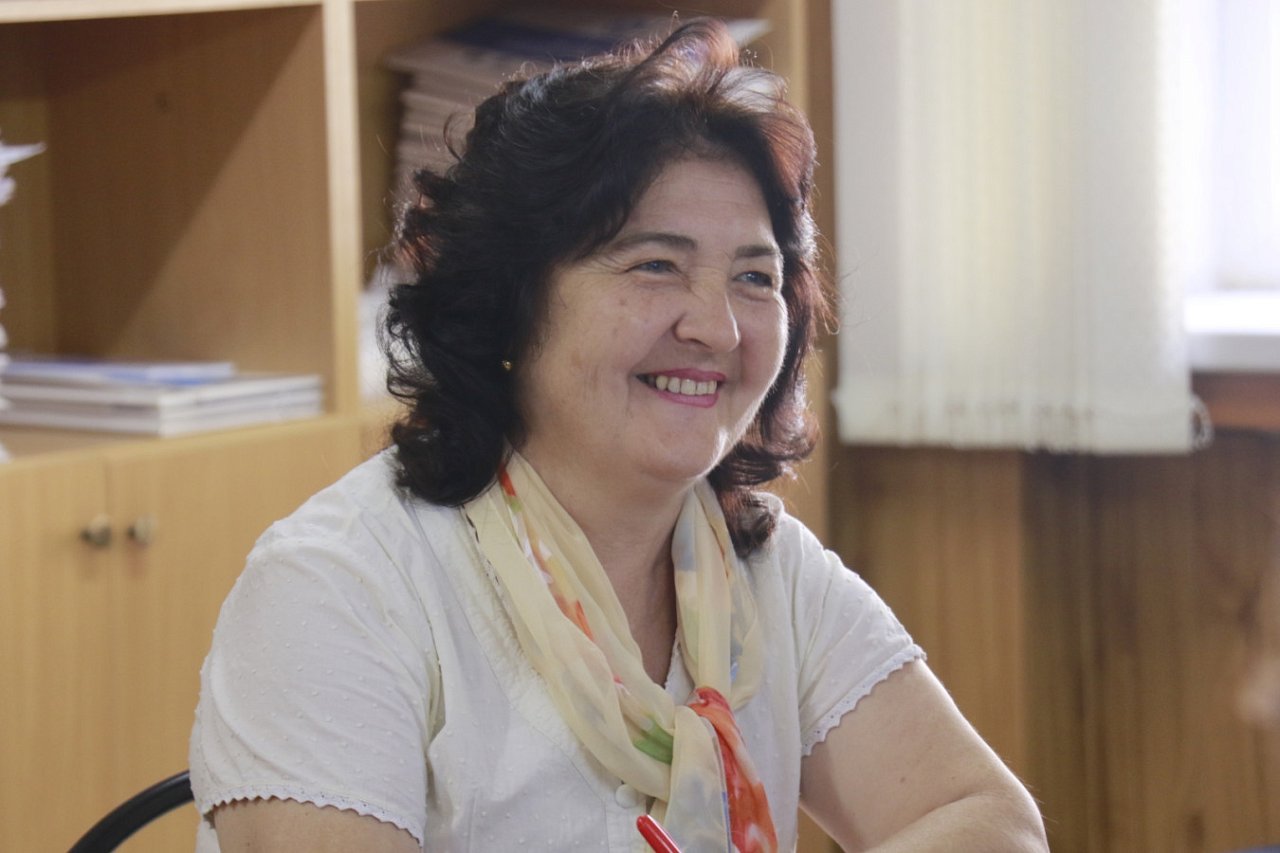



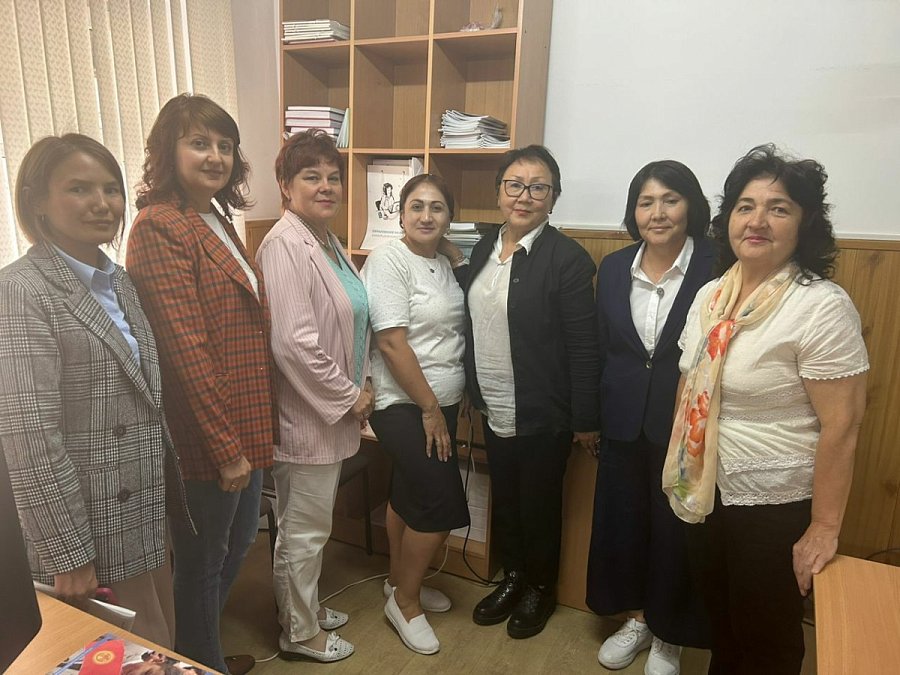

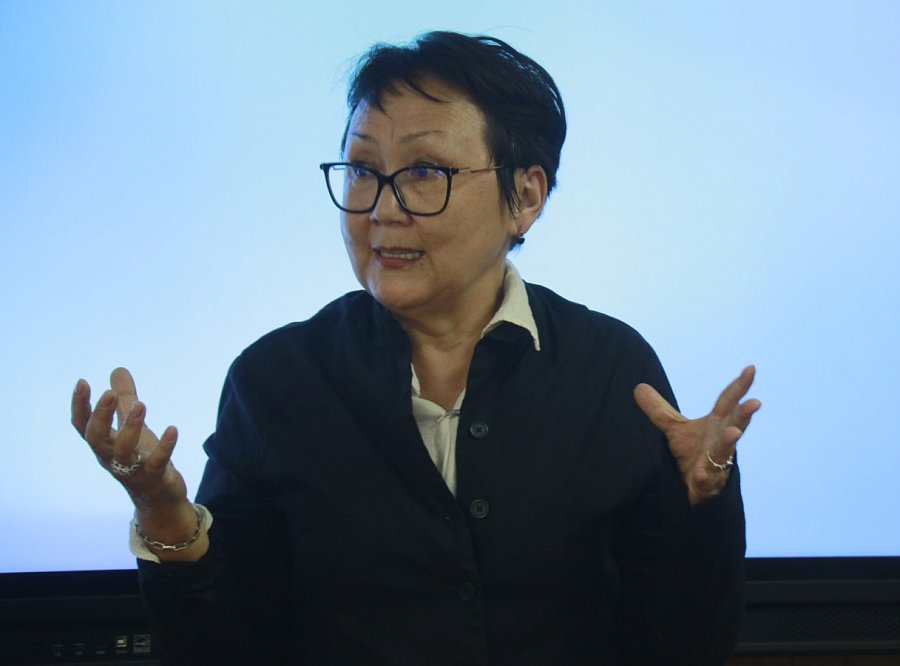
On September 13, at the Faculty of Humanities, a meeting was held between Doctor of Philology, Professor of the Department of Russian Language and Intercultural Communication of RUDN University (Moscow) Uldanai Bakhtikireeva with teachers and undergraduates of the Department of Russian Language KRSU.
As the editor of the magazine «RUDN Bulletin», U. Bakhtikireeva told teachers about the possibility of publication in different series of this magazine and about the topics of issues devoted to research into the languages of the peoples of Russia. During the conversation, the lecturer answered questions from teachers about language policy in multilingual regions of the Russian Federation.
For master's students, Professor U. Bakhtikireeva gave a lecture on the artistic embodiment of the national picture of the world of one ethnic group (Turks: Kazakhs and Kyrgyz) in texts by bilingual authors in the language of another people (in Russian) and cultural and historical factors explaining the typological differences between the Russian and Turkic languages.
Here is the opinion that Yana Kulishova, master’s student of the Russian language department at KRSU, expressed about the lecture:
«A real gift for us, first and second year master’s students, was the visit of Uldanay Maksutovna Bakhtikireeva. Professor Bakhtikireeva quickly found contact with the audience – from the first minutes a dialogue was built, and the lecture took place in the form of a conversation.
Most master's students have already chosen topics for their final works, which are mainly related to the comparison of linguistic pictures of the world and linguistic and cultural concepts, so Uldanay Maksutovna's lecture came in handy.
Using the example of Mukhtar Shakhanov’s poem in Kazakh, the teacher commented on the difference with the Russian translation of the poem and the difference in the perception of the text from the point of view of Slavic and Turkic languages. “Kara yeshki muzhigen agash kaitadan guldemeydi” – this phrase is literally translated into Russian as follows: “A gnawed tree will no longer bloom with black goats”.
–Turkic languages are based more on the characteristics and qualities of objects, while Slavic languages are called event languages, since actions and events are often a priority, – said Uldanay Maksutovna, – therefore, if you translate Turkic texts into Slavic languages, then on literal translation cannot be based – this will be a completely different picture. How would we say in Russian? The tree gnawed by black goats will no longer bloom. Do you feel the difference?
The professor told us what factors influence the formation of national language patterns and recommended that we delve more into our research work.
During the entire speech, the professor never used any tips or notes. It's amazing how much diverse information she keeps in mind all the time she explains the material! Looking at such people, you involuntarily become motivated to improve the skills that you already have. You also understand that you need to learn Russian endlessly, even if you are its native speaker».
Victoria Monastyrskaya, master's student of the Russian language department:
–I was lucky enough to attend a lecture by Uldanay Bakhtikireeva. I was incredibly glad to see and listen to the respected professor, because not every day there is an opportunity to communicate with a person who is so brilliantly able to reveal the beauty «of the Eastern Russian language». In the works of O. Suleimenov, Ch. Aitmatov, written in Russian, really reflects the Eastern understanding of the world, images and everything beautiful. For Turkic-speaking peoples, the characteristics of the subject are important in understanding the world, and not just the eventfulness of everything said, as for the Russian people.
In a lecture on language comparison, the lecturer covered many features of ethnic language to reveal the beauty of the basic meaning in the way that the speaker would understand it. And most importantly, why did the author express the idea with this word, sentence, in exactly this formulation? What is important in his linguistic picture of the world and worldview? The lecturer mentioned languages such as Russian, Kazakh, Kyrgyz, Azerbaijani, Korean, French and Chinese. We dwelled in more detail on the first three. I first heard at the lecture the term «cosmo-psycho-logos», which was introduced by Georgy Gachev in his book «Cosmo-Psycho-Logos. National images of the world», I will definitely get acquainted with it in the future.
The most striking and memorable moment of the entire lecture was the analysis of several lines from the poem by Mukhtar Shakhanov «Zhigerlandiru»:
Kim aitty saga?!
Tulpards surinbeidi dep,
Asaudy Minilmeidi dep,
Ak koylek kirlemeidi dep,
Kara eshki muzhigen agash kaitadan guldemeydi dep.
Kim aitty sagan?!
Uldanay Maksutovna translated the text and explained the meaning of the phrases precisely in such a way as to convey the author’s intention, to reflect the beauty of the Kazakh syllable for the Russian-speaking speaker, his linguistic picture of the world. These lines were close to me, and I was inspired by the translation:
Who told you,
That a purebred herd of horses does not stumble
That clothes are no smother than white,
That a tree gnawed by black goats will not bloom.
Who told you?!
I am very grateful for this opportunity to attend the lecture, learn a lot of new things, and add to my reading list. I learned one important thing that when comparing languages, it is important not only to understand the language being compared, but also to try to be imbued with it, to try to feel the gaze of the speaker, through his eyes to look at the world imprinted in the language in order to answer the linguistic question «why» it is said in this way.