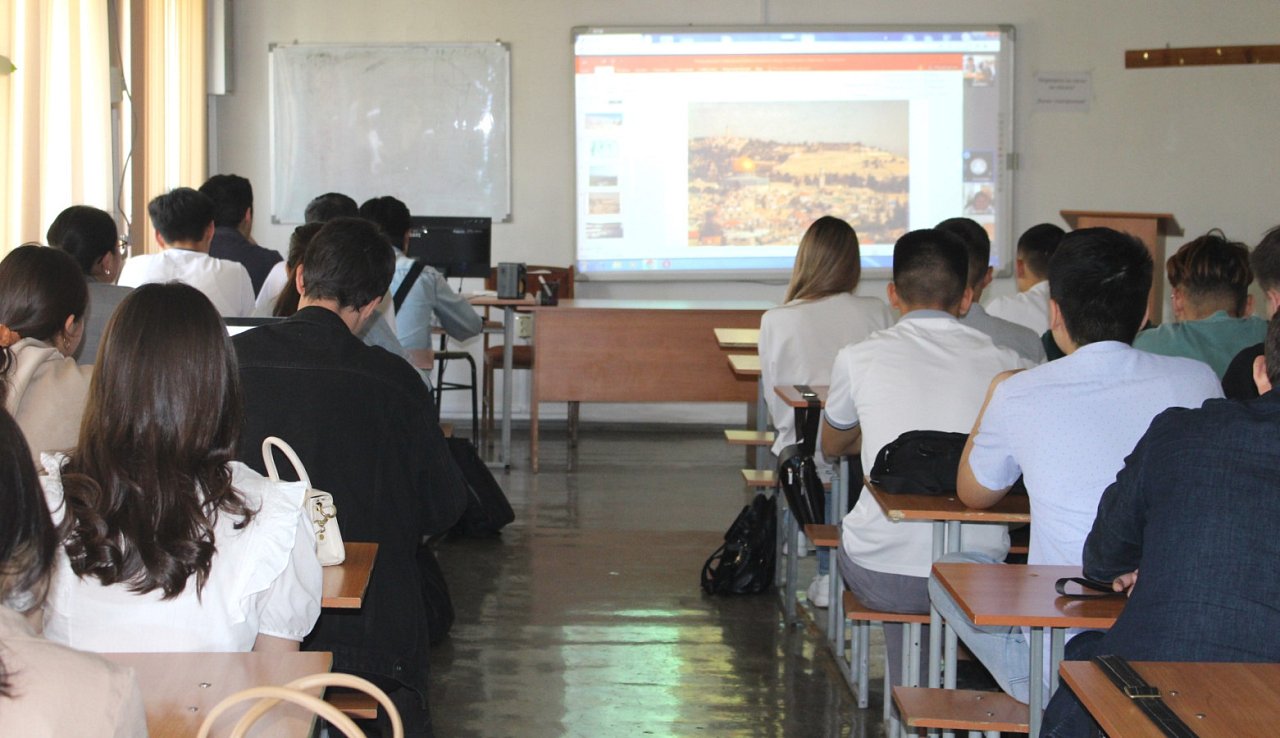
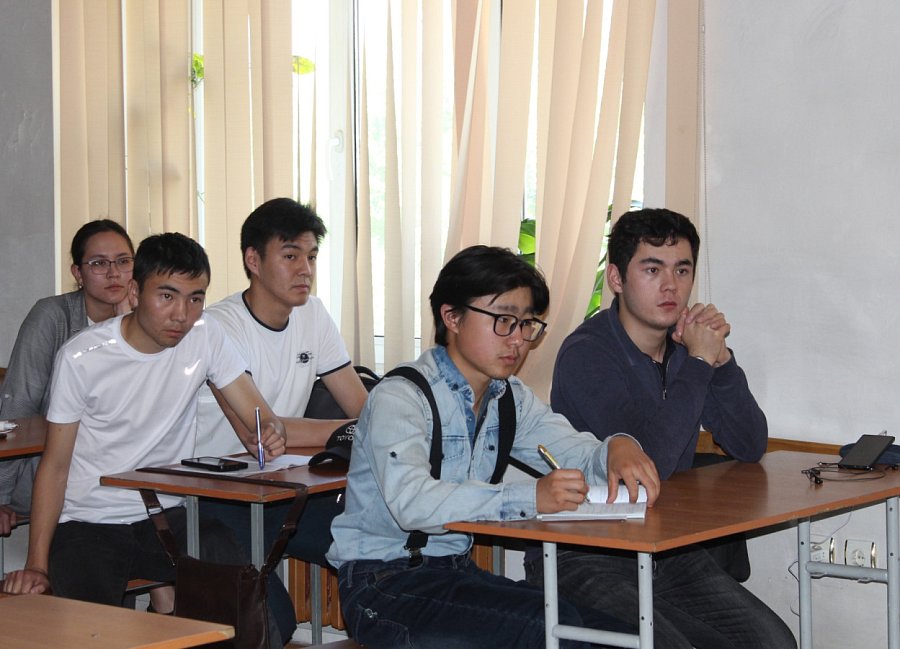


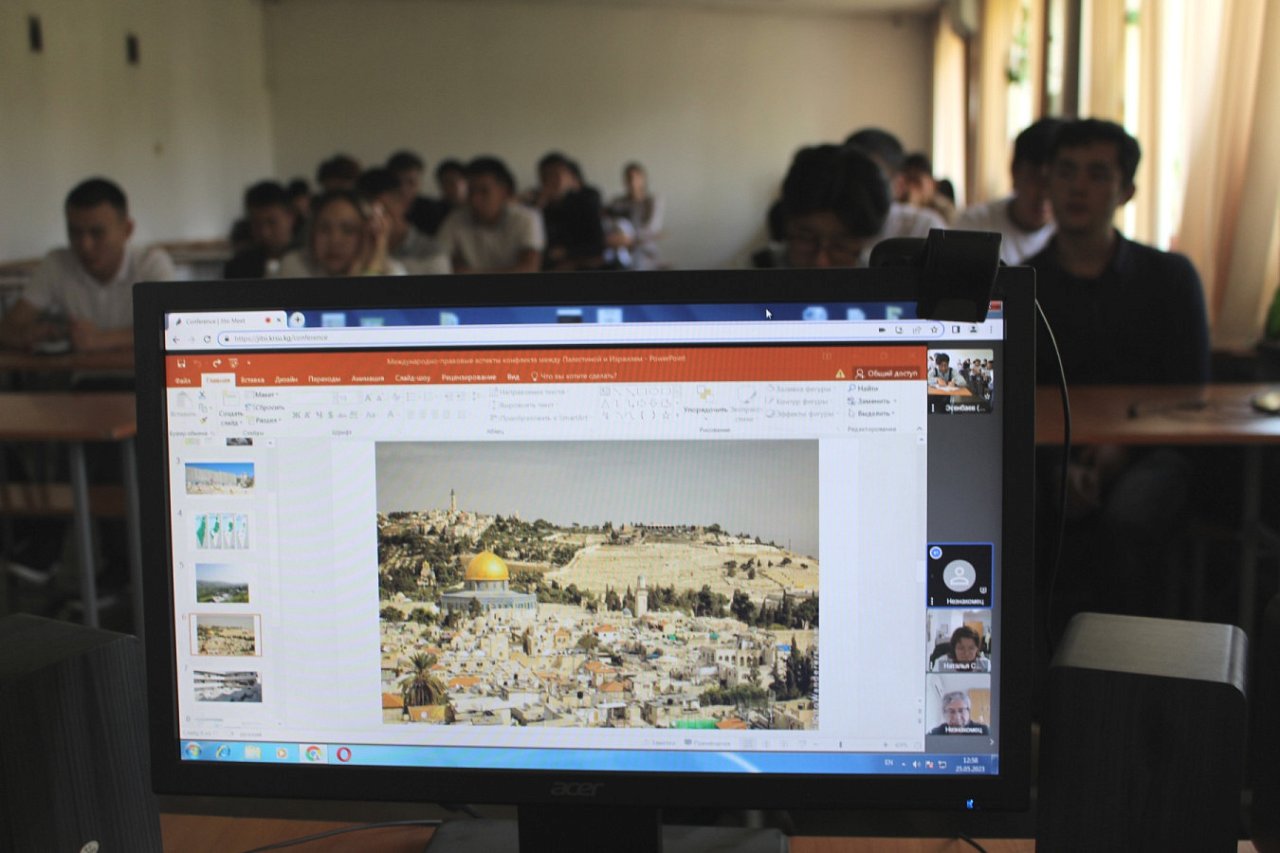
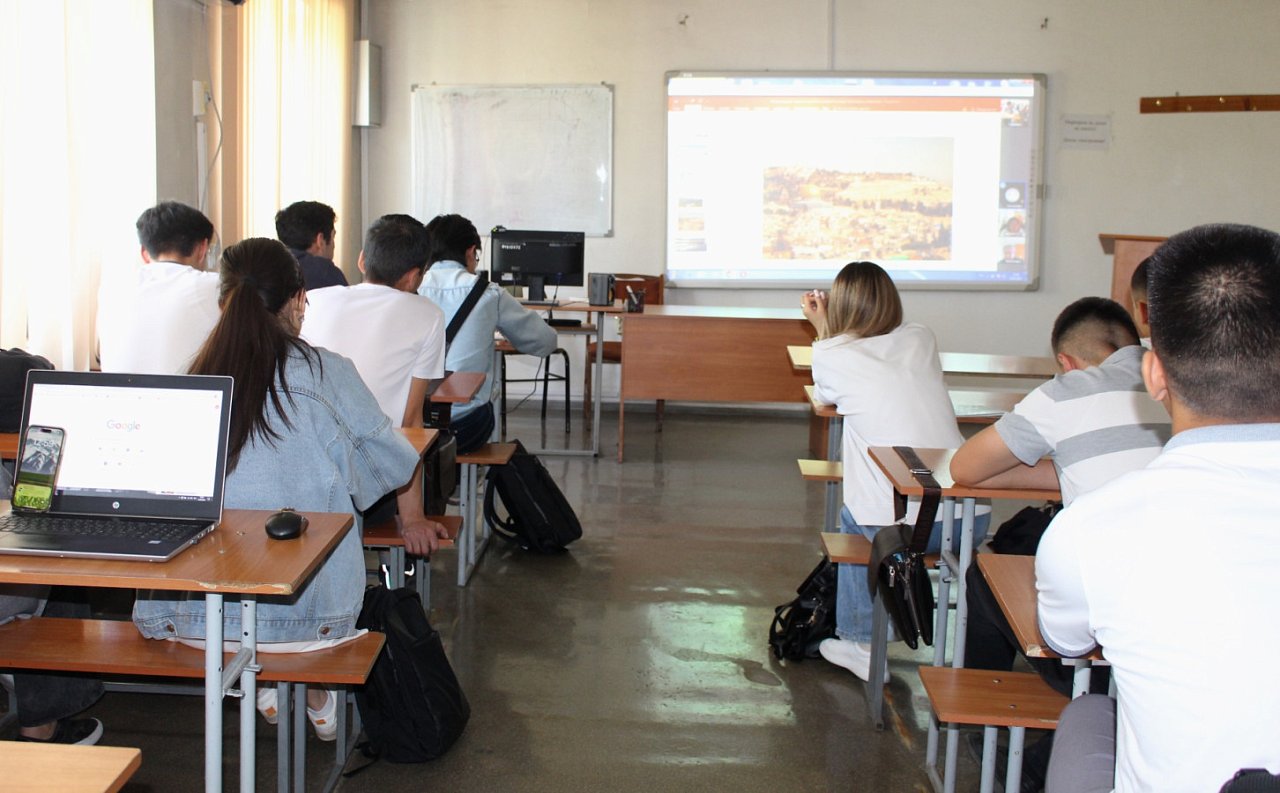
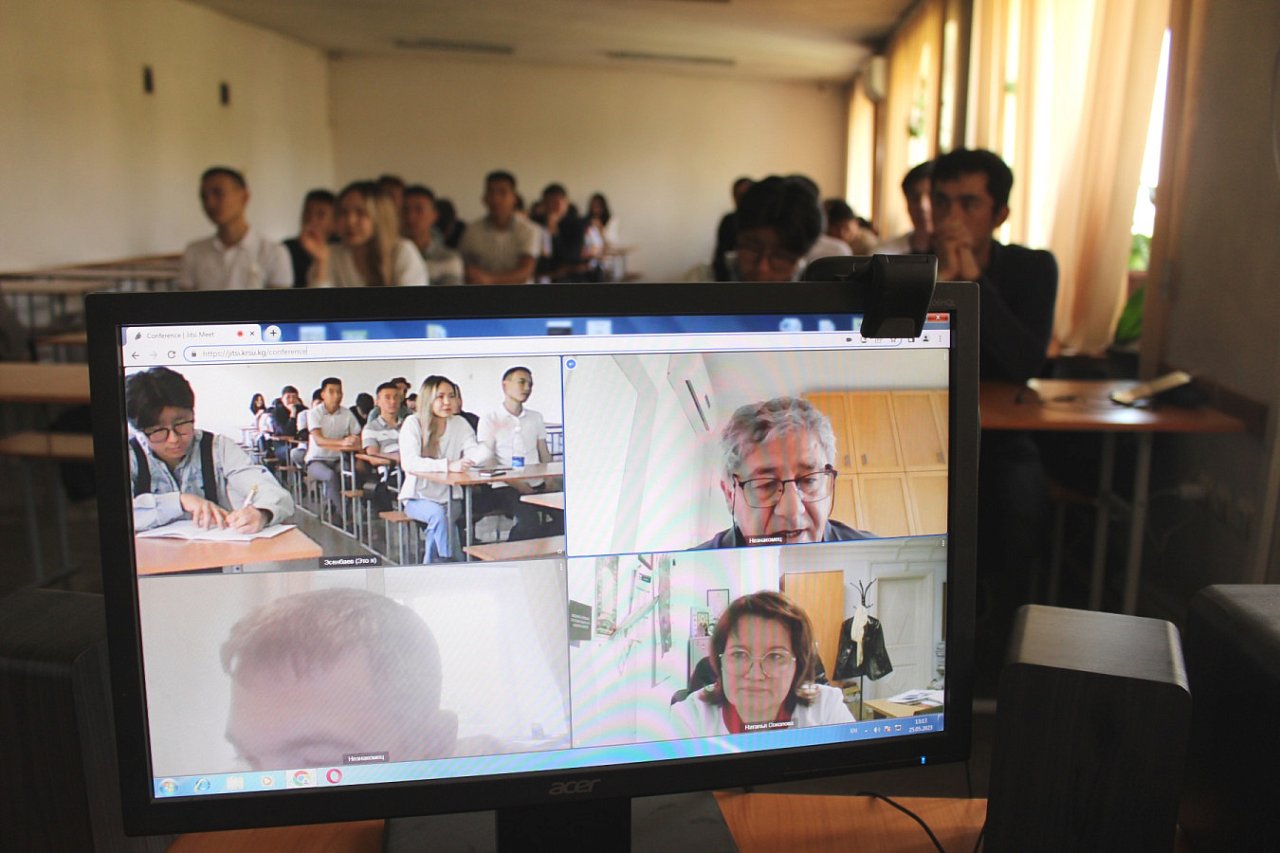
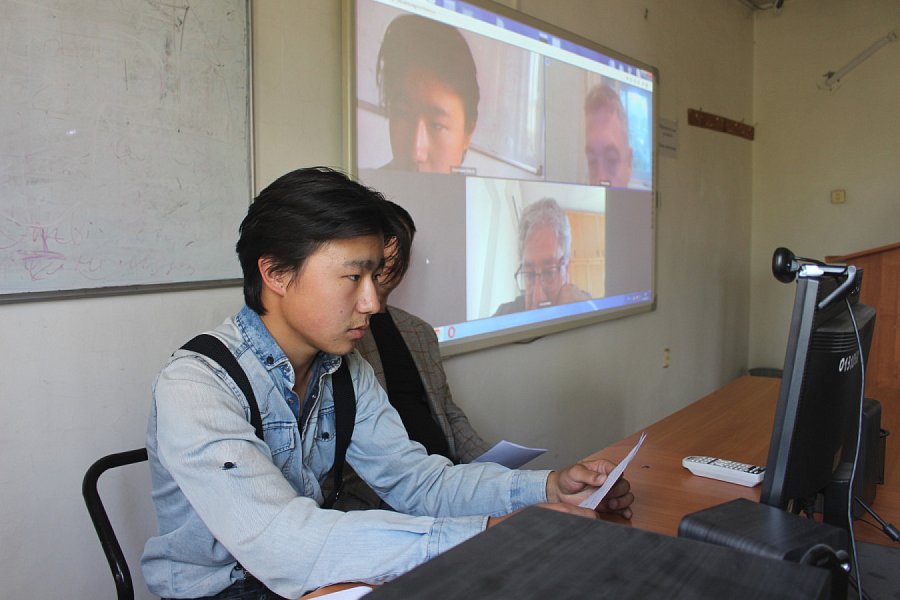
At the Faculty of Law of KRSU, online lectures were held by Doctor of Law, Director of the Center for International Law of the O. Kutafin University (MSAL), Professor Vladislav Tolstykh on the topic: «International legal aspects of the conflict between Israel and Palestine» and Doctor of Political Sciences, Professor Joni Aasi (Palestinian National University An-Najah) on the topic «Political system of Palestine in the 21st century.».
As Professor Tolstykh noted, the conflict between Israel and Palestine manifests many of the challenges that humanity has faced in modern history: religious contradictions, nationalism, economic inequality, colonialism, totalitarianism, etc. «The legal context of this conflict is extremely complex and includes issues related to the right to self-determination, human rights, international humanitarian law, powers of international organizations. An international lawyer who knows this context cannot but feel deep disappointment at his discipline, which demonstrates complete powerlessness and is often used only to aggravate conflict. One of the stakes here, therefore, is the future of international law. In addition, I would call this conflict structural. All other conflicts in the Middle East are directly related to it and in some cases arise from it».
At the lecture, Professor Tolstykh mainly focused on the international legal aspects of the Palestinian-Israeli conflict and on the arguments used by both sides. These arguments, as the lecturer emphasized, are very subtle, sometimes sophisticated. «Sometimes they are incomprehensible to a non-specialist, because it is one thing – to appeal to morality or historical justice, and another – to rely on the norms of international law, which are often far from both morality and justice. The exchange of international legal arguments thus forms another, very important dimension of this confrontation. This is the general didactic conclusion: the new generation of international relations scholars (both in Russia and Kyrgyzstan) must not only know the general theory of international law, but also be able to apply this theory in practice. We still have a poor command of this art».
The lecturer also noted the high activity of the audience: «It seems to me that we had a dialogue: the guys not only asked questions, but also expressed their opinion about the prospects for resolving the conflict. The questions were competent, and the opinion expressed – was interesting. My friend and I (Al-Najah University professor Joni Aasi) were very happy to receive a lively response to our words. For me personally, this is also an incentive to continue studying this issue: after the lecture, Joni and I agreed on joint research work, the subject of which will be the international legal status of Jerusalem. I also think it would be good to organize a meeting between KRSU students and Palestinian students online –it would be an interesting exchange of thoughts».
The lectures were organized by the Department of International and Constitutional Law KRSU. Associate Professor of the Department Nasiba Eshmuradova noted that it is online lectures that allow students to get acquainted with the research of the world's leading scientists on topics of interest to them.


