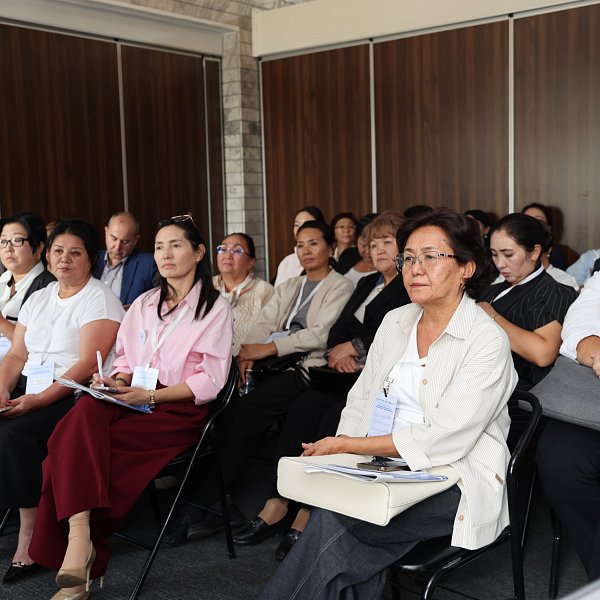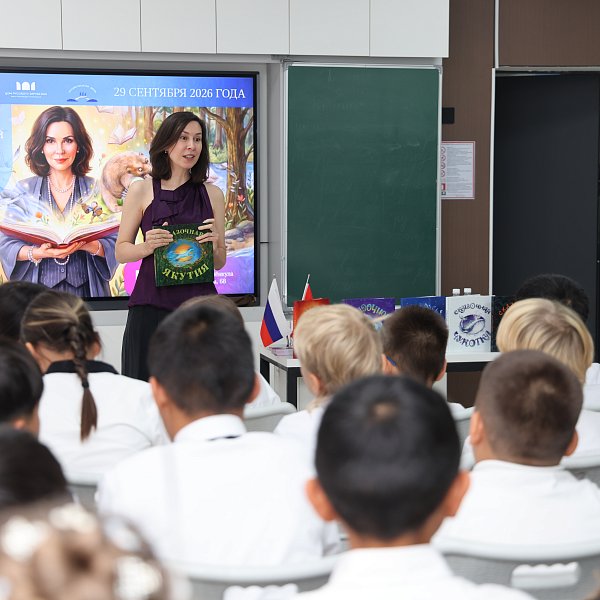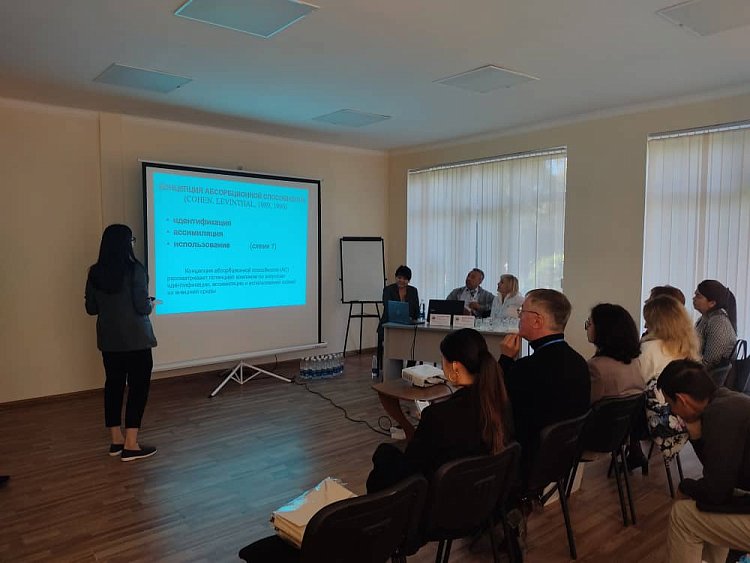
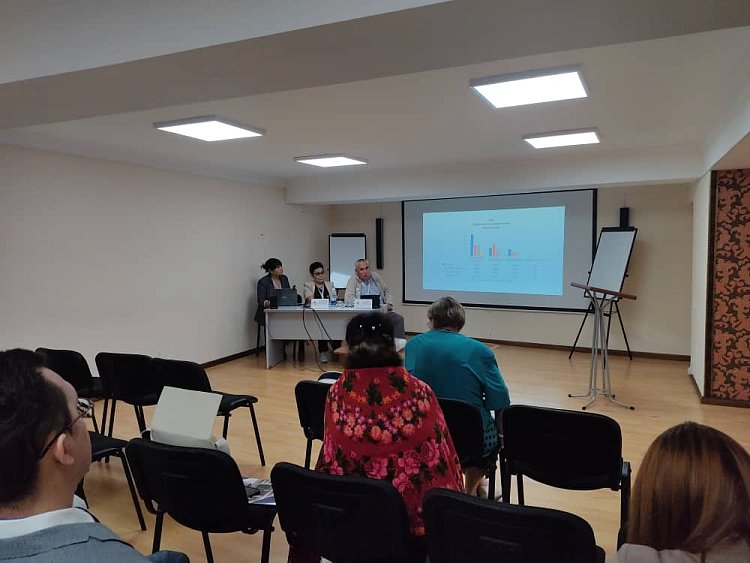
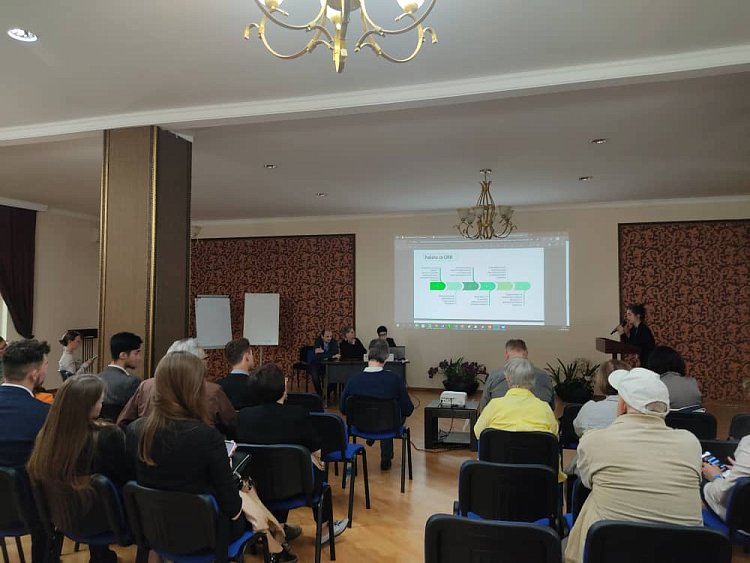
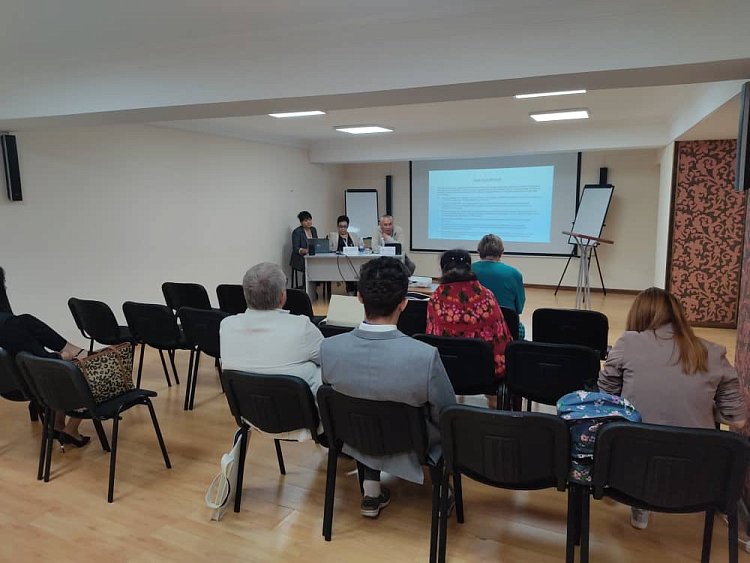
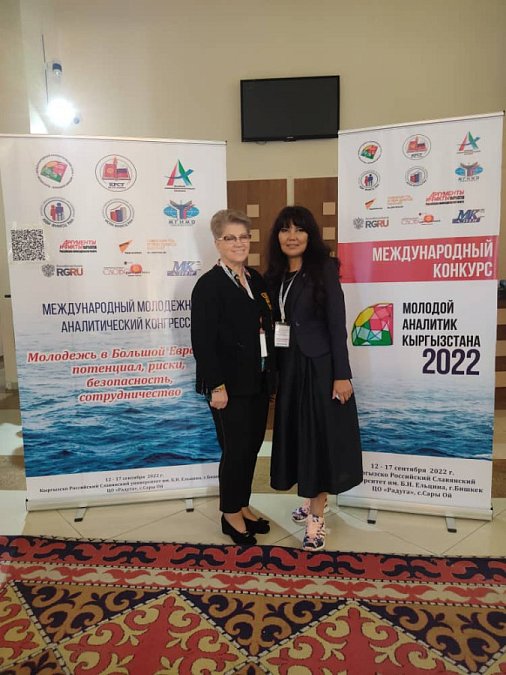
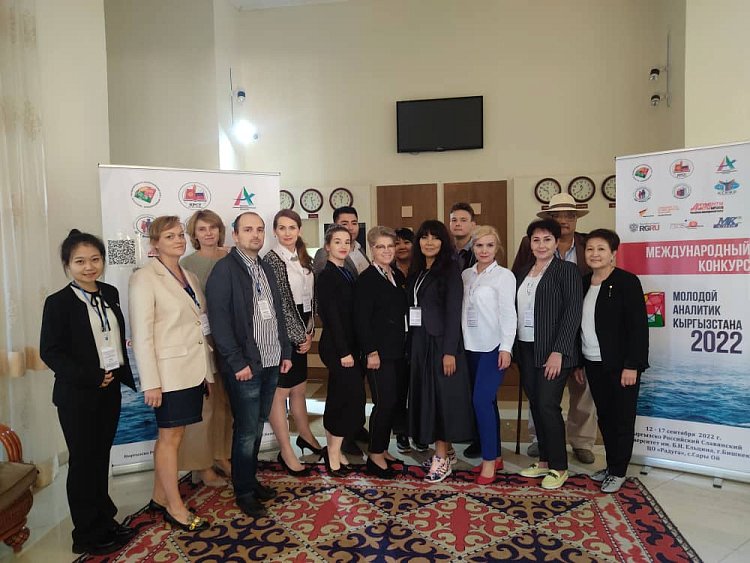
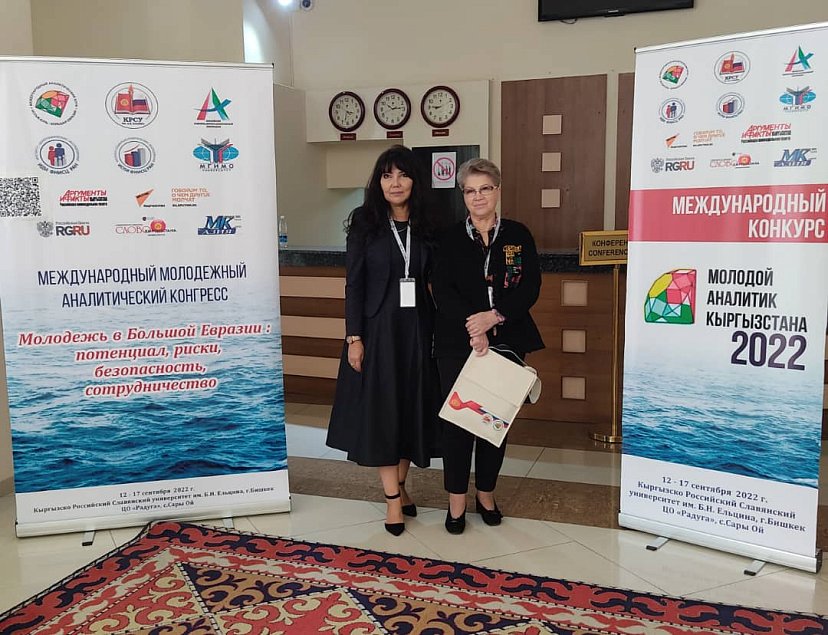
On September 14, 2022, the Congressional Sections opened:
Kocherbaeva Ainura Anatolyevna, director of the International Analytical Club «Issyk-Kul – Greater Eurasia», professor of the Department of Management of the Kyrgyz-Russian Slavic University. B.N. Yeltsin, Doctor of Economics, Professor;
Volchkov Vitaly Yurievich, executive Secretary of the EIAC Coordination Council, Candidate of Historical Sciences;
Kharchenko Viktor Alekseevich, advisor to the Embassy of the Russian Federation in the Kyrgyz Republic, Doctor of Political Sciences;;
Kurylyoin the Konstantin Petrovich, professor of the TIMO RUDN University Department, Director of the Center for Research of Post-Soviet Countries, editor-in-chief of the journal «Post-Soviet Studies», President of the Association of Baltic-Black Sea Studies, Doctor of Historical Sciences, Professor
Alimzhanova Nilufar Yakubzhanovna, deputy of the Jogorku Kenesh of the Kyrgyz Republic of the VII convocation;
Soburova Zhyldyz Kanchyrbekovna, expert of the department of the Committee on Social Policy of the Jogorku Kenesh of the Kyrgyz Republic.
/images/news/mak/images/_31A3371.JPG
/images/news/mak/images/_31A3389.JPG
/images/news/mak/images/_31A3400.JPG
/images/news/mak/images/_31A3408.JPG
The speeches were of a deep scientific, theoretical and practical nature and contained an in-depth analysis of the integration processes of Greater Eurasia.
During the speeches, proposals were made for the development of social and humanitarian cooperation between the countries of Greater Eurasia, improving tools and mechanisms of interaction in the field of culture, science, education, mass communications, sports, tourism, paying special attention to working with youth, identifying subjects for organizing humanitarian cooperation, sources of financing, performance assessment.
|
Block 1. Economy and migration processes in Greater Eurasia |
||
|
Work of sessions 10.00-12.00 |
||
|
Integration processes in Greater Eurasia Moderators: Brovko Natalya Anatolyevna Shcherbakova Alina Vyacheslavovna |
Section 1.2. Technological security of the EAEU
Moderators: Kudaykulov Marat Kyshtooevich Manakhova Irina Viktorovna
|
Section 1.3. Migration processes in Greater Eurasia
Moderators: Savin Victor Evgenievich Bagirova Anna Petrovna
|
|
Block 2: Socio-humanitarian aspects of Eurasian integration |
|
|
Work of sessions 1300-1500 |
|
|
Section 2.1. Socio-humanitarian aspects of Eurasian integration Moderators: Osmonova Nurgul Israilovna Osadchaya Galina Ivanovna |
Section 2.2. The Russian language as the most important factor in the success of integration processes in the countries of the EAEU and Greater Eurasia Moderators: Tagaev Mamed Dzhakypovich Derbisheva Zamira Kasymbekovna |
IN THE sections «Socio-humanitarian aspects of Eurasian integration» 25 participants took part.
The speeches were of a deep scientific, theoretical and practical nature and contained an in-depth analysis of the integration processes of Greater Eurasia.
During the speeches, proposals were made for the development of social and humanitarian cooperation between the countries of Greater Eurasia, improving tools and mechanisms of interaction in the field of culture, science, education, mass communications, sports, tourism, paying special attention to working with youth, identifying subjects for organizing humanitarian cooperation, sources of financing, performance assessment.
Giving humanitarian cooperation meanings and meanings that contribute to the integration process.
The section «Russian language as the most important factor in the success of integration processes in the countries of the EAEU and Greater Eurasia» was attended by scientists, specialists, graduate students and students from the A.S. Pushkin Institute of Russian Literature, RUDN University, South Ural State. University, KRSU named after. B.N. Yeltsin, Osh State University.
The participants' reports stated that the Russian language is a leading communication tool that provides humanitarian, scientific, educational, socio-economic ties between the subjects of Greater Eurasia;
Preserving and strengthening the position of the Russian language in its harmonious interaction with the languages of Greater Eurasia helps strengthen friendship and cooperation, establish harmonious communication in the Eurasian space;