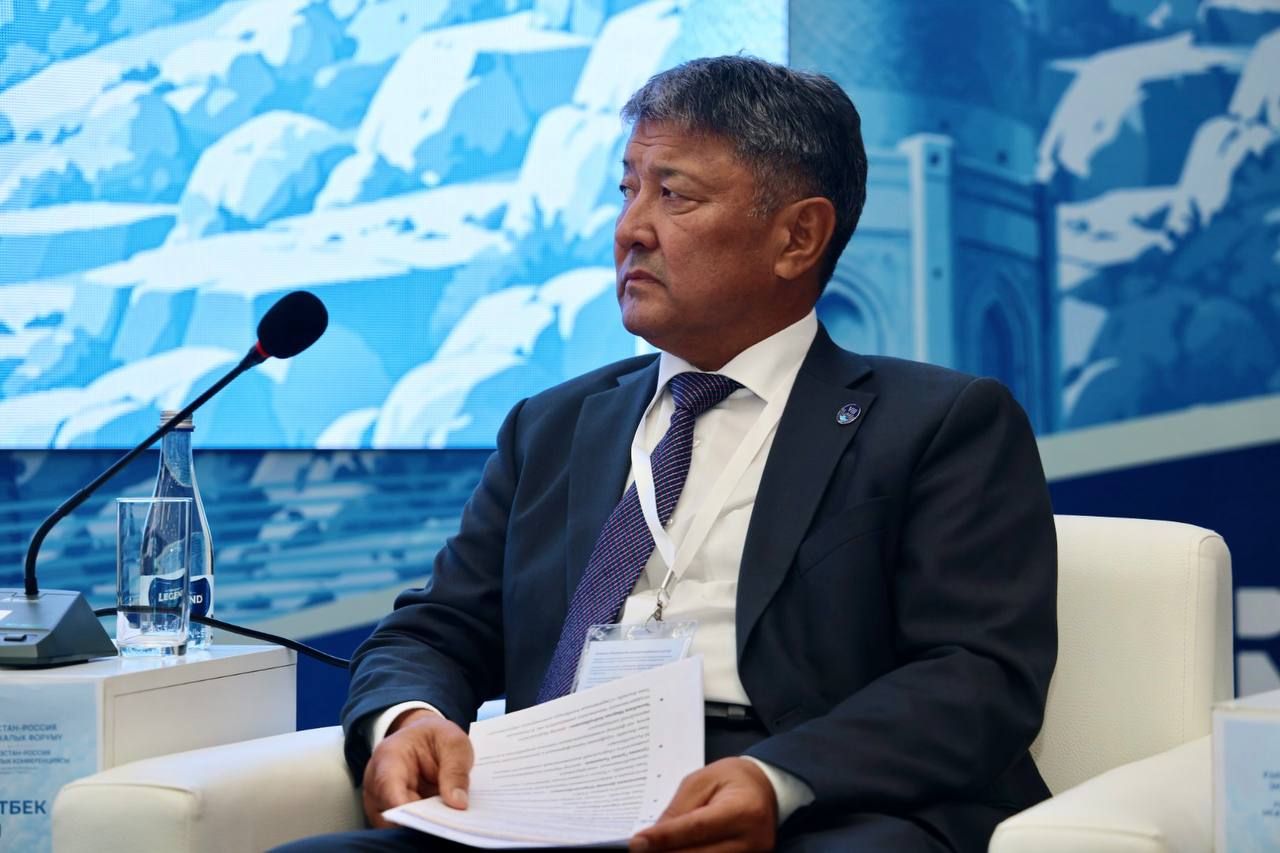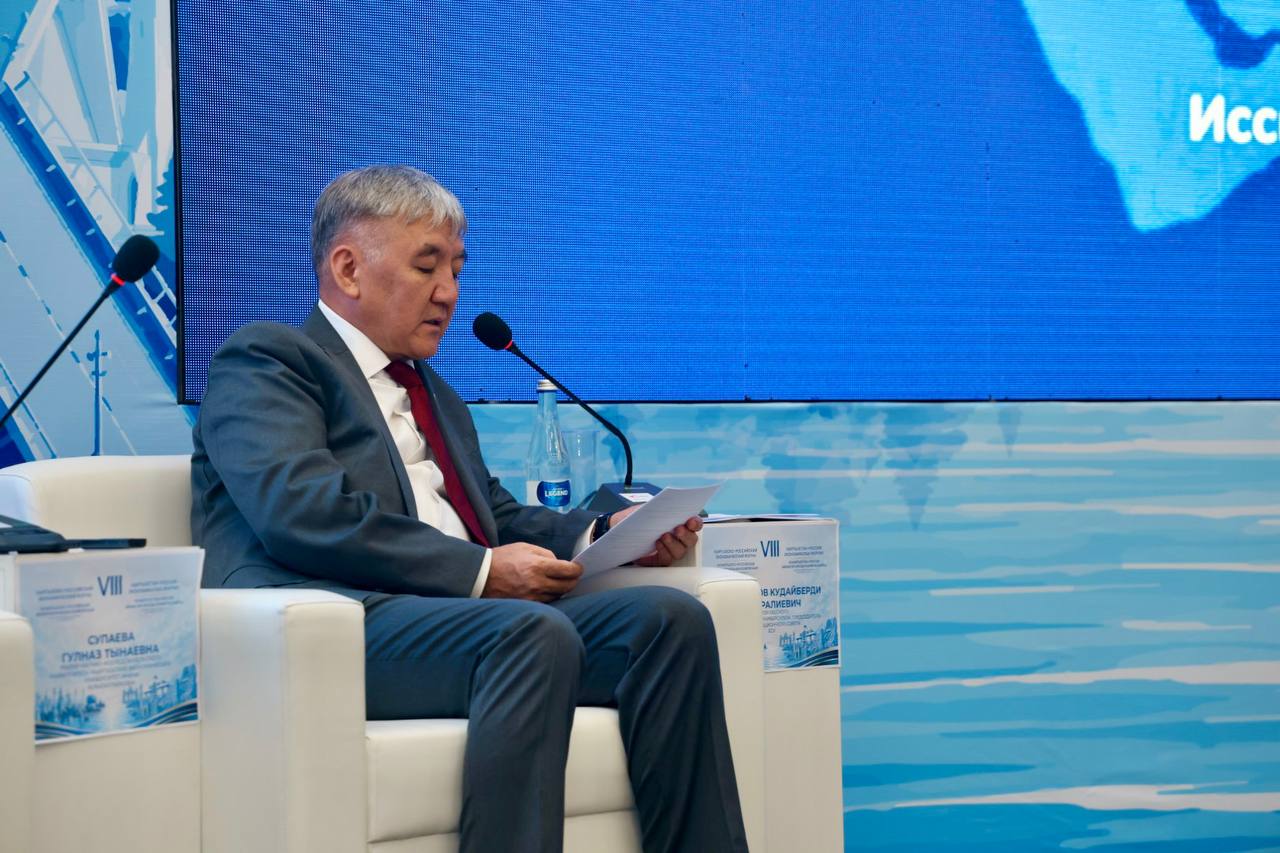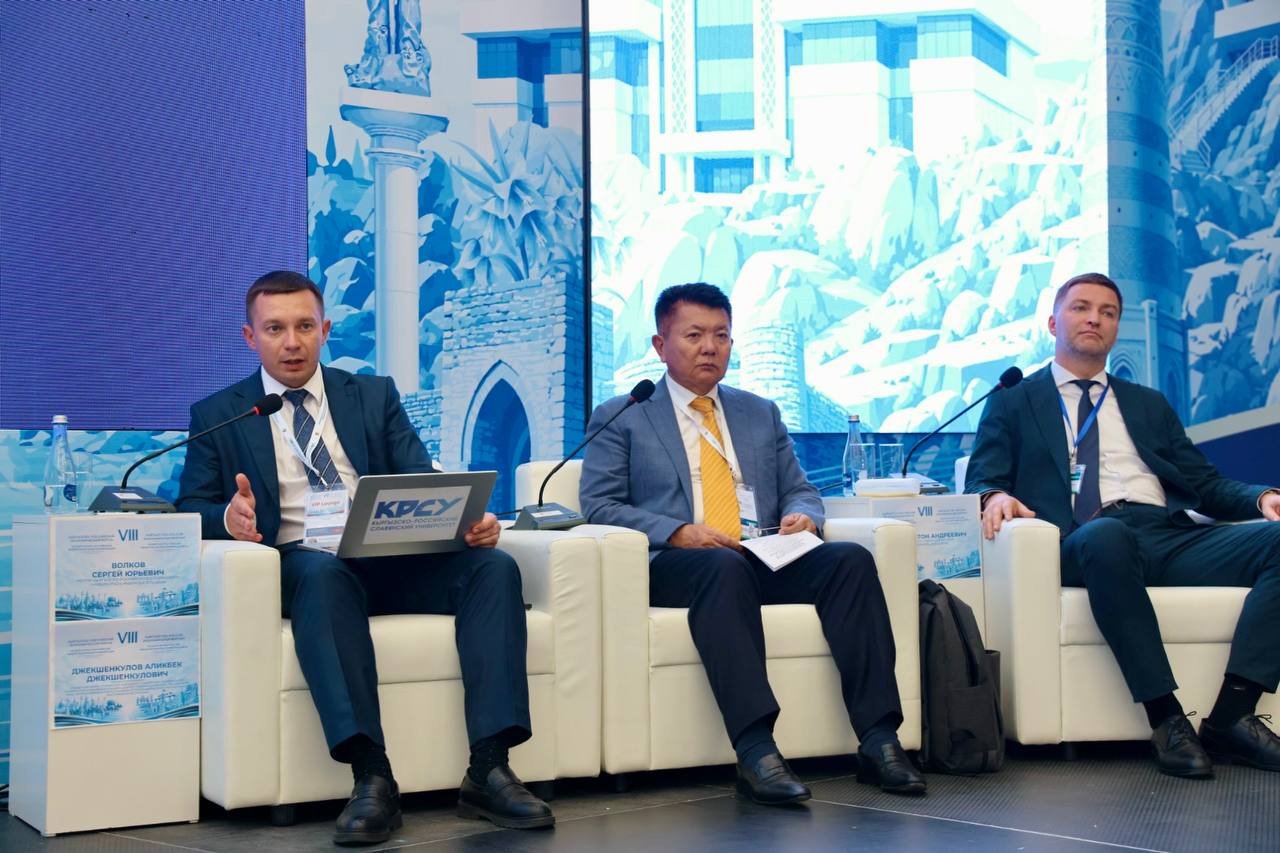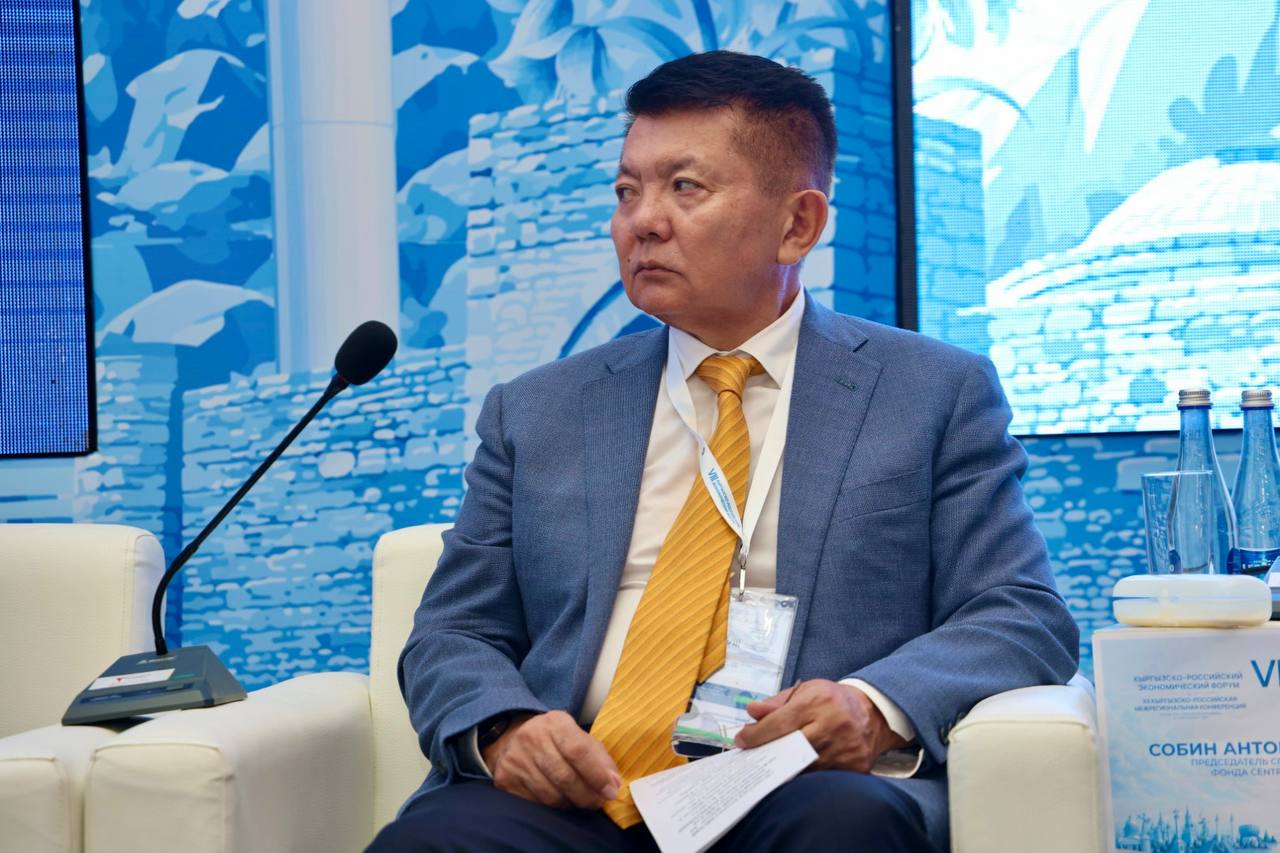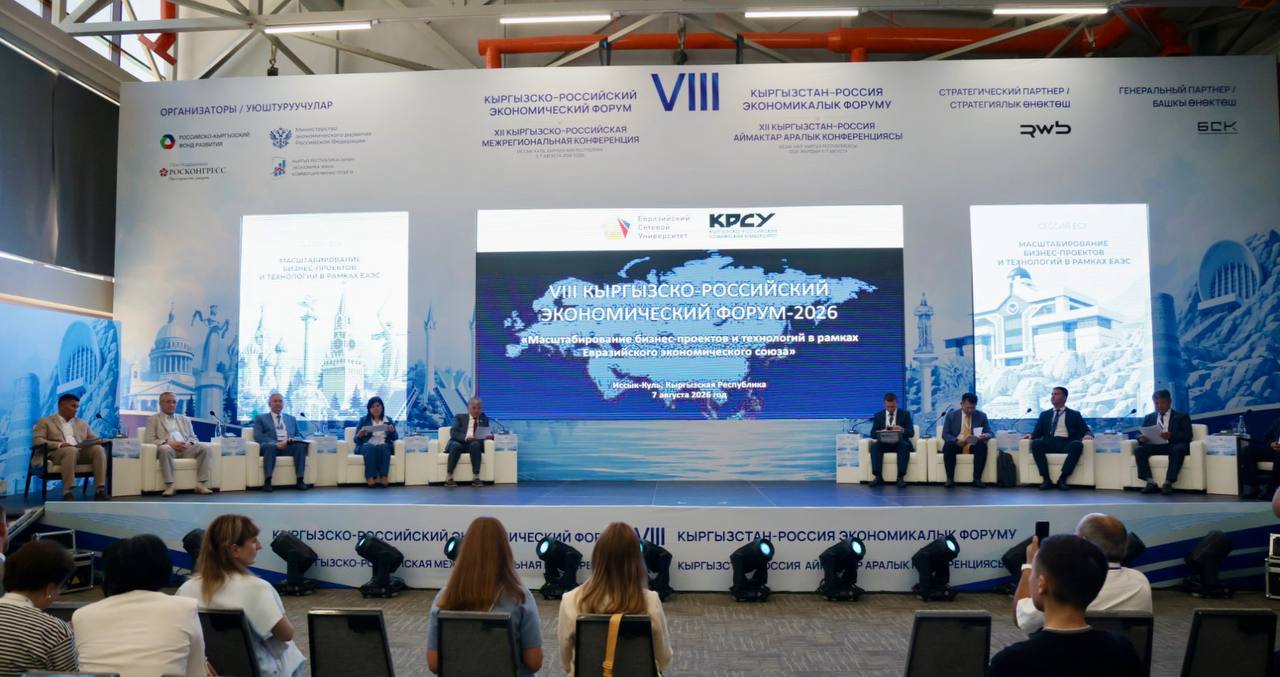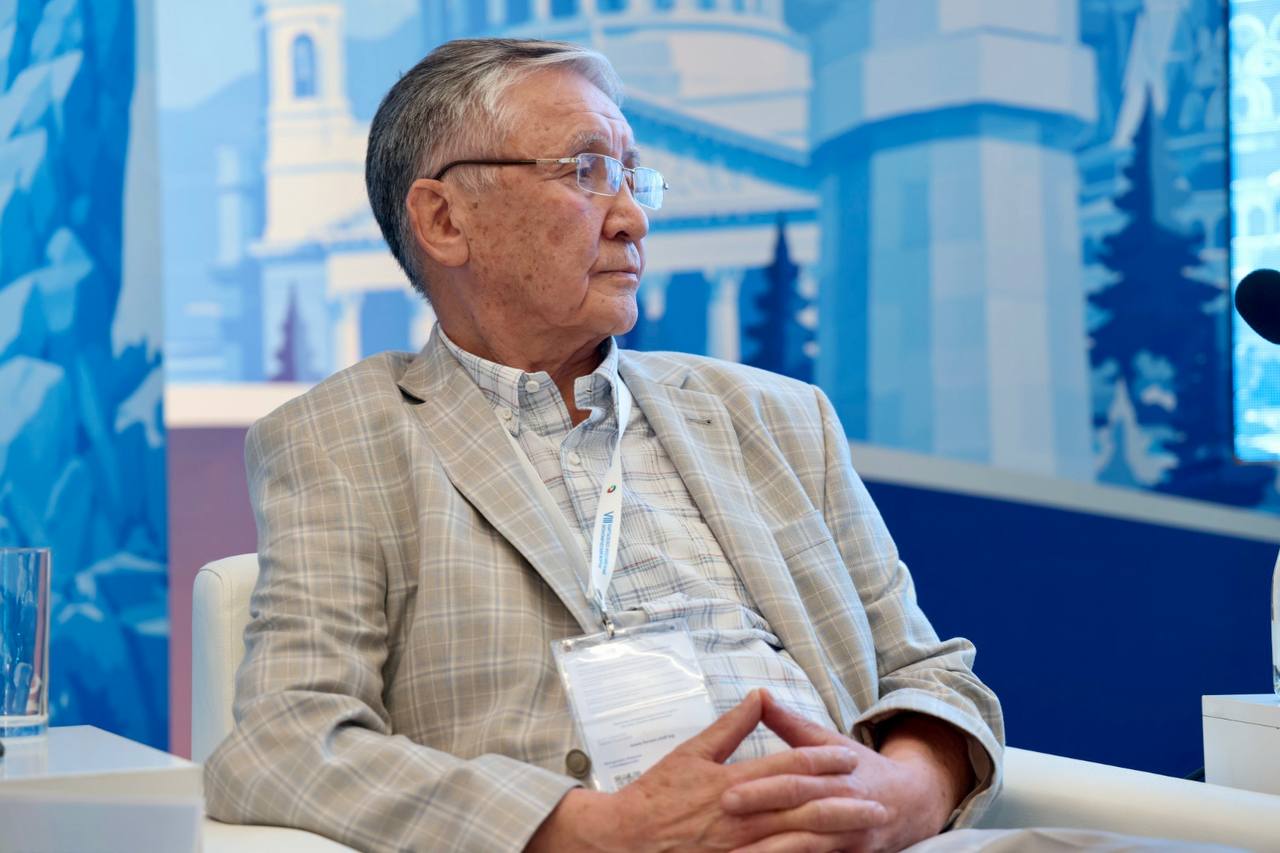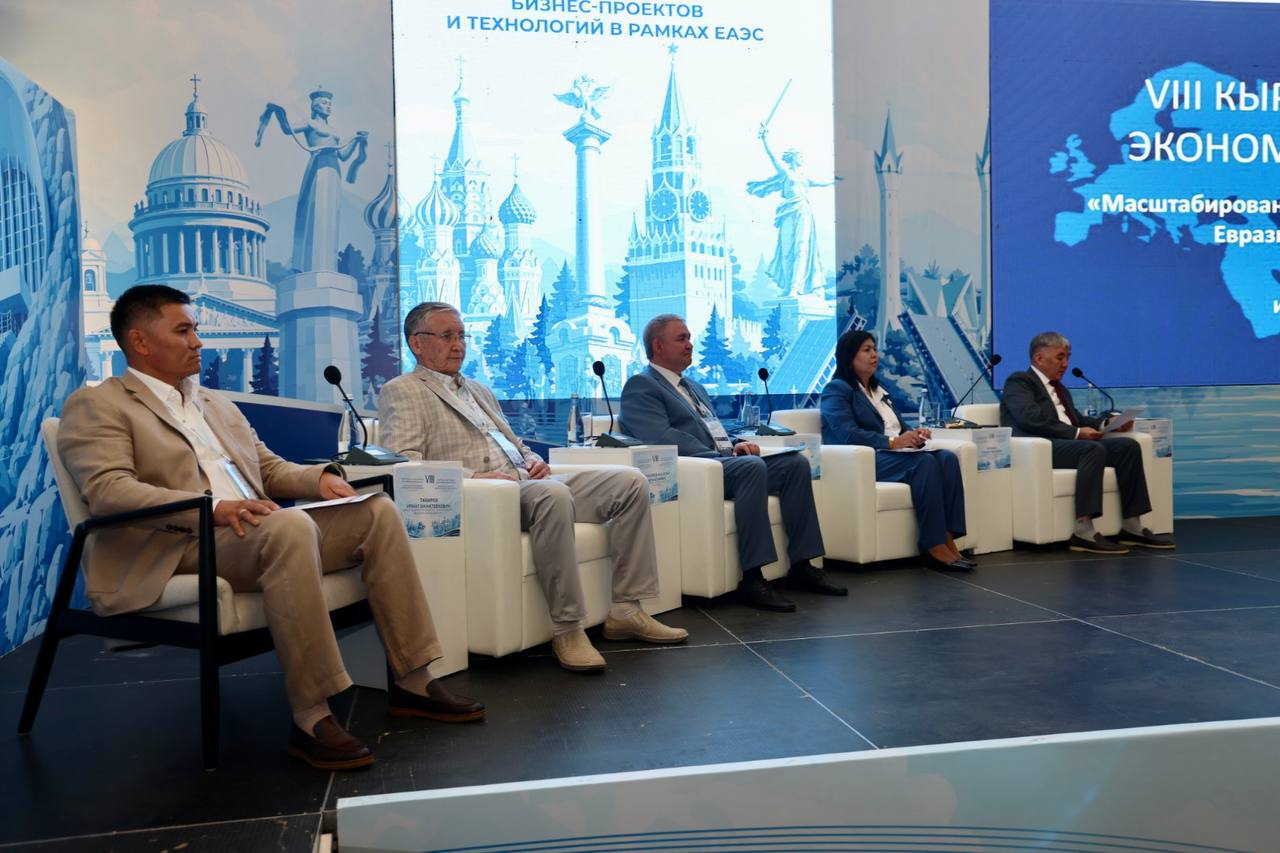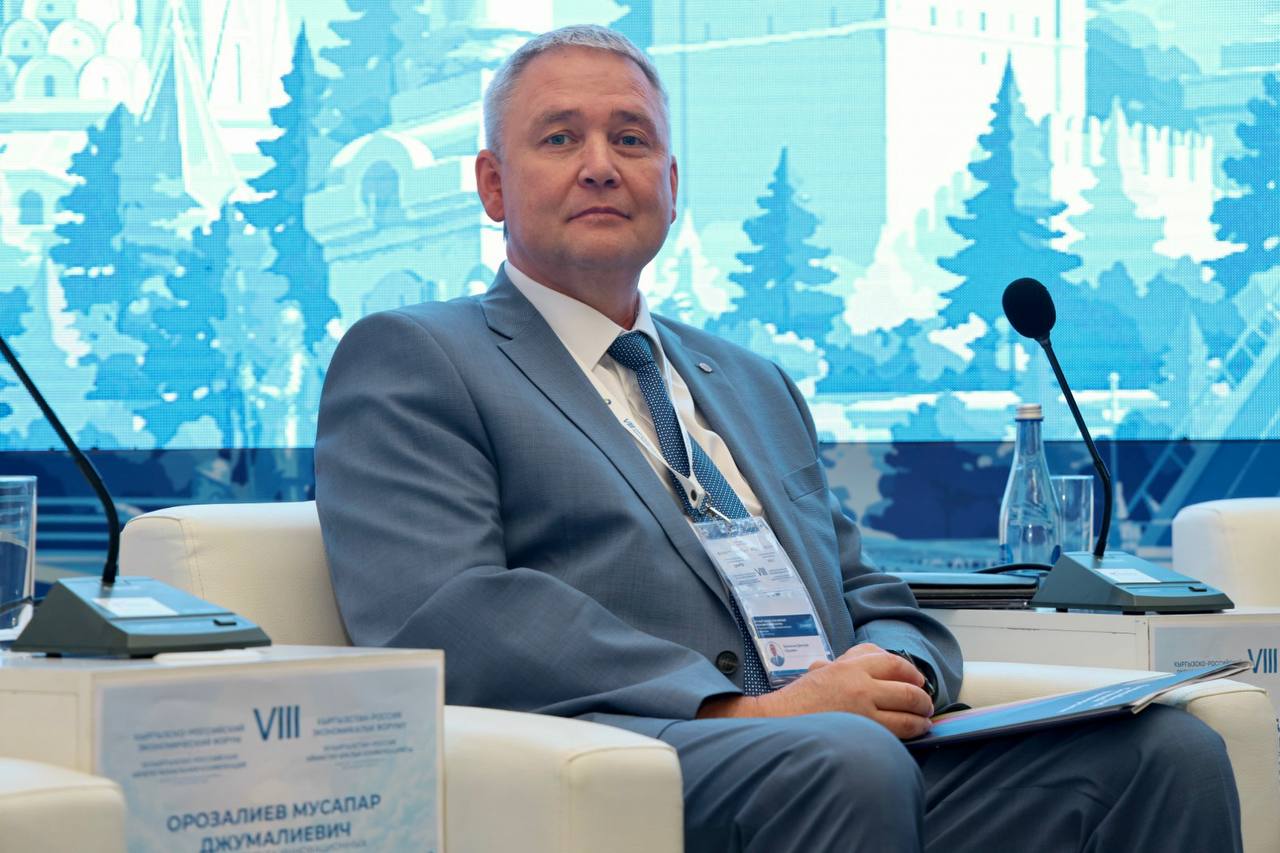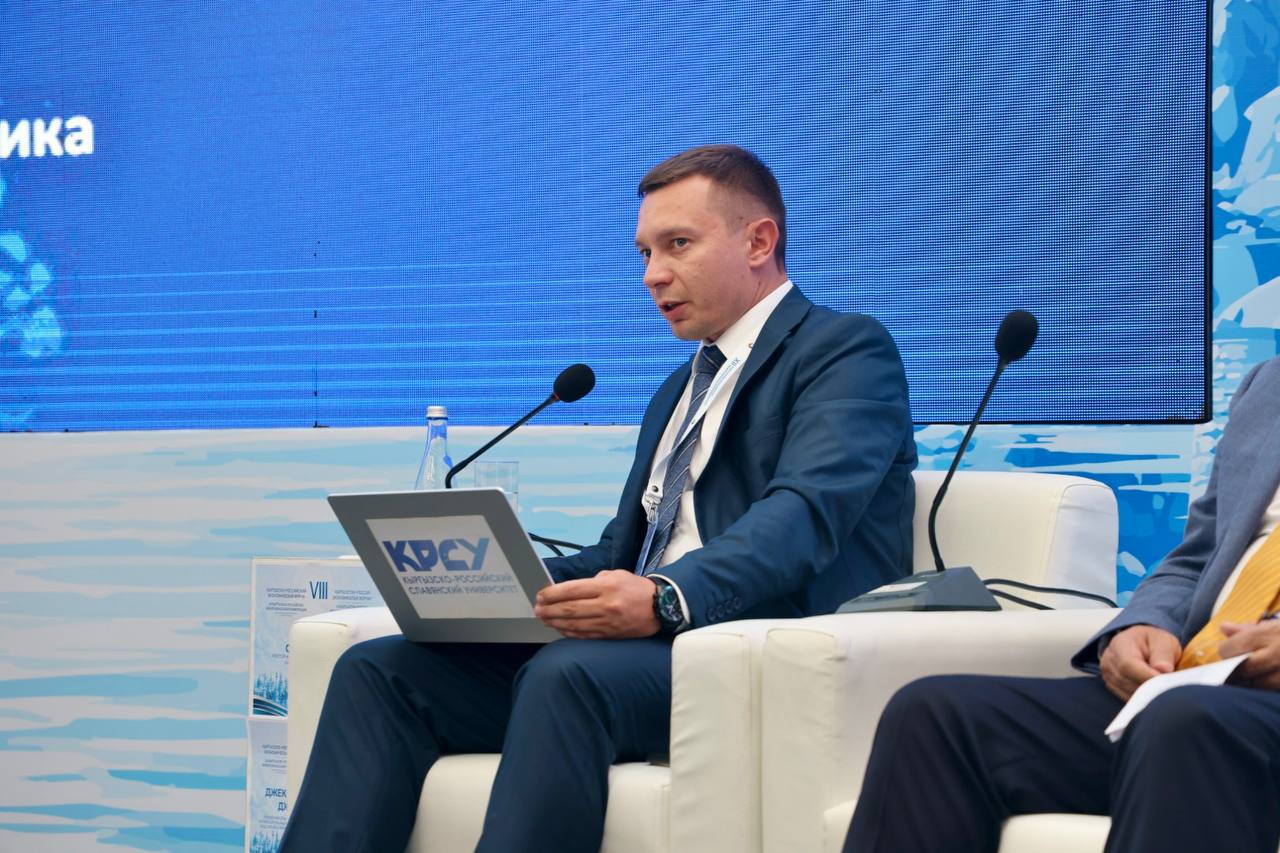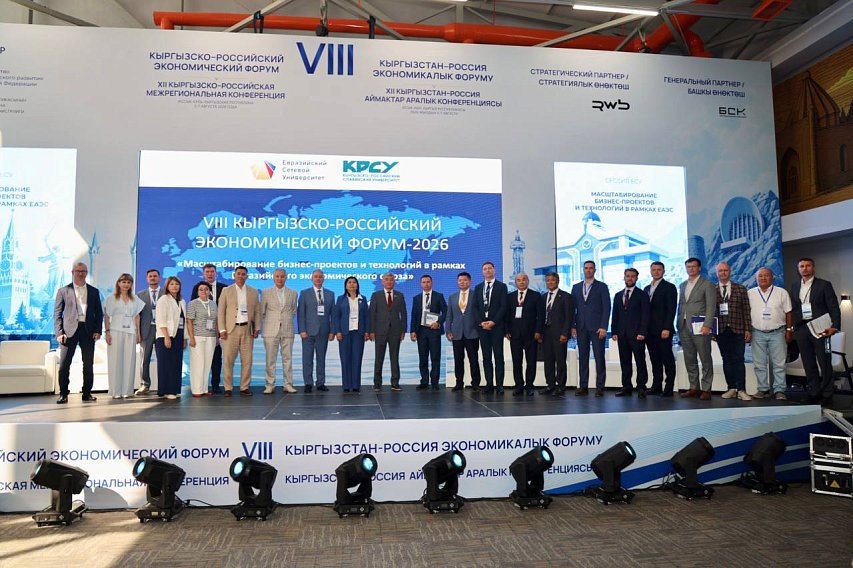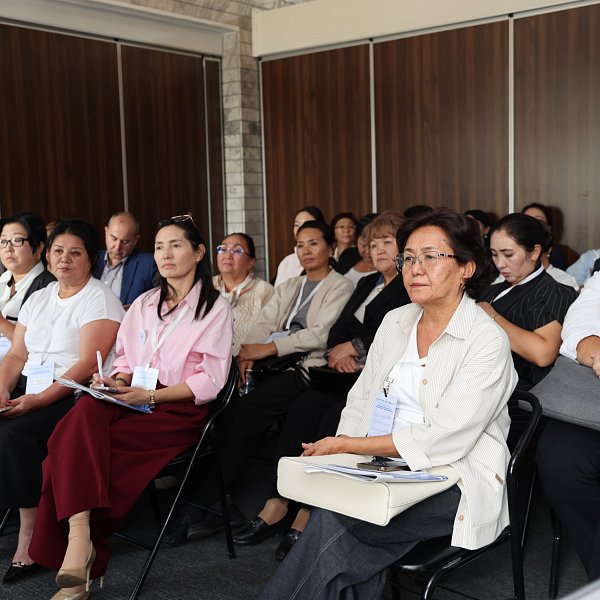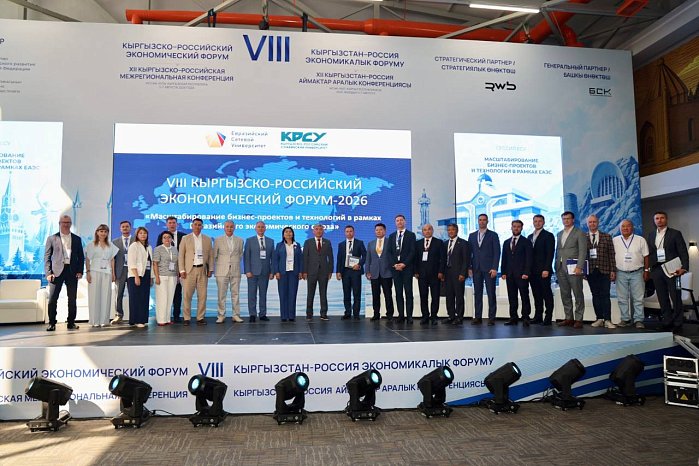
Rector of the Kyrgyz-Russian Slavic University Sergei Volkov moderated the panel session «Scaling of business projects and technologies within the EAEU».The session became a platform for discussing the interaction of business, universities, development institutions and government authorities in the implementation and scaling of technological and investment projects in the space of the Eurasian Economic Union.Participants considered specific cooperation mechanisms, pilot initiatives, issues of commercialization of university developments, training for business, digital transformation, as well as proposals for improving the regulatory environment.Opening the discussion, Sergei Volkov suggested focusing on practical results and specific decisions that could be recorded based on the results of the session and further developed.The rector of KRSU paid special attention to the interaction between universities and the real sector of the economy.«Business needs specialists today, and it takes the university at least four years to train a good specialist. Therefore, constant cooperation is necessary here. In the development strategy of KRSU until 2040, we have enshrined the principle that education should be built through science and production», noted Sergei Volkov.According to him, a modern university should not be limited to training graduates exclusively within the framework of an academic program. Early interaction of students with future employers, business participation in the educational process and the formation of competencies to meet the real needs of the economy are of great importance.The session participants also discussed the role of universities in creating the innovation ecosystem of the EAEU.Rector of the Research University «Kyrgyz Economic University named after M. Ryskulbekov» Gulnaz Supaeva noted the need to form a comprehensive infrastructure around universities, including research centers, laboratories, technology parks, business incubators, technology transfer centers, startup studios, government bodies and international partners.In her opinion, the university is capable of becoming a link between the national education system, the innovation system, business, cross-border scientific and technological networks and technology markets.Among the promising study programs for the Eurasian space were the creation of inter-university digital platforms, cross-border technology transfer centers, joint accelerators and venture mechanisms, the development of grant programs and educational modules aimed at bringing scientific developments to the market.A separate block of discussion was devoted to modern requirements for engineering education.Rector of the Kyrgyz State Technical University named after I. Razzakova Mirlan Chynybaev identified several key trends - strengthening interaction between universities and enterprises, developing dual education, interdisciplinarity, introducing artificial intelligence and digital technologies, as well as training specialists in the field of green engineering.According to him, a modern engineer must have competencies not only in his main specialty, but also in the field of IT, economics, management and sustainable development.Chairman of the Board of Directors of Central Asia Capital Anton Sobin spoke about the practical mechanisms for scaling a business. He presented investment, infrastructure, digital and educational projects being implemented in Kyrgyzstan and emphasized that successful business scaling is impossible without close interaction with government institutions and training of qualified personnel.During the session, examples were given of the development of industrial parks, digital platforms, infrastructure for electric transport, educational projects and the introduction of artificial intelligence technologies.Director of the Center for Development and Promotion of Exports «Kyrgyz Export» under the Ministry of Economy and Commerce of Kyrgyzstan, graduate of KRSU Urmat Takirov drew attention to the need for more active inclusion of business itself in the discussion of integration and educational initiatives.Sergei Volkov noted that it is especially significant for the university to see among the forum participants KRSU graduates who today work in responsible positions in government agencies, business and development institutions. He also invited graduates to become more actively involved in the formation of the university community and interaction with students.Professor KRSU, Doctor of Political Sciences, ex-Minister of Foreign Affairs of Kyrgyzstan, Ambassador Extraordinary and Plenipotentiary Alikbek Dzhekshenkulov in his speech focused on the personnel component of large Russian-Kyrgyz and Eurasian projects.He emphasized that the availability of funding, infrastructure and political will in itself does not guarantee the successful scaling of projects if there are no specialists capable of working simultaneously in the technical, legal, economic and management circuits of several countries.«A project cannot scale faster than the required competence is reproduced. Money, equipment and permitting procedures can be accelerated. Specialist training must begin in advance», noted Alikbek Dzhekshenkulov.According to him, a special role in such work belongs to KRSU as a university of joint subordination of Kyrgyzstan and Russia.Specific proposals included the inclusion of a personnel component in large projects financed by development institutions, the transition from general memorandums to tripartite agreements between universities, enterprises and development institutions, the launch of network master's programs to train specialists in cross-border infrastructure projects and international economic law, as well as the development of systematic work with graduates.Vice-Rector of the State University of Management Dmitry Bryukhanov presented the experience of the Eurasian Network University. He spoke about the implementation of joint programs of additional professional education and master's programs aimed at training specialists for the processes of Eurasian integration.According to him, the further development of the network university can become one of the tools for implementing the initiatives formulated during the panel session.Bringing the discussion to a practical level, the participants agreed that scaling business and technology in the EAEU space requires not individual initiatives, but a stable system of interaction.The key elements of such a system should be joint training of personnel, participation of employers in the educational process, development of digital platforms and technology transfer, commercialization of university developments, support for innovative projects and closer coordination of universities, business, government and development institutions.The panel session showed that universities can become one of the central platforms for such cooperation - uniting education, science, technology and the real needs of the economies of the EAEU countries.