How to teach foreign languages online?

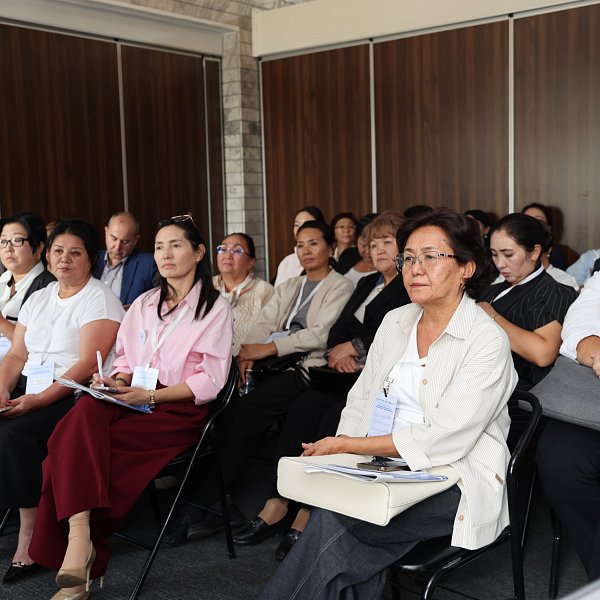
On January 14, employees of the Department of Foreign Languages KRSU took part in an online scientific and practical seminar «New in teaching foreign languages», organized by the Mordovian State Pedagogical University.
The event participants were greeted by Doctor of Philosophy, Dean of the Faculty of Foreign Languages of Moscow State Pedagogical University named after M.E. Evseeva (Saransk, Russia) Svetlana Piskunova. According to her, the main goal of the seminar – is to exchange experience in distance work of foreign language teachers from different countries in a pandemic and to find adequate ways to preserve the quality of higher education in situations similar to the current one. In particular, S. Piskunova noted the importance of searching and adapting existing educational platforms and creating new ones, as well as the need to introduce an electronic dean’s office and tutors for e-learning.
Professor, Head of the Department of English Philology, Moscow State University named after N.P. Ogareva (Saransk, Russia) Konstantin Svoykin made a presentation on: «Organisation of training activities during social exclusion (from work experience)».
Teacher of foreign languages at the Termez branch of TPGU named after Nizami (Termez, Uzbekistan) Oybek Khushbokov shared observations of how writing helps improve foreign language skills.
Methodologist for foreign languages of the publishing house's information and methodological center «Russian Word», (Moscow, Russia) Natalya Sleptsova presented a presentation «Communicative-cognitive approach in foreign language education: essence and implementation».
The presentation of the head of the Department of Foreign Languages at KRSU, Associate Professor Marina Yurchenko about «Psychological features of educational motivation of students in distance learning conditions» aroused great interest among students.
Marina Gennadievna spoke about the many years of work of KRSU to solve the problem of digitalization of education at the university: the presence of an electronic IAIS system, which allows not only to regulate the educational process, but also to combat plagiarism through the introduction of an anti-plagiarism system, access of all employees and students to the I-Library electronic library and the presence of its own electronic database of educational and methodological literature, access to Internet simulators for monitoring the knowledge of I-exam students systematic implementation of advanced training courses for employees on the basis of KRSU, adaptation and development of new university educational platforms, in particular Canvas and Jitsi. All these resources allowed the department’s staff to quickly adapt to the distance learning format.