KRSU presented the experience of training specialists for PPP projects at the Kyrgyz-Russian Economic Forum
11 augusta 2026
Share:
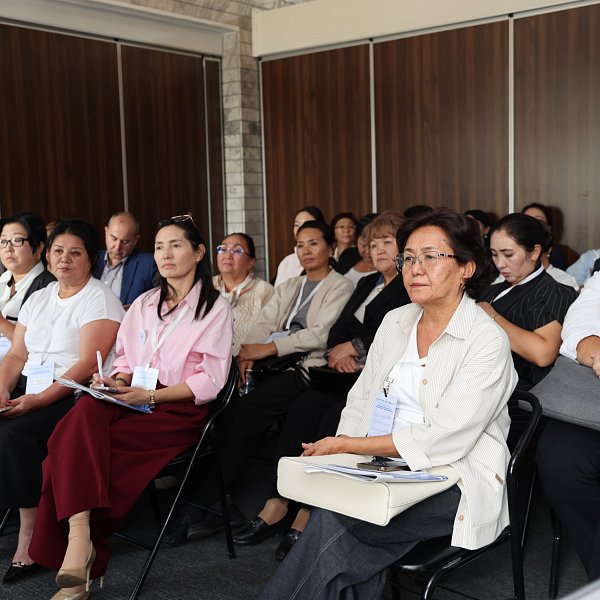
As part of the VIII Kyrgyz-Russian Economic Forum, which was held on August 5-7 in the village of Bosteri, a session of the Eurasian Development Bank (EDB) was held «Development of public-private partnerships in the Kyrgyz Republic: accumulated experience, lessons, architecture of the future». Participants discussed the development of public-private partnership mechanisms, attracting investments and training personnel for the implementation of infrastructure projects.The session was attended by the director of the International Business School KRSU Ainura Kocherbaeva. From September 1, 2026, she will head the new structural unit of the university, created as part of the transition of KRSU to an institute management model.EDB PPP Project Director Svetlana Maslova noted that Kyrgyzstan became one of the first countries in the Eurasian space where a special legal regime was created for the implementation of public-private partnership projects. According to her, the next stage could be support for small projects using a programmatic approach.Director of the PPP Center at the National Investment Agency Nurbek Anarbekin emphasized that over 17 years a comprehensive system for regulating PPP has been formed in Kyrgyzstan. Today, legislation allows the implementation of both large infrastructure projects and initiatives worth up to 100 million soms using a simplified procedure.Deputy Director of the National Investment Agency Damir Bikulov noted that now the key task is to improve the quality of project preparation and their synchronization with national development programs.The cooperation of KRSU with the Eurasian Development Bank is one example of effective interaction between the university and international development institutions. With the support of the EDB, the university has created a personalized bank auditorium, and the best students annually receive personalized scholarships, which helps strengthen the connection between education and practice and train in-demand specialists for the financial and public sectors.The session participants agreed that the further development of public-private partnerships will be associated with attracting investments in infrastructure, education, healthcare, digital technologies and regional projects. One of the key conditions for the successful implementation of these initiatives remains the training of qualified personnel capable of accompanying PPP projects at all stages.