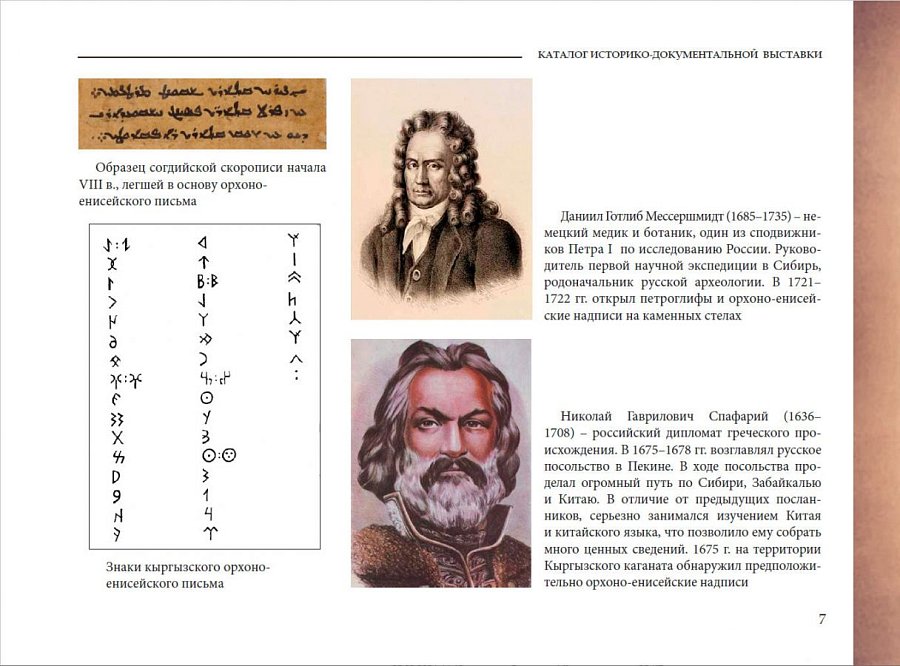
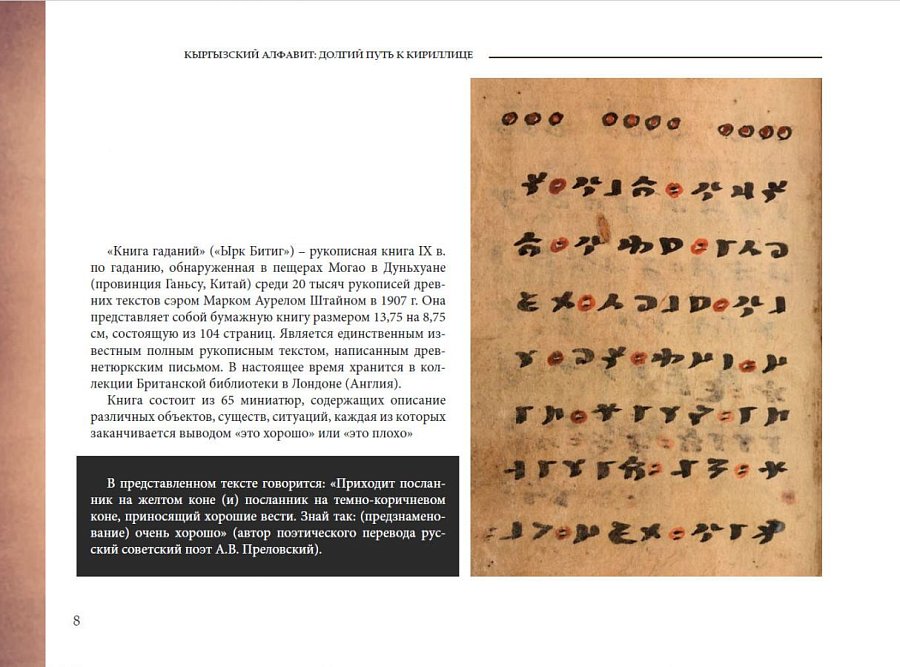
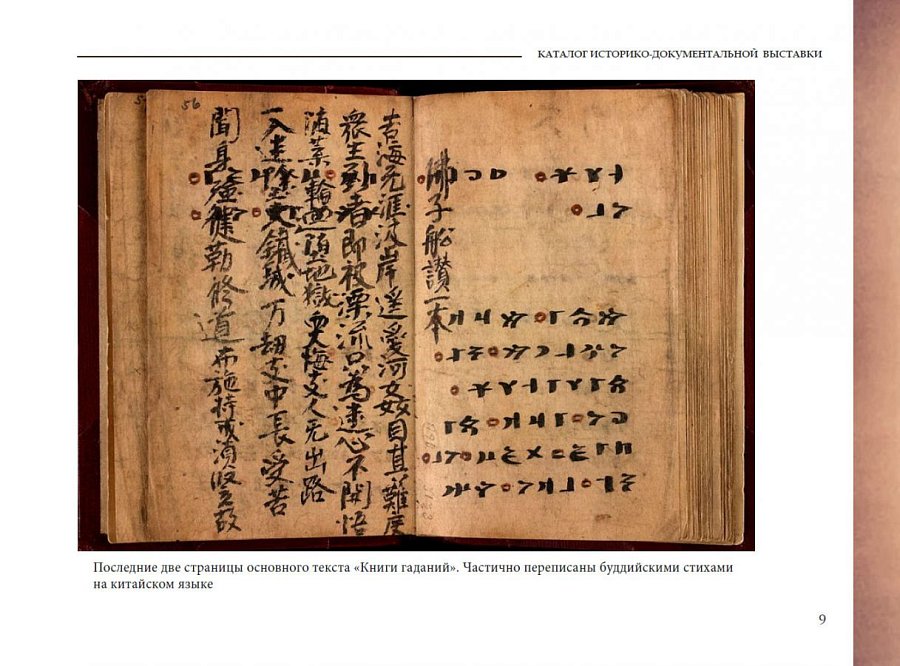
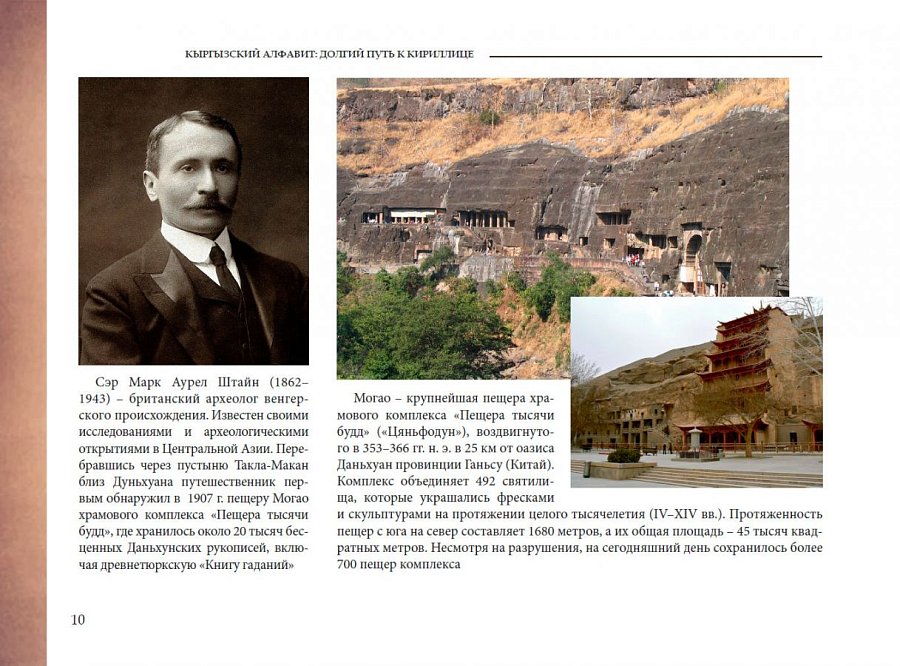
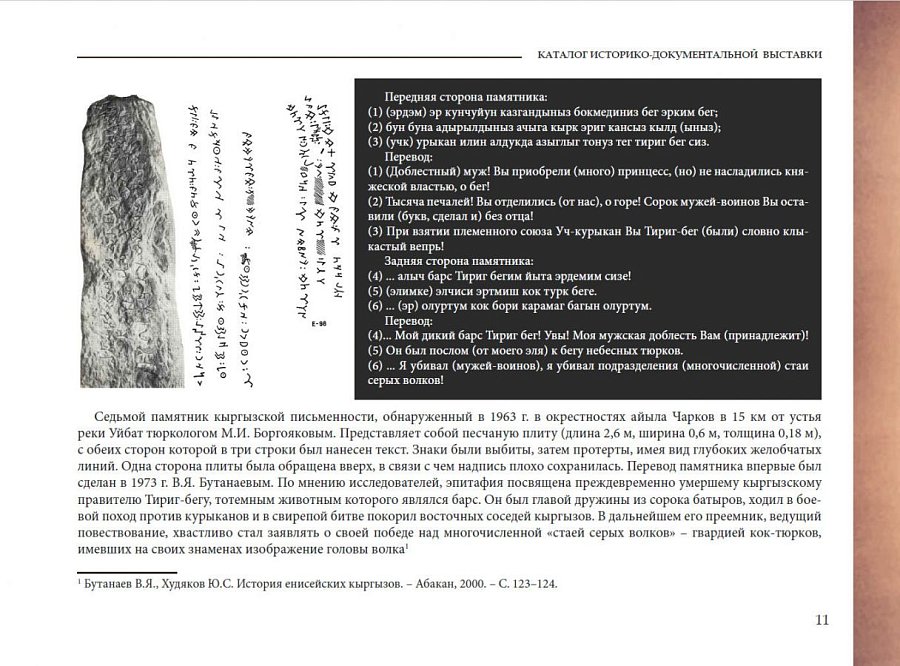
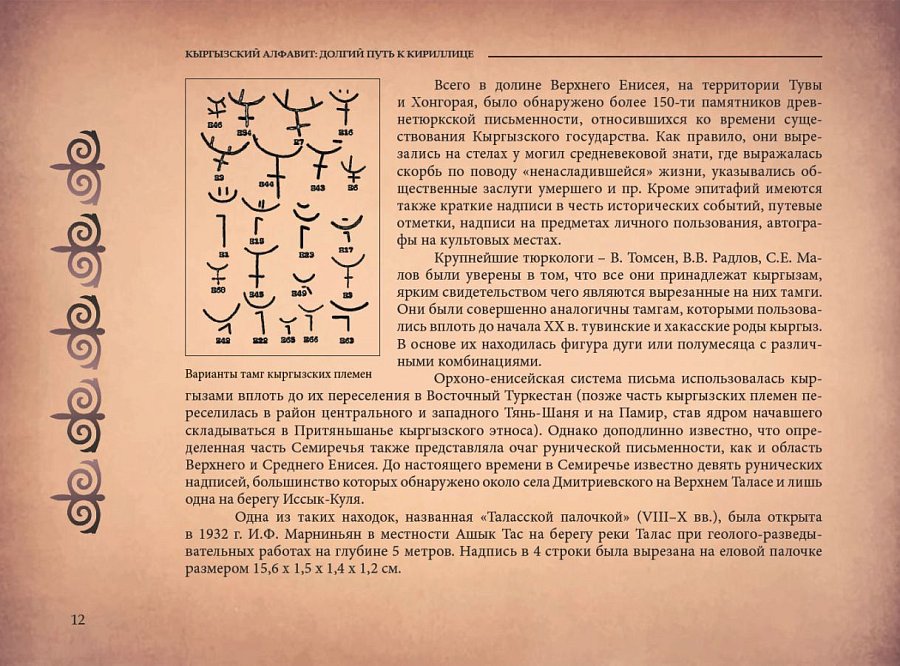
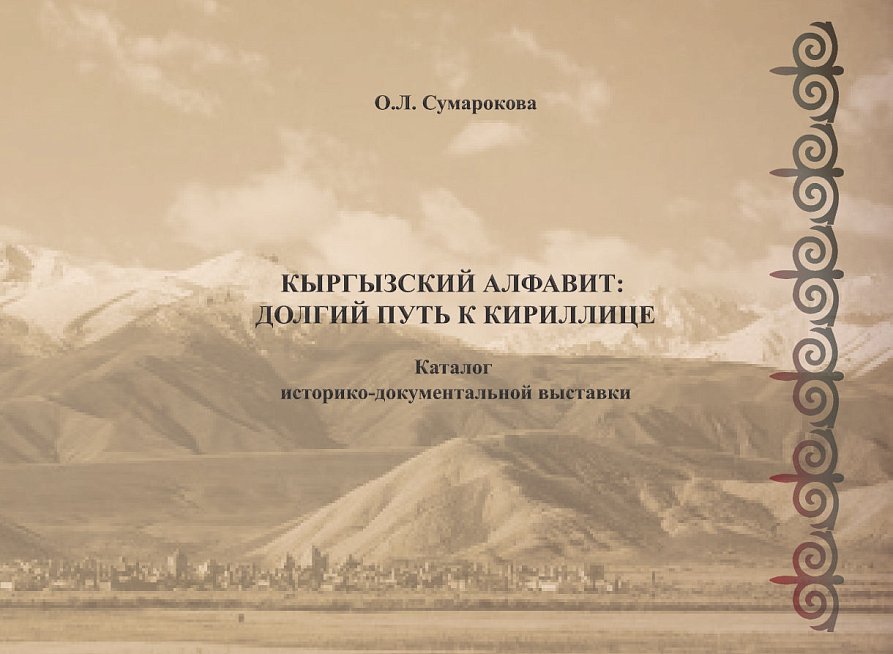
A historical and documentary catalog of the exhibition «Kyrgyz alphabet: a difficult path to the Cyrillic alphabet» was published, dedicated to the 80th anniversary of the adoption of the Kyrgyz alphabet based on Russian graphics. Its author and compiler – Deputy Director of the Russian Language Institute KRSU, Doctor of History. Olga Sumarokova – attempted to present the main milestones in the history of the formation and development of the alphabetical systems of the Kyrgyz language, starting from the times of Kyrgyz statehood on the Yenisei (IV–X centuries) and ending with the alphabetical reform of 1941, which resulted in the adoption of the Cyrillic alphabet by the Kyrgyz SSR.
The structure of the presented work – documentary materials and photographs, accompanied by short historical essays – will allow readers not only to visualize historical facts, but also to immerse themselves in the historical and cultural contexts of alphabetical construction, characterized by the intensity of civilizational dialogue and exchange of ideas, which are revealed on the basis of the methodology of intellectual history. At their center are such outstanding historical figures as the author of the «Collection of Turkic Languages» Mahmud al-Kashgari; founder of the Chagatai language, son of Genghis Khan Chagatai; authors of the first printed publications in the Kyrgyz language Osmonaly Sydykov, Moldo Kilych and Moldo Niyaz; authors of the idea of developing a national alphabet for the Kyrgyz language based on the Cyrillic alphabet, orientalist Nikolai Ivanovich Ilminsky, Minister of Public Education of the Russian Empire Dmitry Andreevich Tolstoy first Turkestan Governor-General Konstantin Petrovich von Kaufman; compiler of one of the first textbooks on the Kyrgyz language, in which a modified Cyrillic alphabet was applied to Kyrgyz words, Orientalist, inventor, Major General Mikhail Afrikanovich Terentyev; one of the reformers of the Arabic alphabet, Kyrgyz linguist Ishenaly Arabaev; ideologist of the Latinization of the Kyrgyz alphabet, Kyrgyz scientist and statesman Kasym Tynystanov; an outstanding Soviet lexicographer, participant in all alphabetical reforms carried out during the Soviet period one of the authors of Kyrgyz orthography, «father» of the Kyrgyz Oө and Үү Konstantin Kuzmich Yudakhin and, of course, the Kyrgyz people.
According to the author-compiler of the historical and documentary catalog, the Cyrillic alphabet adopted in 1941 by the Kyrgyz SSR, which perfectly reflects the phonetic features of Kyrgyz speech, gave a tangible impetus to the development of the Kyrgyz literary language, proving its convenience and simplicity for 80 years. In addition, Russian graphics have opened up the opportunity for Kyrgyz youth to freely master the Russian language, and through it get acquainted with the achievements of Russian and world science and culture, creatively rethinking them and weaving them into the outline of national culture.
Meanwhile, Olga Sumarokova believes, not a single stage in the development of Kyrgyz writing was accidental and meaningless. Each writing system was a way for the Kyrgyz people to become aware of themselves and the world, self-expression, spiritual practice of seeking truth by entering the blood and flesh of the Kyrgyz nation.
The publication is based on documentary materials stored in state funds of the Kyrgyz Republic, regulatory documents and rare publications of past centuries, and is aimed at a wide range of readers. The material presented in it can be used for educational purposes, as well as, in agreement with the author, – for organizing traveling school and university exhibitions.
Download, view the catalog of the historical and documentary exhibition "KYRGYZ ALPHABET: THE LONG ROAD TO THE CYRILLIC ALPHABET."