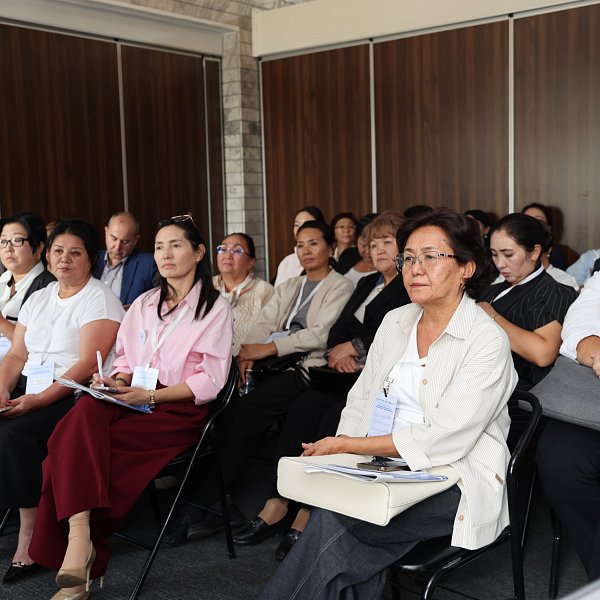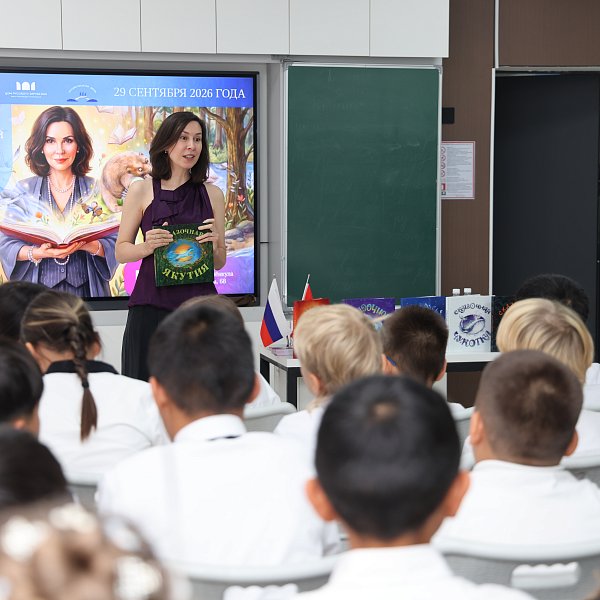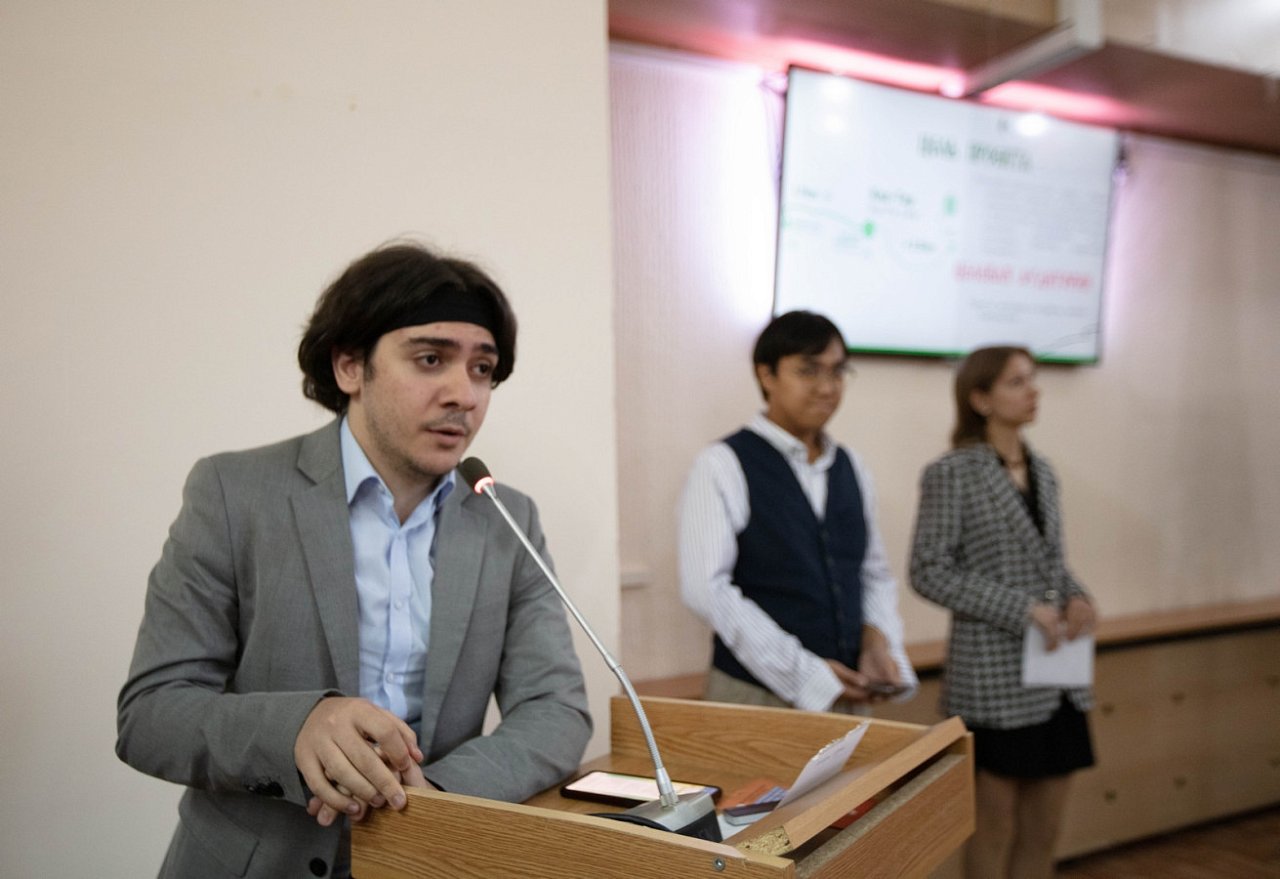
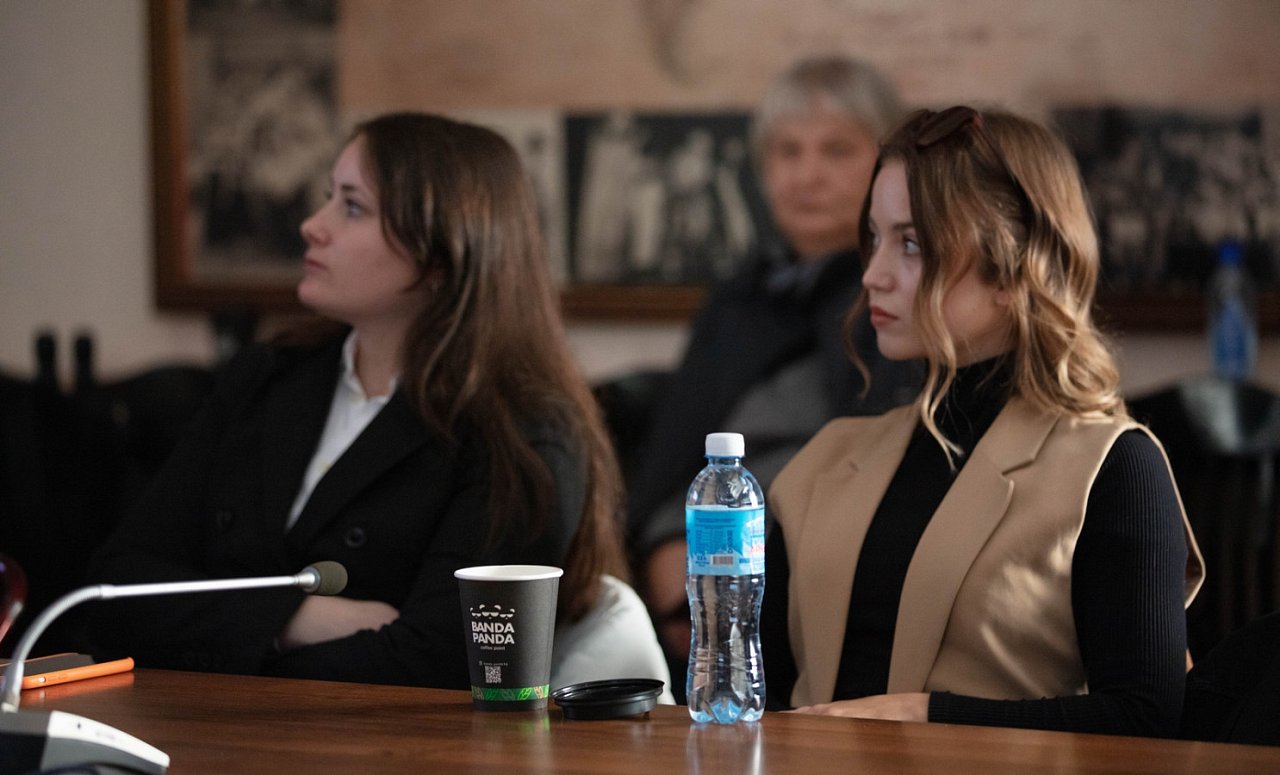
In the capital of the Kyrgyz Republic, Bishkek, the International Youth Historical School (IIS) has come to an end. The events, which were held over seven days, were devoted to the topic «Common history as a resource for the joint development of Russia and countries – members of the Commonwealth of Independent States». We talk about the final events of the project.
In the last days of the project, school participants listened to a series of educational lectures prepared by representatives of the Russian scientific community. The first speaker was Daniil Anikin, associate professor of the department of history and theory of politics at Lomonosov Moscow State University. He gave a lecture on the topic «In Search of a Steppe Empire: The Legacy of Genghis Khan in the Historical Politics of Russia and Central Asia».
The speaker examined in detail approaches to interpreting the influence of the legacy of the Mongol Empire on the economy, culture, politics and other spheres of life of Rus' and, subsequently, the Soviet Union. He noted the difference in the perception of historical continuity between the countries of Central Asia and Russia, emphasizing that there is no unambiguous attitude towards these issues in modern science. Daniil Anikin also analyzed the changing views of scientific figures from different eras on the role of the invasion of the troops of the Golden Horde: from the establishment of the myth of «the yoke» and the opinion about the allied relations of Rus' and the Mongols of Lev Gumilyov to the formation of modern historical concepts and interpretations of the events of those years.
Part of the lecture was devoted to the role played by past researchers in socio-political processes, how often the results of their work become tools for promoting ideas and achieving their own goals by government structures. Daniil Anikin drew the participants' attention to the most controversial moments in Russian history, the unambiguous interpretation of which is still not possible and creates tension in the public consciousness.
Next, the head of the Center for Economic History of the Institute of Russian History of the Russian Academy of Sciences, Professor Viktor Kondrashin gave a lecture «The economy of the Russian Empire and the USSR in the era of industrial modernization (second half of the 19th – first half of the 20th centuries): regional aspect».
The speaker examined the process of transformation of Russia from a country with a peasant agricultural economy into a developed industrial power. Particular attention was paid to the impact on the development of industry during the period of government reforms and social upheavals. In particular, Viktor Kondrashin noted that the October Revolution of 1917 became possible due to the reaction of the peasant country to the industrial modernization of the tsarist autocracy.
The lecture examined the main reforms of the tsarist and Soviet governments and their differences, the measures that were taken to achieve the goals of industrialization, and the problems that it brought to the peasant economy. Viktor Kondrashkin devoted part of his speech to the topic of economic development of Turkestan in the pre-revolutionary era, Central Asia and, in particular, Kyrgyzstan today.
The next speaker to the children was Evgeniy Krinko, Deputy Director for Scientific Work of the Southern Scientific Center of the Russian Academy of Sciences. The topic of his lecture was «The Great Patriotic War as a place of memory of Russia and other post-Soviet states».
The speaker described the work of the Extraordinary State Commission (ECC) to establish and investigate illegal and criminal acts by Nazi troops committed in 1941-1945, noting that over 7 million people participated in drawing up acts of damage. The results of the work of the ChGK were used in the trials of the invaders. In addition, Evgeny Krinko spoke about the work of the Commission on the History of the Great Patriotic War of the USSR Academy of Sciences. From the first days of the attack on the country by the fascist invaders, the highly qualified scientists who were part of it began collecting materials incriminating atrocities. Information about the heroism shown by Soviet people at the front and in the rear was obtained in the process of studying archival data and presented in the form of monographs and scientific works.
The lecturer paid special attention to preserving in the public consciousness the memory of significant events of the past – commemoration of events related to the Second World War, updating facts, images and historical personalities in the context of modern views. Evgeny Krinko examined the features of memorial policy in the Soviet Union and the Russian Federation, noted differences in approaches to preserving the memory of the tragedy of war in different periods of the history of our country.
Throughout the week, teams of participants developed their projects under the guidance of experienced mentors. According to the assignment, thematically they had to correspond to the tracks in which the students took part: «Memory», «Knowledge», «Connections» and «Culture».
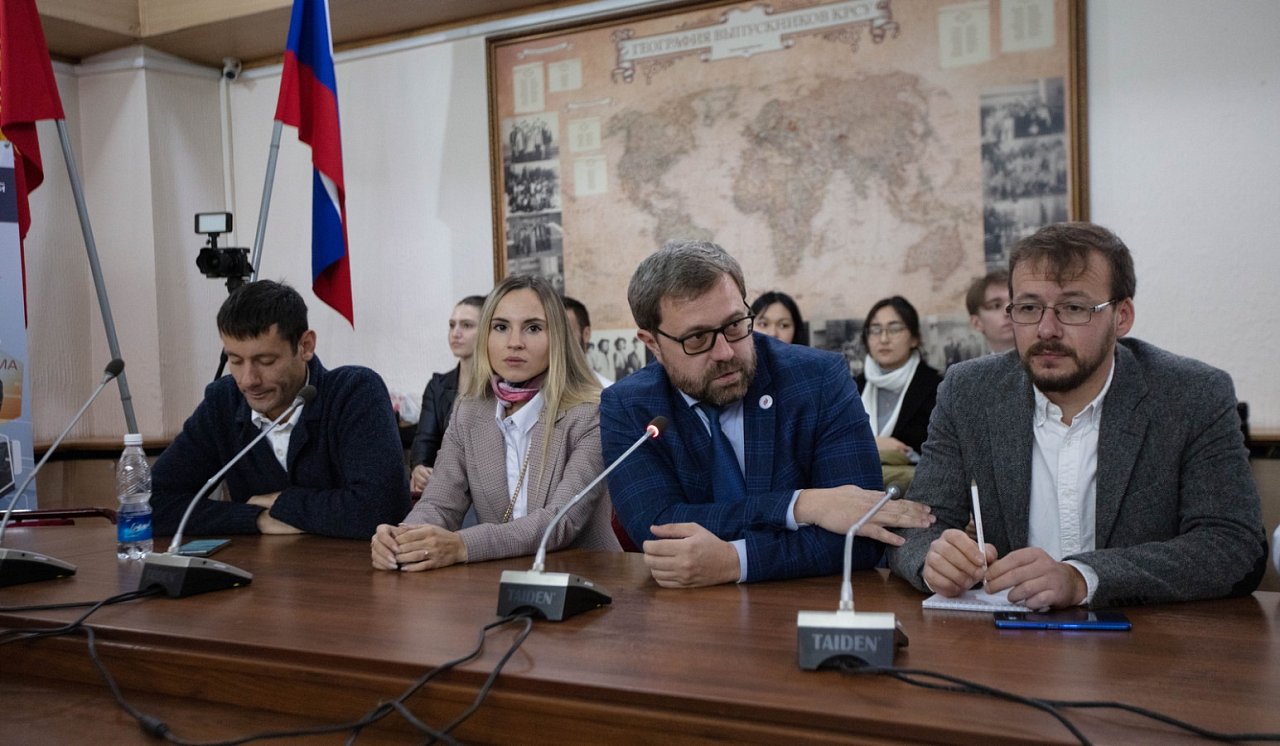
On the last day of the school, the results of the students’ project work were summed up and its results were presented to the jury: the head of scientific and historical and educational projects of the Foundation «History of the Fatherland» Andrey Kokhan, acting, rector of the Kyrgyz-Russian Slavic University named after the first President of the Russian Federation B. Yeltsin Denis Fomin-Nilov, Vice-Rector for Youth Policy and Educational Work of the State Autonomous Institution Anastasia Khatskevich, Advisor to the Rector of KRSU on Strategic Communications Petr Bychkov.
The track team «Memory» presented a project for a tabletop role-playing game «Time of Heroes». Each participant must get used to the role and merge with a character with predetermined goals and initial position who travels to memorable places of the Great Patriotic War and tries to cope with ongoing local and global events. Behind any player's move is the answer to the question of a historical quiz.
Track «Knowledge» presented a draft scientific study on the topic «Comparative analysis of economic reforms in the CIS countries in the 1990s» The collapse of the Soviet Union in 1991 forced the states formed on its territory of the former USSR to face serious challenges and the need for fundamental political, social and other transformations. The guys set the goal of the study to a comprehensive study of economic processes in the CIS countries and conduct a comparative analysis of the reforms of the 1990s.
Participants of the track «Culture» presented a project for a tourism application «New Nomads», which should introduce tourists, schoolchildren, students and local residents to the historical, cultural and ethnographic heritage, as well as the natural landscapes of Kyrgyzstan. The online application accumulates information from various sources and offers users the most interesting travel routes.
The Track «Connections» team has prepared a draft internship program «Get to Know the Commonwealth». In their presentation, the guys noted that joint practice will help overcome negative stereotypes and strengthen mutual understanding by increasing awareness and developing dialogue between the younger generation of CIS countries. The program provides for the implementation of a general trip and excursions to Mogilev, Moscow, Yerevan, Vladivostok, Bishkek and Dushanbe. In each city, students will be involved in internships for a period of 2 to 5 days.
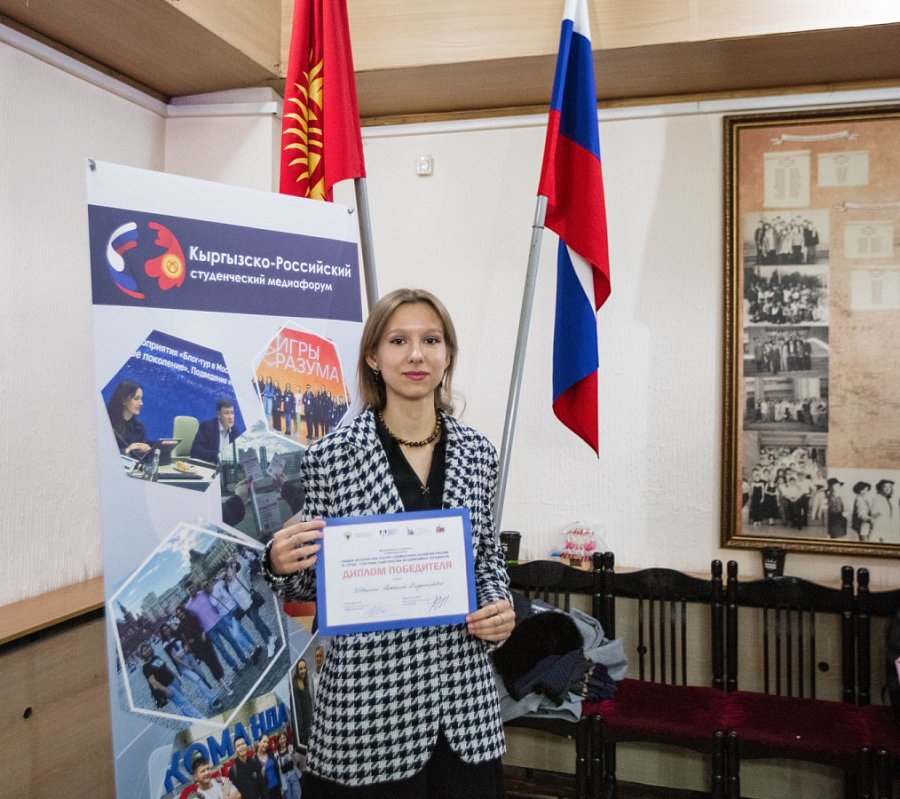
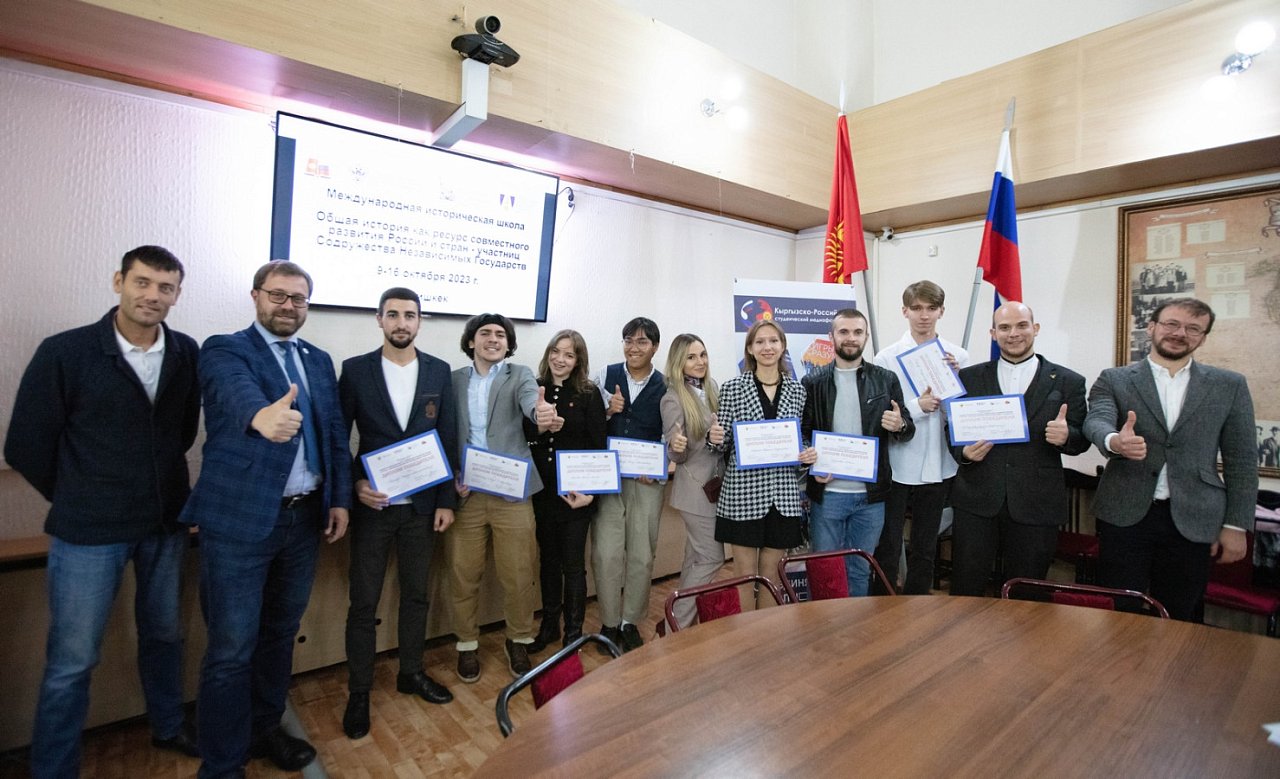
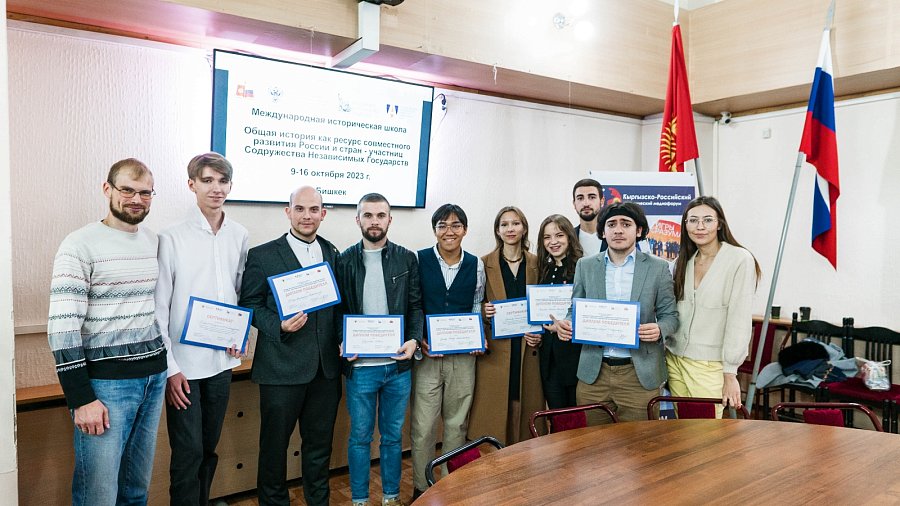
Based on the results of the presentation of the projects, the track team «Culture» was recognized as the winner. Chairman of the jury Denis Fomin-Nilov noted that he was pleased with the high level of elaboration of all the presented projects and thanked the guys for the work done.
We asked the winning team members to share their impressions of the International Youth Historical School and talk about working on projects.
Postgraduate student of the program «Historical Sciences and Archeology» of the Patrice Lumumba Peoples' Friendship University of Russia, citizen of the Republic of Greece Eleftherios Chatzifeodoridis explained: «We wanted to create an application in which tourist routes would be available that would reflect the diversity of Kyrgyzstan. During our work on the project, we have developed a truly strong international team. I am sure that the key to our victory was coordinated work and respect for each other’s opinions. At the same time, the other guys also had strong and interesting ideas that deserved attention». Eleftherios Chatzifeodoridis emphasized: «Most of all, within the framework of the International School, I liked the opportunity to meet, communicate and exchange opinions with other young scientists from various study programs».
Antonia Angelova, a graduate student of the program «Theory and History of Architecture, Restoration and Reconstruction of Historical and Architectural Heritage» of the St. Petersburg State University of Architecture and Civil Engineering, citizen of the Republic of Bulgaria, shared her opinion about participation in the work of MISH: «I spent a wonderful time in Bishkek surrounded by wonderful people – students, graduate students, scientists closely associated with the humanities, and above all, with history. I was amazed that all the guys are – bright personalities who will definitely have their own success stories, and most importantly –they are united by common tasks and interests!
I am grateful for the opportunity to develop a project with the team and get a well-deserved victory! I would like to remember the Japanese proverb «Walk the usual way unusually». This advice was followed by us with the project of the mobile application «New Nomads», which «opened» modern tourism destinations in Kyrgyzstan: musical, gastronomic, historical, cultural, etc. For each of these study programs, a detailed author's route for travelers was compiled.
I would like to say a special thank you to my team for the results of their work on the project. With the help of «New Nomads» we will continue to study the culture and history of the Kyrgyz Republic», – antonia Angelova shared.
Let us remind you that the International Youth Historical School was held from October 9 to 15 at the site of the Kyrgyz-Russian Slavic University (KRSU) named after the first President of Russia B. Yeltsin. The organizers of the project were the Ministry of Science and Higher Education of Russia, the Russian Historical Society (RIS), the State Academic University of Humanities (SAUGN) and KRSU.