New Vice-Rector Azamat Naimanbaev: Reforms and New Prospects KRSU
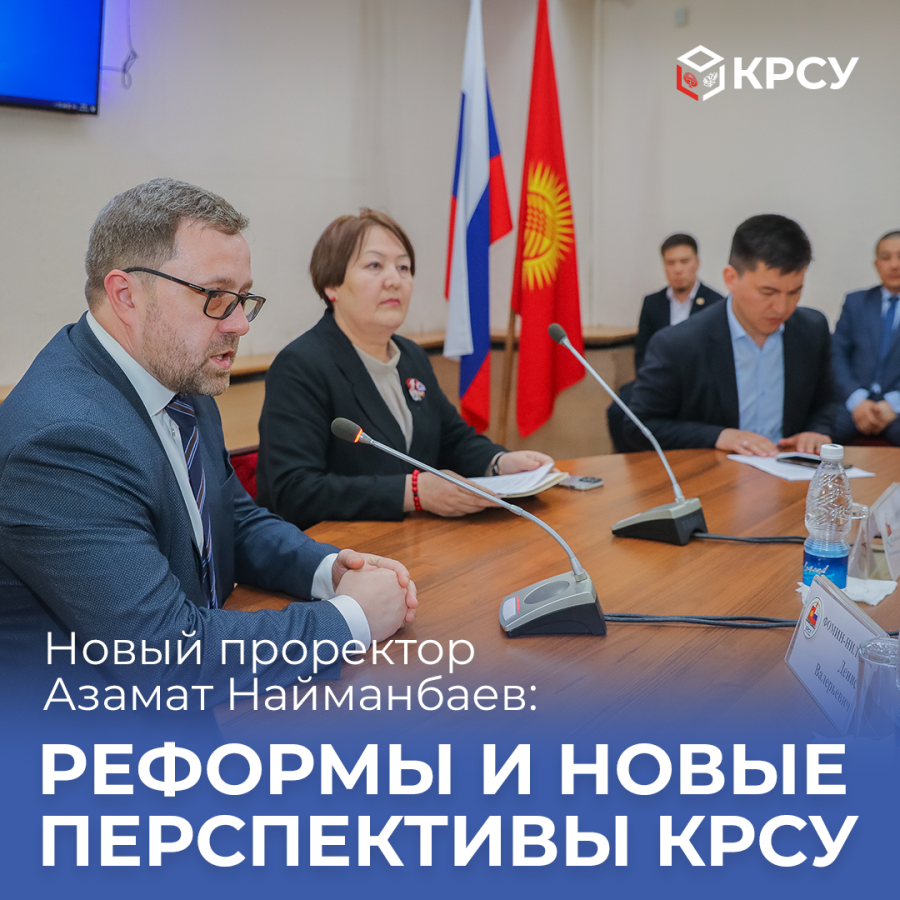
Today, a new stage of development has been announced at the Kyrgyz-Russian Slavic University (KRSU), with the appearance of an experienced specialist, Azamat Naimanbaev, as the first vice-rector. He previously served as head of the higher education department at the Ministry of Education. Naimanbaev is introduced by the Minister of Education of Kyrgyzstan Dogdurkul Kendirbayeva to the university staff.
This step means recognizing the strategic importance of the university in the context of cooperation between Kyrgyzstan and Russia. The new vice-rector successfully passed all stages of selection, demonstrating a deep understanding of the current challenges and transformations in the field of education.
"We are on the path of a deep transformation of the education system, and KRSU has received a special status that allows us to determine our own vector of development," Kendirbaeva emphasized. "The transition to the 4.0 university format requires experienced leaders capable of implementing innovation, and I am confident that Azamat Naimanbaev has all the necessary qualities for this role.".
Vice-Rector Naimanbaev emphasized that his priority will be a person-oriented approach to education, as well as the development of innovative educational programs based on the concept of university 4.0. "We have developed a concept that will become the main program for our development, and in the near future we will begin the development and implementation of competitive educational programs," he added.
Rector of KRSU Denis Fomin-Nilov expressed confidence that with the arrival of a new vice-rector, the university will be able to quickly achieve its goals and become a platform for the most advanced educational technologies. This step also emphasizes the strategic importance of KRSU in the educational space of Kyrgyzstan, setting itself the task of not only ensuring a high level of education, but also becoming a flagship in the training of Russian language teachers and the development of partnerships with industrial enterprises in the region.