From phraseology to the Russian cultural code
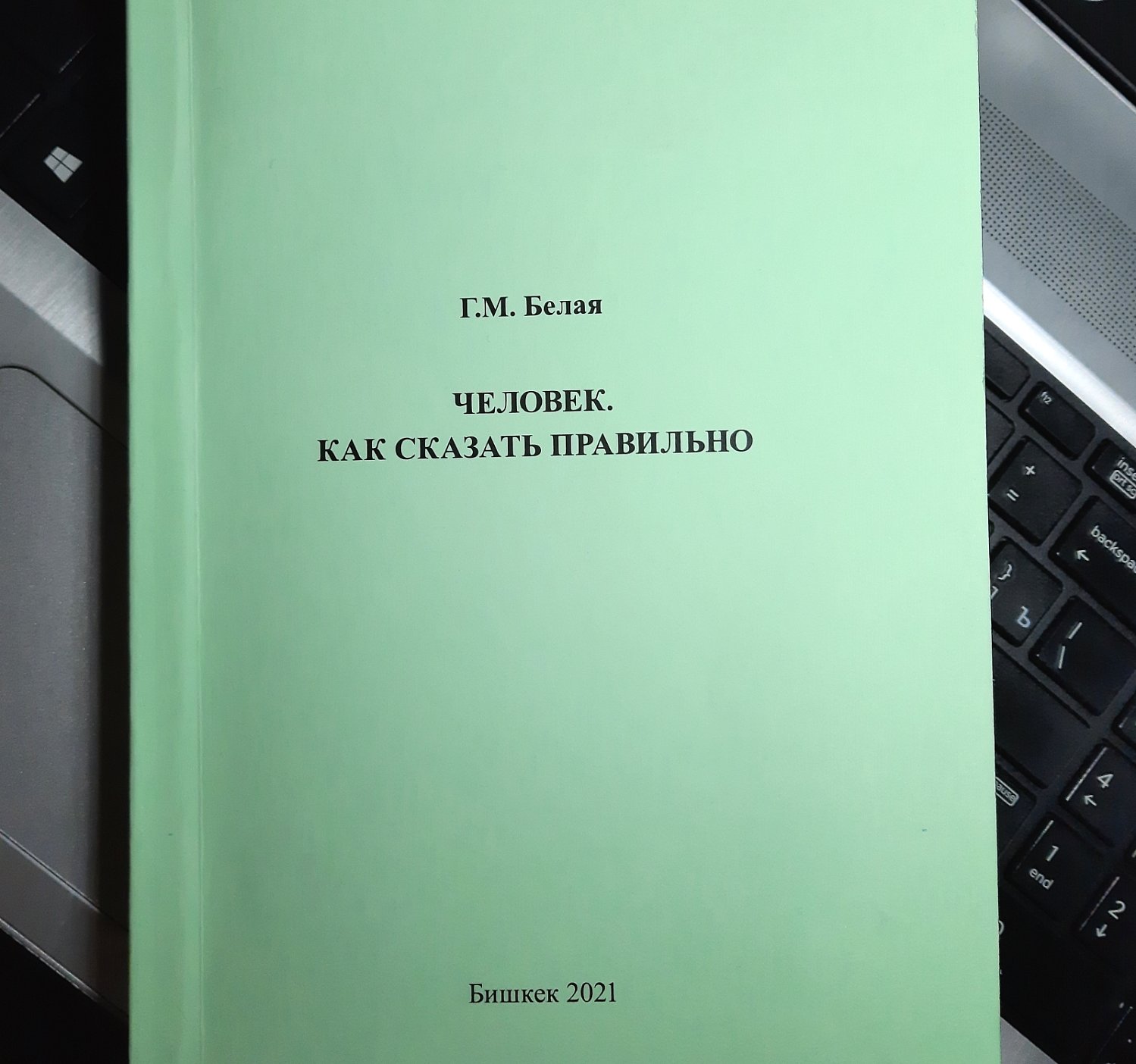
The list of textbooks on Russian as a foreign language has been replenished with a dictionary-reference book of Russian colloquial phraseology for foreign phones «Man. How to say it correctly», published by KRSU. In it, the author of the dictionary – teacher of courses in Russian as a foreign language at the Institute of Russian Language KRSU, Ph.D. G.M. Belaya proposed a new system of work on the assimilation of Russian phraseological units from the standpoint of modern achievements of modern linguistics.
Phraseological units (PU), which are a unique means of personal communication, give a bright and accurate name, figurative and/or convincing description, assessment of an object, person, fact, process, phenomenon. Among them, a large number of whorls characterizing humans are found. It was they who became the object of description.
500 FEs were selected for the dictionary, which were divided into thematic and semantic groups, taking into account the understanding of reality within the framework of Russian linguistic culture: appearance (appearance, age), spiritual and moral qualities of a person, family (family and family relationships), money (wealth, poverty), career, social role, rest. The characteristics of FE are given taking into account phonetic sound, formal structure, grammatical features, semantics, syntactic structure and lexical-semantic compatibility, socially significant conditions for the use of FE in speech. Before each FE group, a linguistic and cultural certificate is given, reflecting the main characteristic features «of the worldview» of a Russian person.
Mastery of Russian phraseology by foreign languages makes it possible to form an idea of the historical, cultural, spiritual and moral values of the Russian people, which contributes to the intellectual development of students; enriches their speech in Russian, makes it bright and expressive, improves the culture of Russian speech, and promotes a deeper and more complete understanding of the language.
The dictionary-reference book is addressed to foreign trainees who speak Russian at the basic level, high school students with Russian, Uzbek and Tajik languages of instruction, philology students, and persons interested in improving the culture of Russian speech.