Strategic cooperation: Development of education in the focus of a meeting with deputies of the State Duma
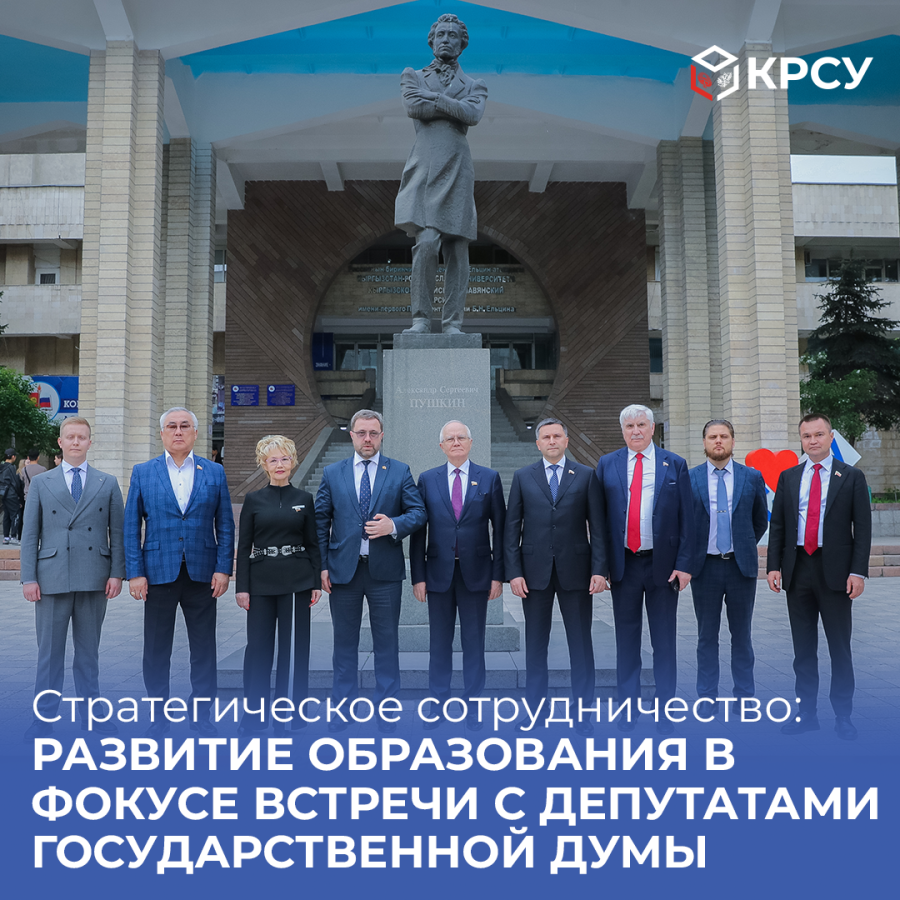
The focus is on KRSU. The meeting with representatives of the State Duma and the Federation Council of the Federal Assembly of the Russian Federation, chaired by Dmitry Kobylkin, became a landmark event for discussing the prospects for the development of education.
Rector of the Kyrgyz-Russian Slavic University Denis Fomin-Nilov shared the history of the creation of the university, its achievements over the past 30 years and plans for the future.
Over 30 years, KRSU has graduated more than 30,000 graduates and has a staff of 1,793. However, it is not just quantitative indicators that make this university significant. It is intended to become a new generation university implementing the concept of education 4.0. This means not only integrating science, business and education, but also introducing a social mission and a digital component.
An important part of the meeting was the speech of Dmitry Kobylkin, who expressed his readiness to provide legislative support to the university in its pursuit of development. He emphasized that helping to create conditions for the development of education is an important task that requires joint efforts. "There is never enough money, but creating conditions – is within our power," he noted.
Deputy Chairman of the Federation Council Committee on International Affairs, Farit Mukhametshin, emphasized the importance of supporting the Russian language. He said that 9 schools are currently being built in Russia at the expense of the Russian Federation, and from this year the Kyrgyz-Russian Slavic University should begin training Russian language teachers for schools in Kyrgyzstan.
One of the key points of discussion was the issue of building a new university campus. Farit Mukhametshin noted that it is important to quickly identify problematic issues and resolve them so as not to delay the process for years.
As a result of the meeting, a complete understanding of the processes taking place at the university was achieved. Members of the delegation will provide all possible support to the university in order to support and develop education as a key factor in the progress of society.


