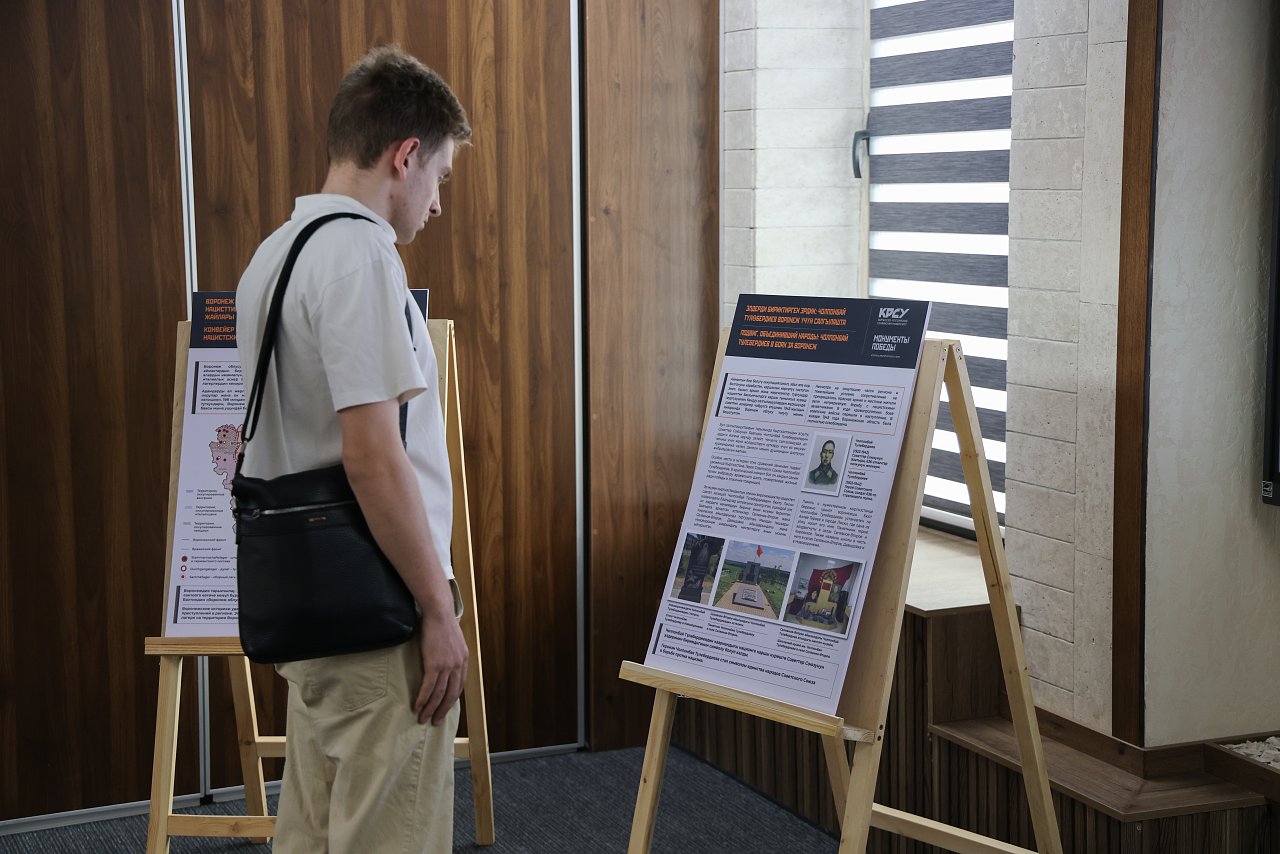
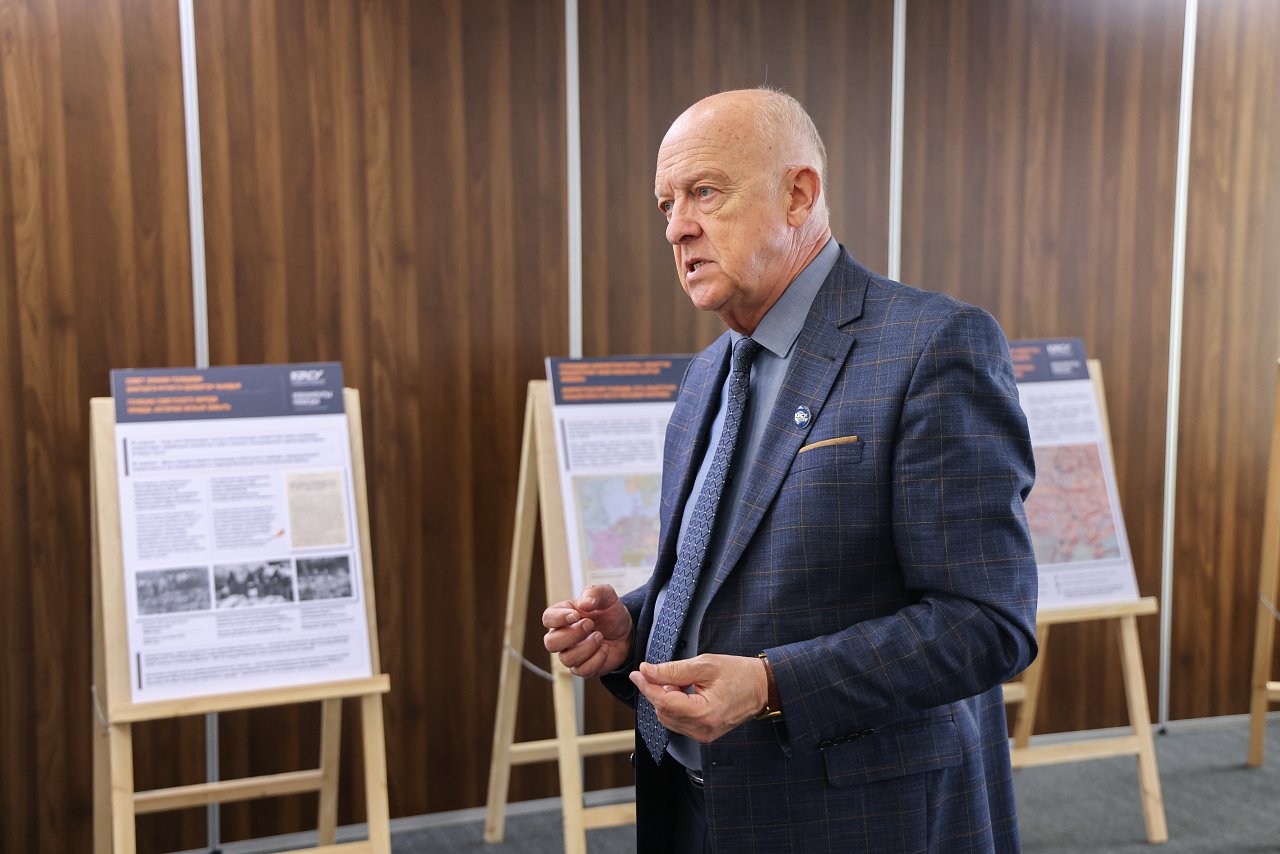
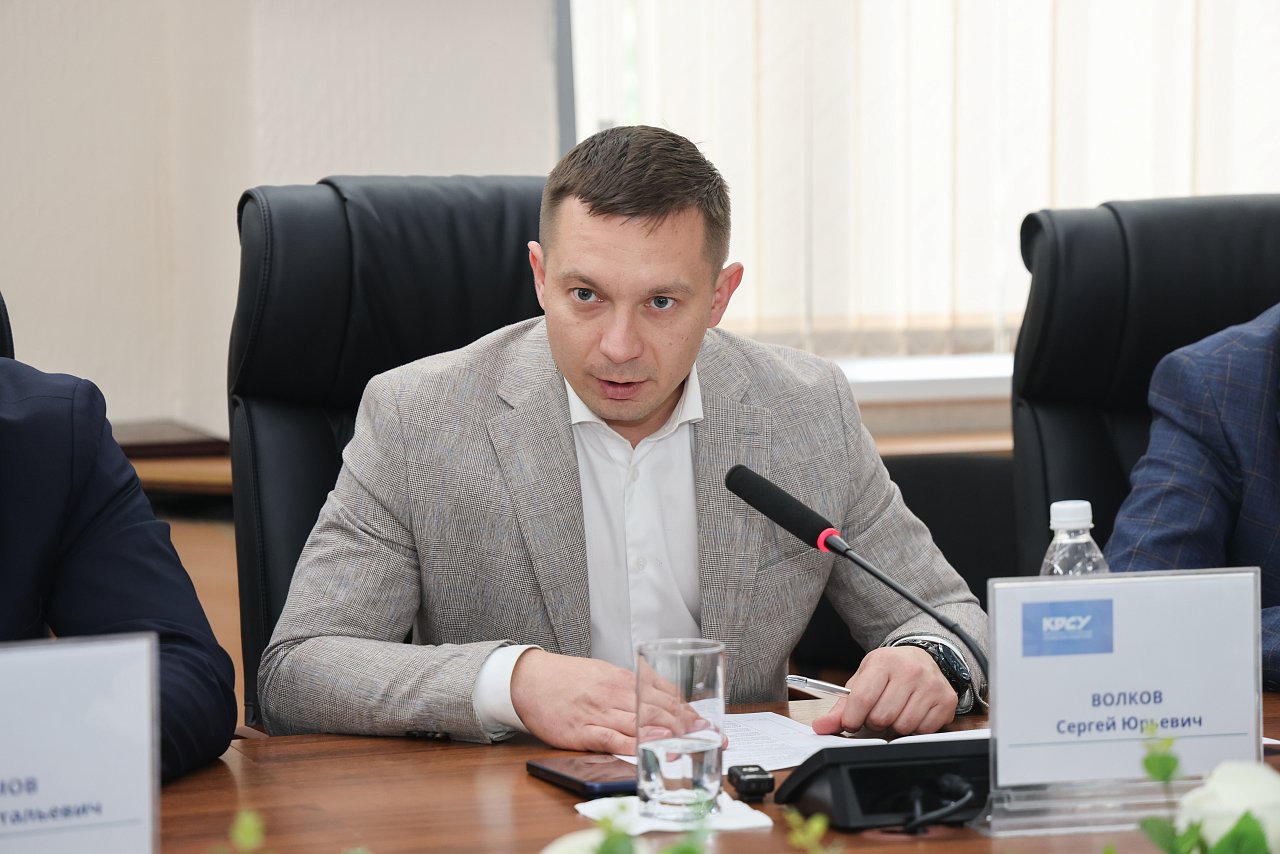
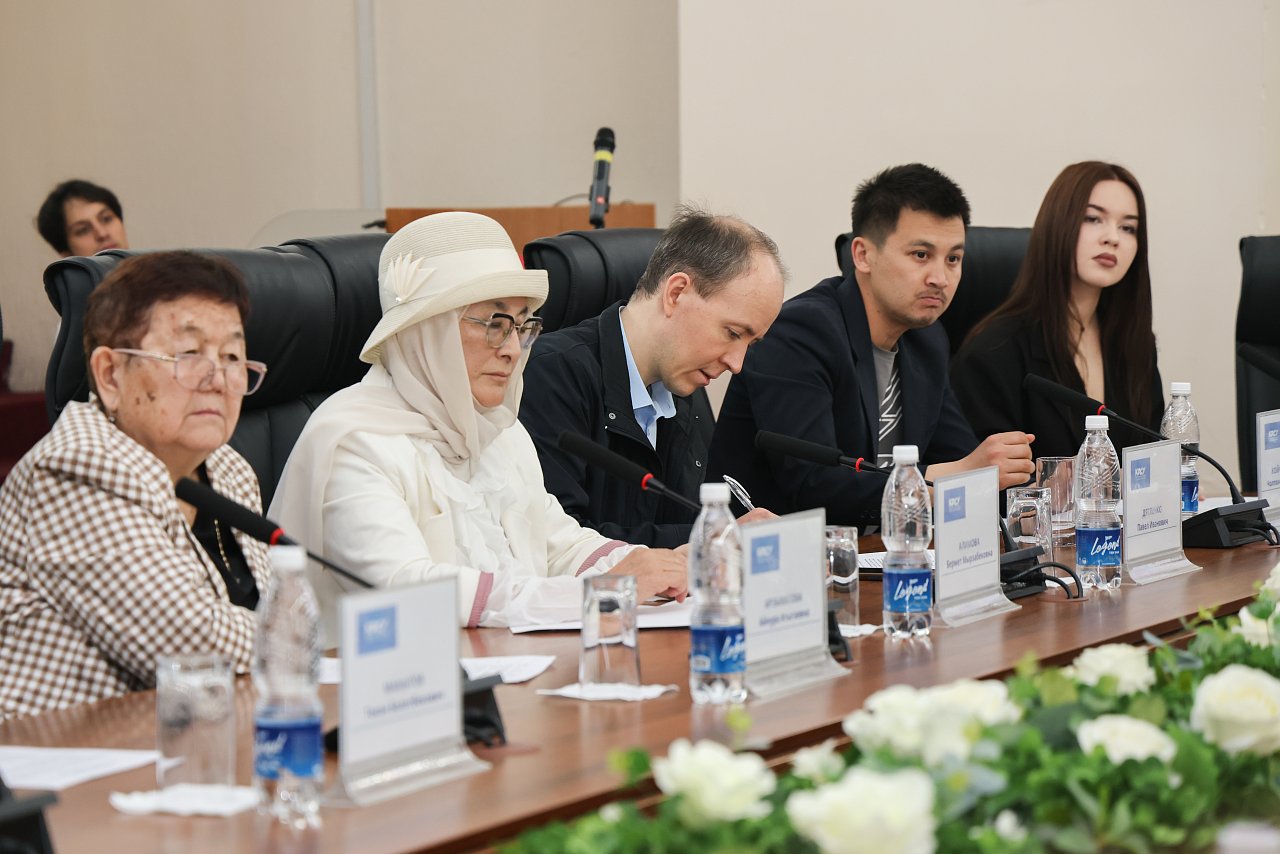
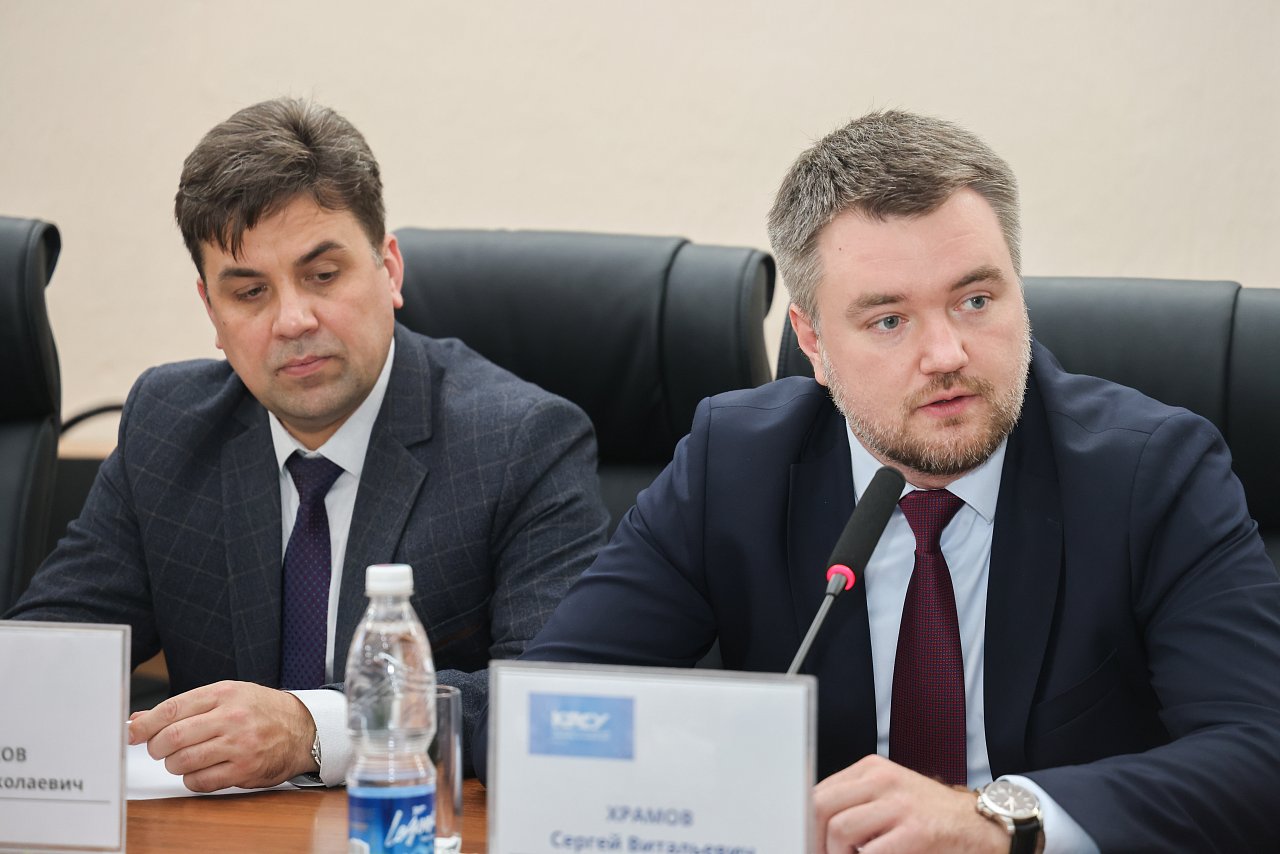
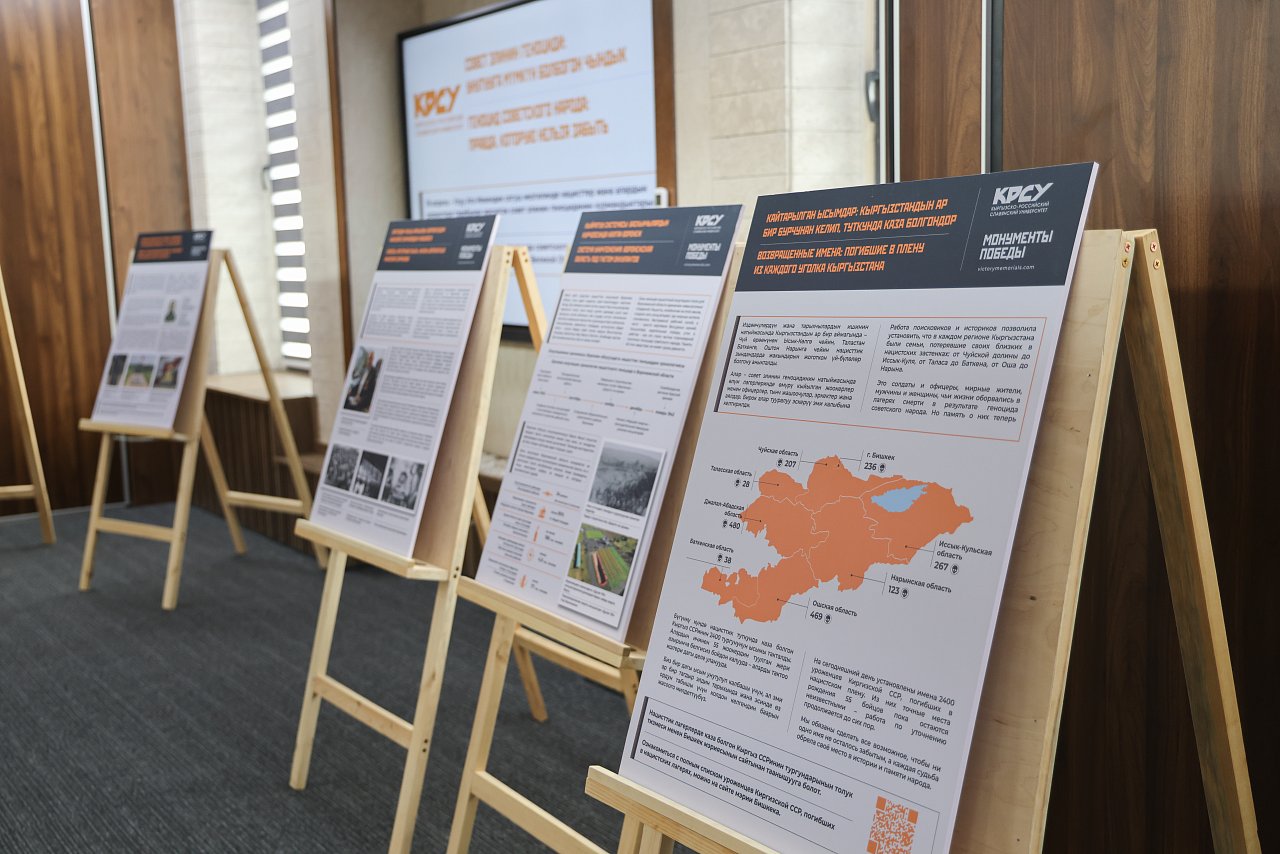
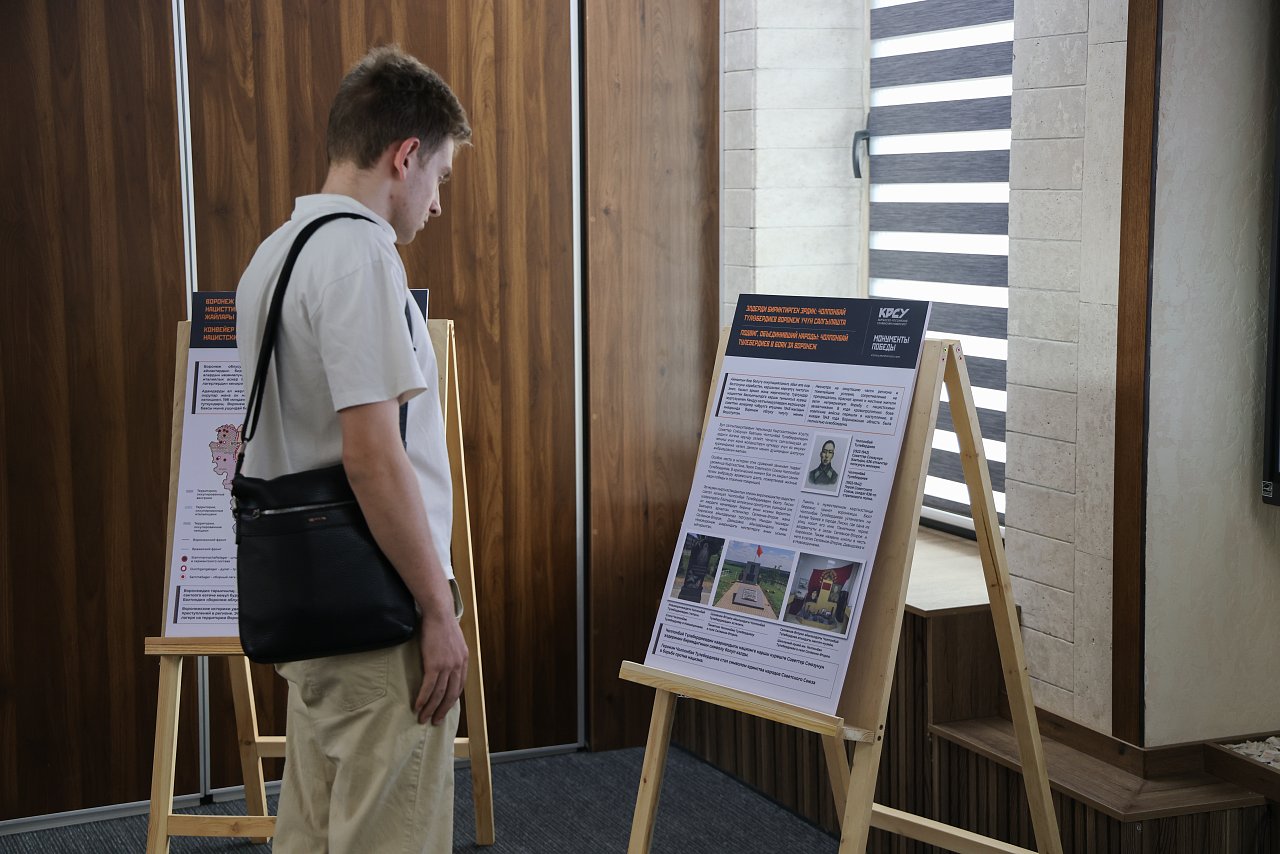
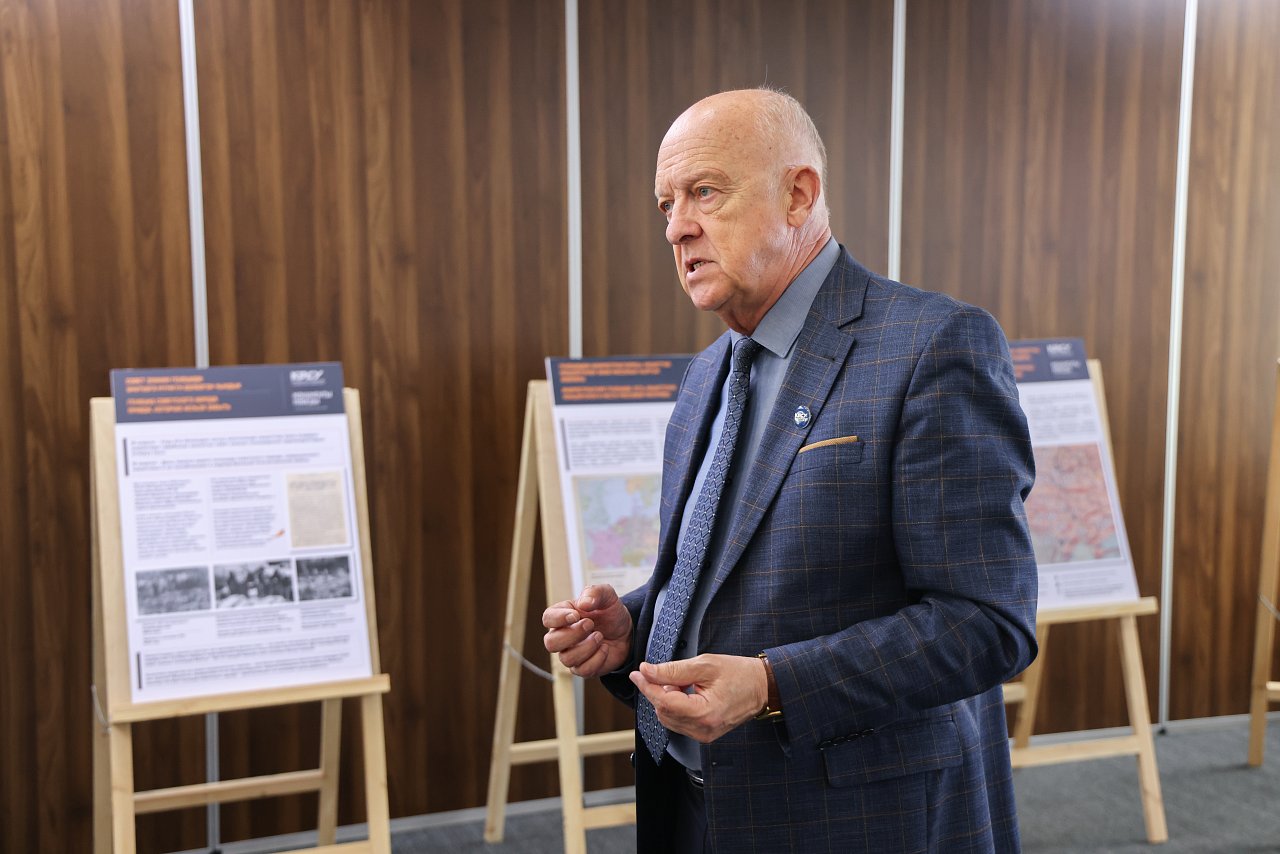
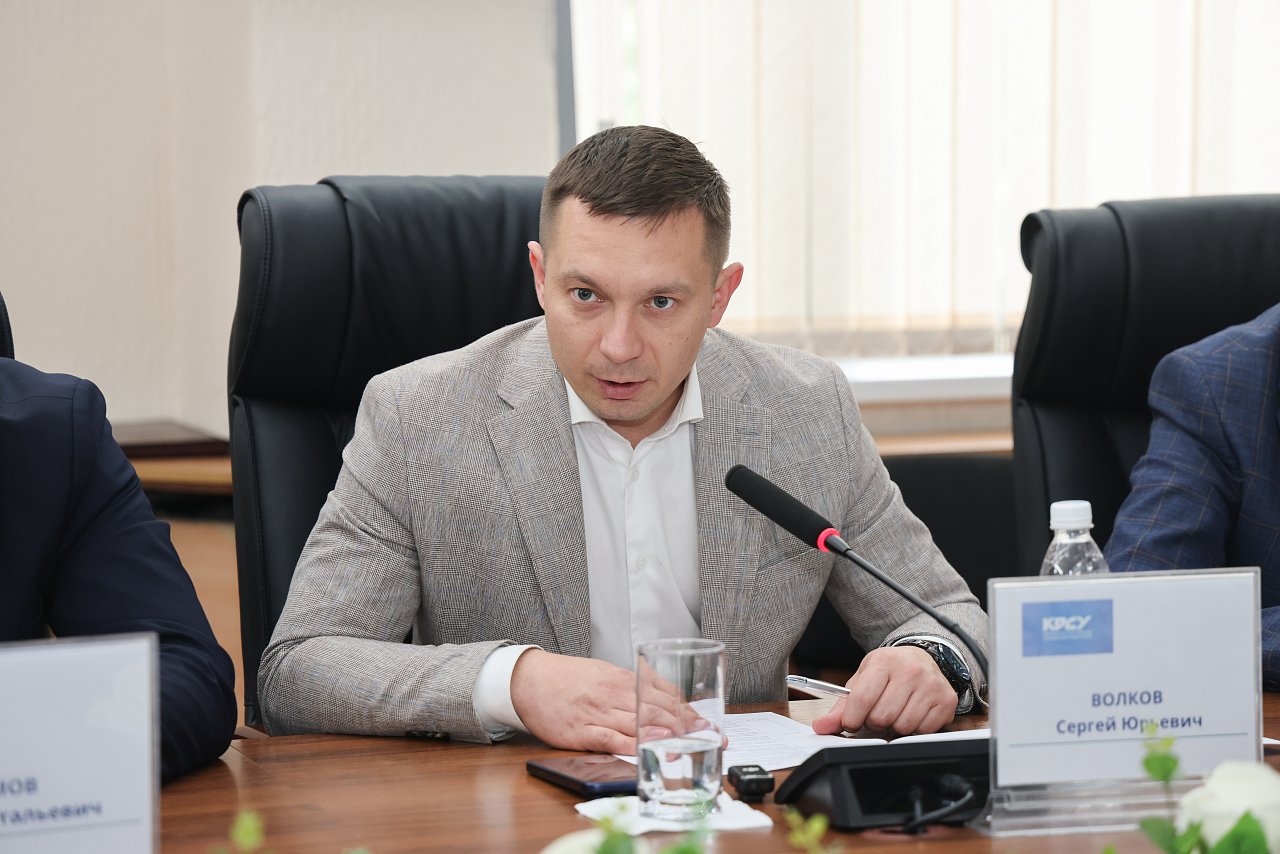
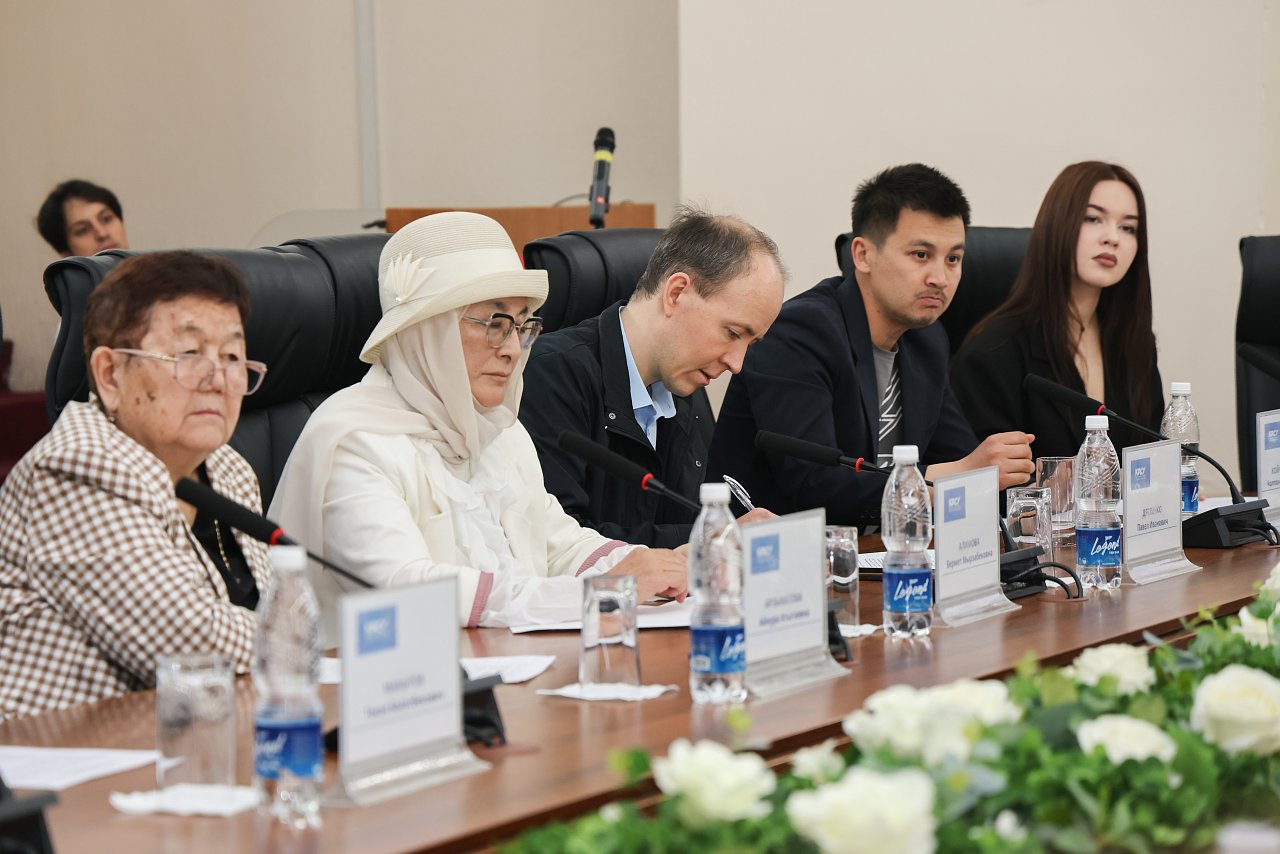
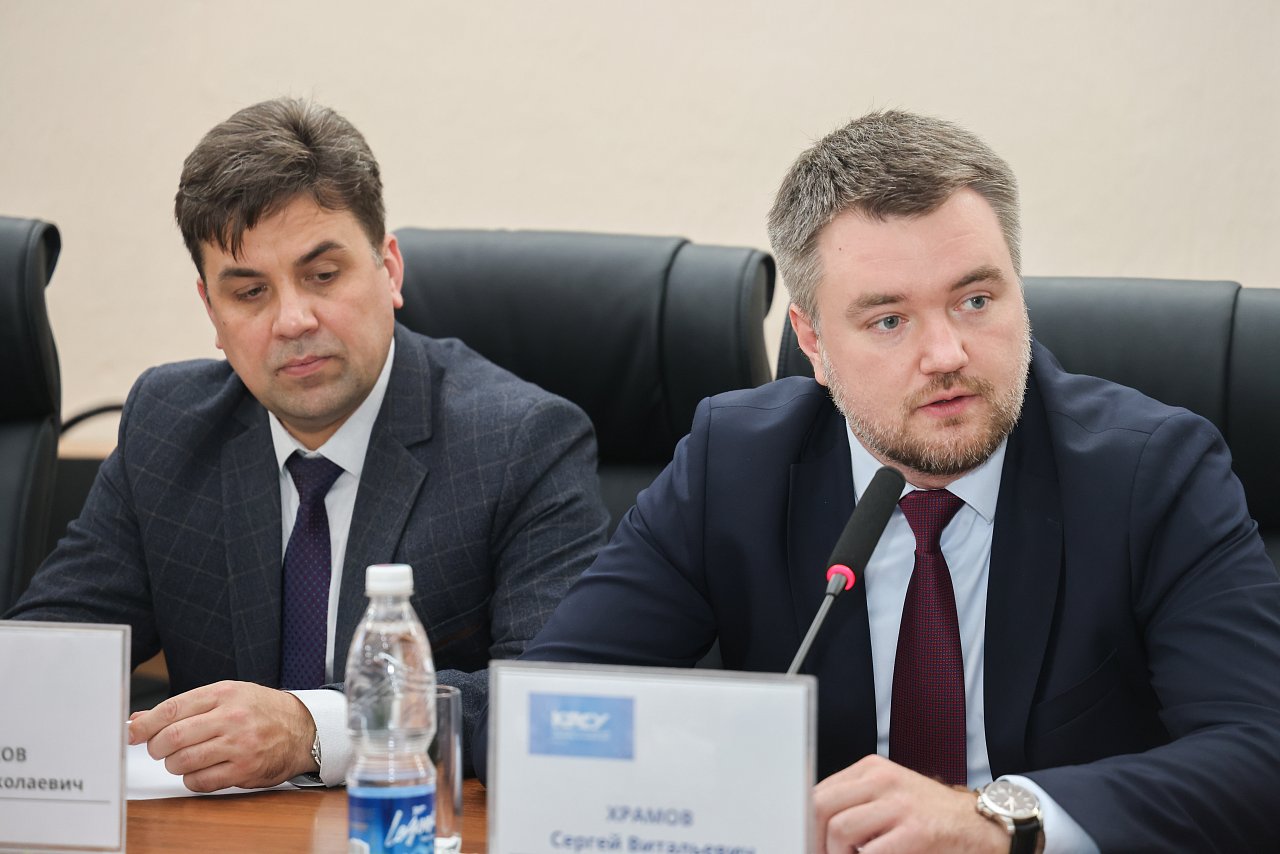
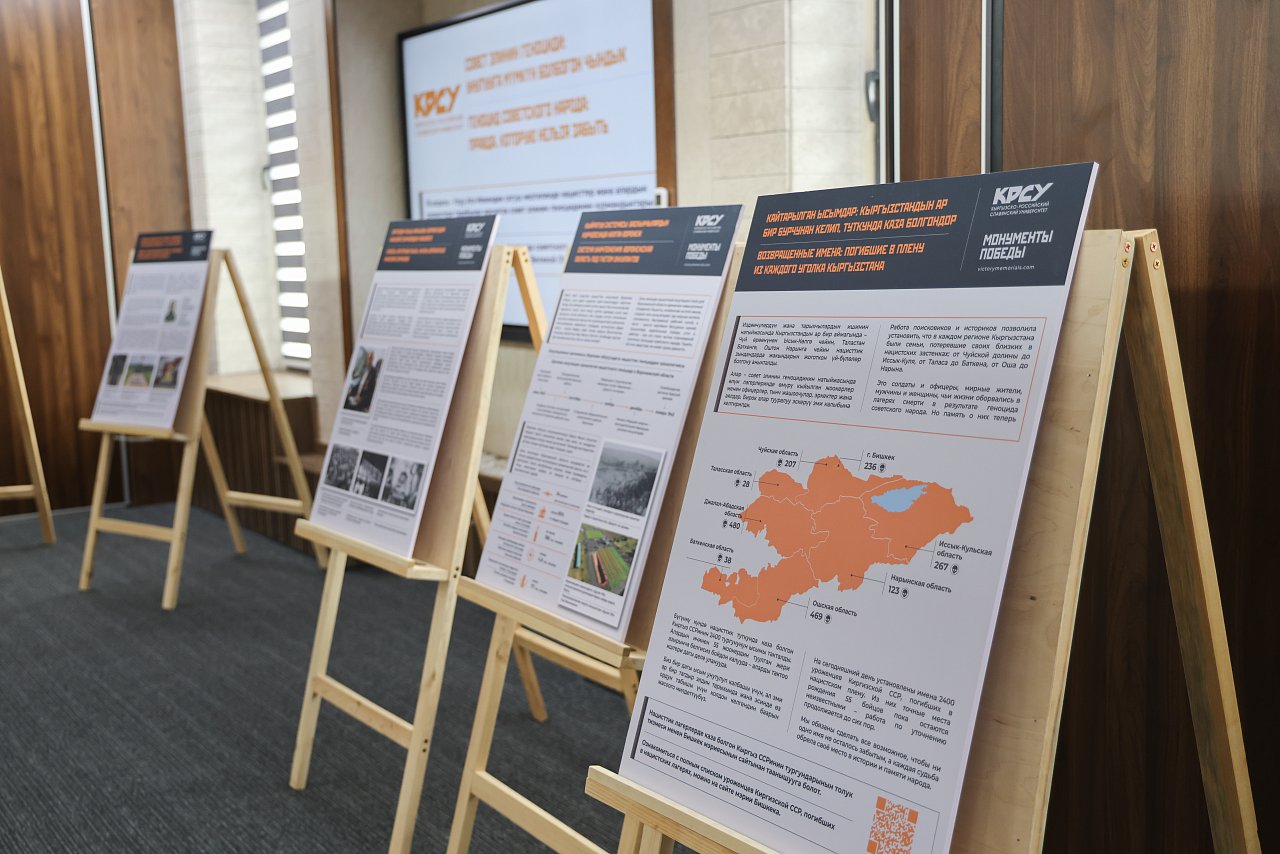
On April 15, 2026, a round table and presentation of a historical and documentary exhibition «Without the right to be forgotten: genocide of the Soviet people by the Nazis and their accomplices during the Great Patriotic War in the common memory of Kyrgyzstan and Russia» took place at the Kyrgyz-Russian Slavic University.The event was organized by the Center for Historical and Cultural Heritage KRSU, the project «Victory Monuments» and the Eurasian Guild of Historians. The exhibition was the result of joint research work devoted to the study of the crimes of the Nazis and their accomplices against the Soviet people, as well as the preservation of the historical memory of the tragic pages of the Great Patriotic War.The exhibition brought together archival documents, visual materials, eyewitness accounts and data on the fate of concentration camp prisoners, including natives of Kyrgyzstan and Russia. Through specific human stories, the exhibition reveals the scale of the tragedy and emphasizes the systemic nature of the policy of exterminating civilians.The discussion at the round table focused on the historical and legal assessment of the genocide of the Soviet people, preserving the legacy of the Nuremberg trials, countering the glorification of Nazism and falsification of history, as well as the role of science and education in working with young people to protect historical truth.Advisor to the Embassy of the Russian Federation in the Kyrgyz Republic Sergei Khramov emphasized the importance of joint scientific work and the preservation of historical memory:«Preserving historical truth — is our shared responsibility. Today, when we are increasingly faced with attempts to revise the results of World War II, a special role falls on the scientific community. Such exhibitions and such round tables are needed for the sake of the memory of the victims, for the sake of respect for the feat of the winners and for the sake of future generations».He also noted that this war was not alien to the peoples of the Soviet Union, and the plans of the Nazis affected all republics, including Central Asia. According to him, this is why it is especially important to convey the historical truth to young people and counteract any attempts to justify Nazism.Rector of KRSU Sergei Volkov in his speech focused on personal responsibility for preserving memory and the importance of passing it on to the younger generation. Addressing the topic of historical heritage, he gave a figurative example, recalling that behind the opportunity to live, study and build the future there is a feat of those who defended the world at the cost of their own lives.«Thank God we had a childhood. And that is why we do not have the right to treat memory formally. Everything related to the Great Patriotic War, to the destinies of people, to tragedy and Victory should live not only in books and documents, but also in the minds of young people», — the rector noted.Director of the Center for Historical and Cultural Heritage KRSU Leonid Sumarokov emphasized that the exhibition was the result of serious research work, in which university students were also involved:«We wanted to show what happened to our compatriots during the Great Patriotic War, including those who ended up in concentration camps. For many students, this topic was a real discovery. They delved deeply into the material, studied the documents and saw how important it was to continue this work further».According to Leonid Sumarokov, it is of particular importance that the exhibition is built not only on facts and documents, but also on the fate of specific people whose stories make the memory of the war alive and personal.The round table and exhibition at KRSU became an important platform for a meaningful dialogue on the preservation of historical truth, the common memory of Kyrgyzstan and Russia, as well as the importance of scientific and educational work in countering the distortion of history.