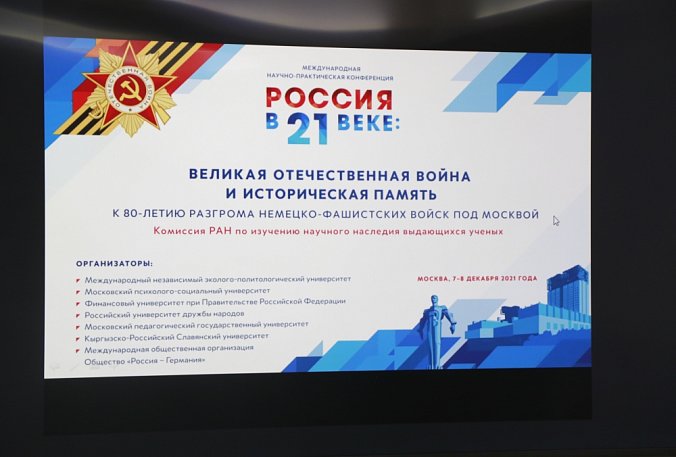
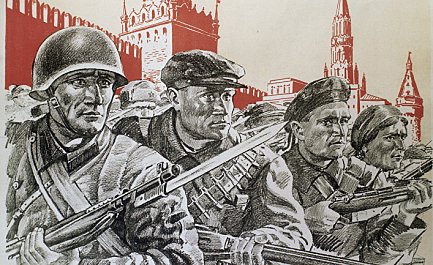
On December 8, the International Scientific and Practical Conference «Russia in the 21st Century: The Great Patriotic War and Historical Memory concluded. To the 80th anniversary of the defeat of Nazi troops near Moscow». The scientific forum, held under the patronage of the Russian Academy of Sciences, brought together historians from different countries, starting from Germany and ending with Kyrgyzstan.
Conducted by the RAS Commission for the Study of the Scientific Heritage of Outstanding Scientists (N.N. Moiseeva) in June of this year. international scientific and practical conference «Russia in the 21st century: the Great Patriotic War and historical memory» (XXIX Moses Readings), showed the relevance of the stated topic of the readings, in connection with the escalating information war, distortion of the real history of the Second World War and an attempt to revise its results (See: https://buran-sas.ru/). In the scientific and practical recommendations adopted by the conference, it was proposed to continue the scientific discussion of this topic in connection with the 80th anniversary of the defeat of Nazi troops near Moscow.
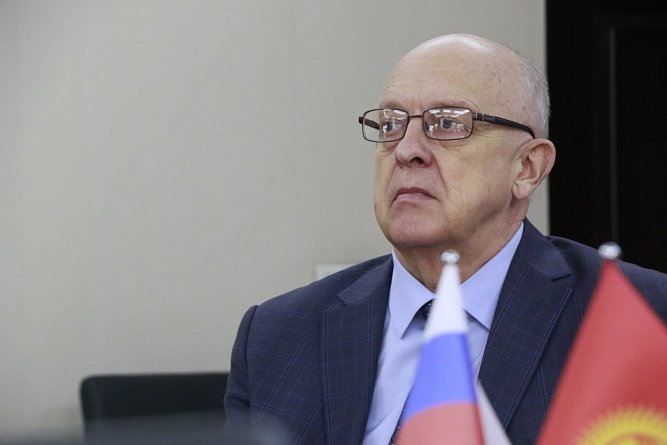
At the opening of the current conference, the rector of the Kyrgyz-Russian Slavic University named after the first President of the Russian Federation B.N. addressed its participants with a welcoming speech. Yeltsin, academician Vladimir Nifadiev.
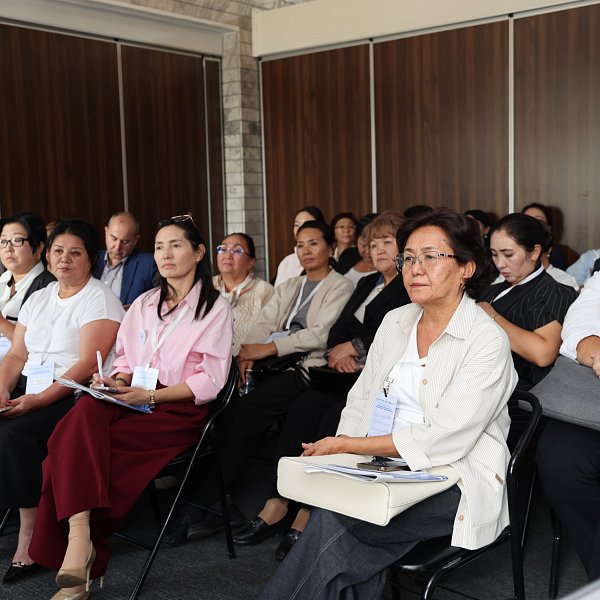
At the RAS conference site under the auspices of KRSU, a meeting of the section «Envoys of the Kyrgyz SSR in the Battle of Moscow during the Great Patriotic War» was held. Scientists from the Kyrgyz National University named after Zh. Balasagyn, Bishkek State University named after K. Karasaev, as well as university students took part in it.
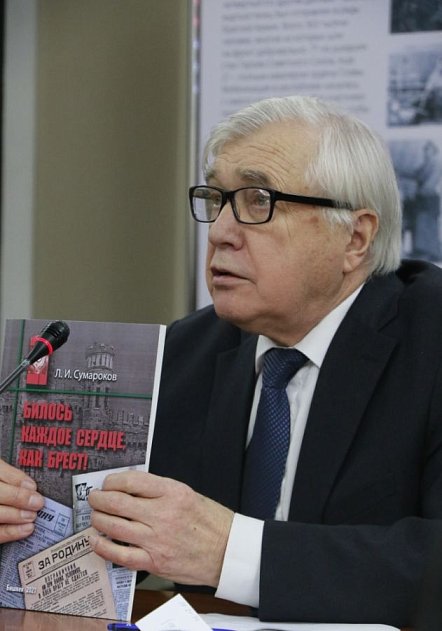
Speeches by KRSU Vice-Rector Leonid Sumarokov, Associate Professors of the Department of History and Cultural Studies of KRSU Pavel Dyatlenko and Elena Nosova, scientists from BSU and KNU Toktobek Ryskulov, Narynbek Alymkulov and Salamat Malabaev were devoted to current historiographical problems of the events of the autumn-winter of 1941/42, which led to the first strategic defeat Nazi Germany in World War II and predetermined its outcome of the war.
Historians of Kyrgyzstan shared new documentary evidence of the courage and heroism of Kyrgyzstanis who stood in unified battle formations with the entire multinational Soviet people to defend the Motherland. The speakers stated the importance of solving the problem of establishing the fate of thousands of soldiers and commanders of the Red Army and other troops who were among those missing on the battle fronts, and describing episodes of their military actions. According to scientists, this is required by the idea of justice and the need to constantly fill the memory space with new evidence of the people’s feat. They will allow society and youth, first of all, to go beyond the knowledge of already known facts, to update the idea of the tragedy that befell the Soviet Union 80 years ago, to assess the scope of the battle against evil and the scale of human self-sacrifice for the sake of defeating it.
The head of the search movement «Our Victory-Bizdin Zhenish» Svetlana Lapteva, who presented the project of a monument to the feat of the 9th company of the 1075th Infantry Regiment of the Panfilov Division, developed at KRSU, carried out in October 1941 on the outskirts of Moscow, spoke about the work being carried out in this regard in Kyrgyzstan.
The Battle of Moscow – the largest battle in World War II in terms of the number of troops, the amount of military equipment on both sides and military-political consequences. It lasted almost 7 months – 203 days – starting from September 30, 1941 to April 20, 1942. On March 6, 1942, US President F.D. Roosevelt wrote: «From a grand strategy perspective... it is difficult to escape the obvious fact that Russian armies are destroying more enemy soldiers and weapons than all the other 25 states... combined».
As a result of the conference, scientific and practical recommendations were developed for further scientific research and their use in the historical education of young people, the formation of an objective, scientific picture of the world in them.