What Central Asia owes to the Russian language
Once again about the foundation of historical memory in the post-Soviet space.
The Russian Academy of Sciences hosted the XXX Moiseev Readings – Scientific and Practical Conference «Russia in the 21st Century: Education as an important civilizational institution for the development and formation of Russian cultural and historical identity», organized by the RAS Commission for the Study of the Scientific Heritage of Outstanding Scientists. Researchers, university teachers and teachers of secondary schools in Russia, Belarus, Ukraine, Kyrgyzstan and a number of foreign countries discussed the problems of education in the context of the civilizational confrontation between Russia and the West.
What is the essence and orientation of education in Russia – to form consumers with a hedonistic attitude or creators of their own destiny and creators of well-deserved success in life? What are the distinctive features of domestic education in the conditions of civilizational confrontation between Russia and the West? What are the best traditions and experience of domestic education, including the Soviet period, that can be used in reforming Russian education and in the practice of scientific and pedagogical activities? These and many other important issues were at the center of discussion at the conference.
Scientists from Kyrgyzstan made a significant contribution to their consideration at the Moiseev Readings. They presented a report «Russian language as the unifier and foundation of historical memory in the post-Soviet space» and a presentation of a book series «Eurasian creators».
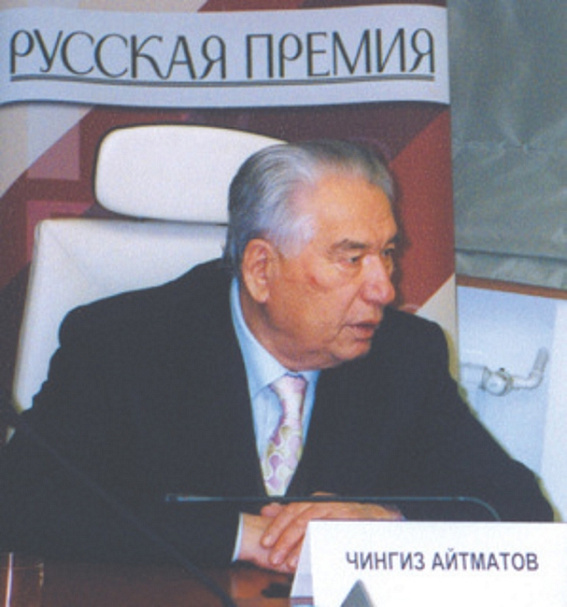
One of the authors, who lived for many years in Kyrgyzstan after the Great Patriotic War and learned the beauty of the Russian language thanks to a Russian teacher in the village of Ivanovka in the Kyrgyz SSR, would especially like to note that the publication of books in this series – is a notable event in scientific, cultural and social life not only in modern Kyrgyzstan, but throughout the post-Soviet space. Indeed, even a simple list of titles of these documentary-biographical monographs is impressive: «Chingiz Aitmatov. Man-Universe», «Eurasian Chronicles N.M. Przhevalsky», «K.K. Yudakhin. Uniting Central Asia with the word», «E.D. Polivanov. An unfinished linguistic symphony». Scientific editor of the series – V.I. Nifadiev; authors-compilers – L.I. Sumarokov, O.L. Sumarokova.
The idea of Chingiz Aitmatov that the language of the people – is a phenomenon, a value... the property of a universal genius, – the main leitmotif of this series. The books reveal the significance of the Russian language in interethnic relations, political culture and history.
It is important to note the multiplier effect of the distribution throughout the world in Russian, in particular, of the works of Chingiz Aitmatov. «And if my works have now been published through the Russian language in many languages of the world, then thereby the Russian language strengthens the position of my native Kyrgyz language, contributes to its establishment and testifies to its internal capabilities», – the writer himself emphasized. An illustration of this effect – staging of a ballet «Asel» based on the writer’s story «My Poplar in a Red scarf» on the stage of the Bolshoi Theater of the USSR, a significant filmography of the writer, consisting of 23 feature films, theatrical productions in many theaters in the country and abroad.
«We have lived side by side with the Russian people for more than 100 years. We have nothing that divides us. On the contrary, we are united in everything: in work, in struggle, in dreams», – Aitmatov emphasized in one of his main literary works «In collaboration with land and water».
The activities of the wonderful Russian traveler N.M. had no less influence on the development of Kyrgyz culture. Przhevalsky. Anton Pavlovich Chekhov, in his obituary dedicated to this great ascetic, wrote: «In our painful times, when European societies have overcome laziness, boredom of life and unbelief, when everywhere in a strange mutual combination there reigns dislike for life and fear of death, when even the best people sit idly by, justifying their laziness and their debauchery by the lack of a specific goal in life, ascetics are needed like the sun».
In the book «Eurasian Chronicles N.M. Przhevalsky» shows his role not only as a traveler, but as an educator and creator. «With all four trips here, – N.M. emphasized. Przhevalsky, –I constantly had to witness great sympathy and respect for the name Russian among the natives, with the exception of Tibet, where we are little known, but among other peoples of Central Asia their aspirations for Russia reach a very high degree».
At the beginning of the 2000s, Mikhail Zalikhanov, with the support of academician and then President of the Republic Askar Akayev, initiated urgent measures to preserve the N.M. Memorial Museum. Przhevalsky near the city of Karakol.
The Great Russian Kyrgyz – Konstantin Kuzmich Yudakhin, a prominent Soviet Turkologist, lexicographer, expert in living Turkic languages and ancient Turkic writing, was impressed by his communication with Yevgeny Dmitrievich Polivanov. «Polivanov was an ordinary brilliant man», – Viktor Shklovsky wrote about him. Yudakhin’s contribution to the publication in Russian of a four-volume version of the Kyrgyz heritage is invaluable – «Manas. Kyrgyz heroic epic». The work was published in 1984 by the publishing house «Science».
As the authors of the book note «E.D. Polivanov. Unfinished linguistic symphony», a scientist who received the title of professor at the age of 28, knew linguistically at least 35 languages, wrote a grammar of Japanese, Chinese, Bukharan-Jewish, Dungan, Mordovian, Turkmen, Kazakh, Tajik languages, attracted with his erudition, practicality, determination and genius.
Scientific contribution of E.D. Polivanova and K.K. Yudakhin's Kyrgyz philology deserves further research, systematization and popularization among new generations of intelligentsia and national scientific personnel.
To the credit of the authors of the series «Eurasian Creators» Leonid Ivanovich Sumarokov and Olga Leonidovna Sumarokova, carried out at the Kyrgyz-Russian Slavic University. B.N. Yeltsin, it should be emphasized that the books turned out to be bright, well illustrated, rich in previously unpublished documents and photographs. This is an absolute success for researchers.
However, the publication «Eurasian Creators» involuntarily leads to rather sad thoughts. Today in the West there is increasing incitement to Russophobia and «abolition» of Russian culture. Unfortunately, signals of the manifestation of this degradation in a number of countries in the post-Soviet space were the transition in linguistic culture from the Cyrillic alphabet to the Latin alphabet. And not for reasons of the evolutionary development of national languages, but based on the political situation, far from the culture and urgent needs of peoples. Against this background, the publication of books such as the «Eurasian Creators» series – is actually a cultural creative act. Its goal – is to preserve all the best that the cultural and historical community of peoples who were once part of the USSR developed and brought into world culture.
About the authors: Mikhail Chekkaevich Zalikhanov – Academician, Deputy Chairman of the RAS Commission for the Study of the Scientific Heritage of Outstanding Scientists, Doctor of Geographical Sciences, Professor; Stanislav Aleksandrovich Stepanov – Doctor of Pedagogical Sciences, Professor, Scientific Director of the International Independent Ecological and Political Science University, Scientific Secretary of the RAS Commission for the Study of the Scientific Heritage of Academician N.N. Moiseeva.