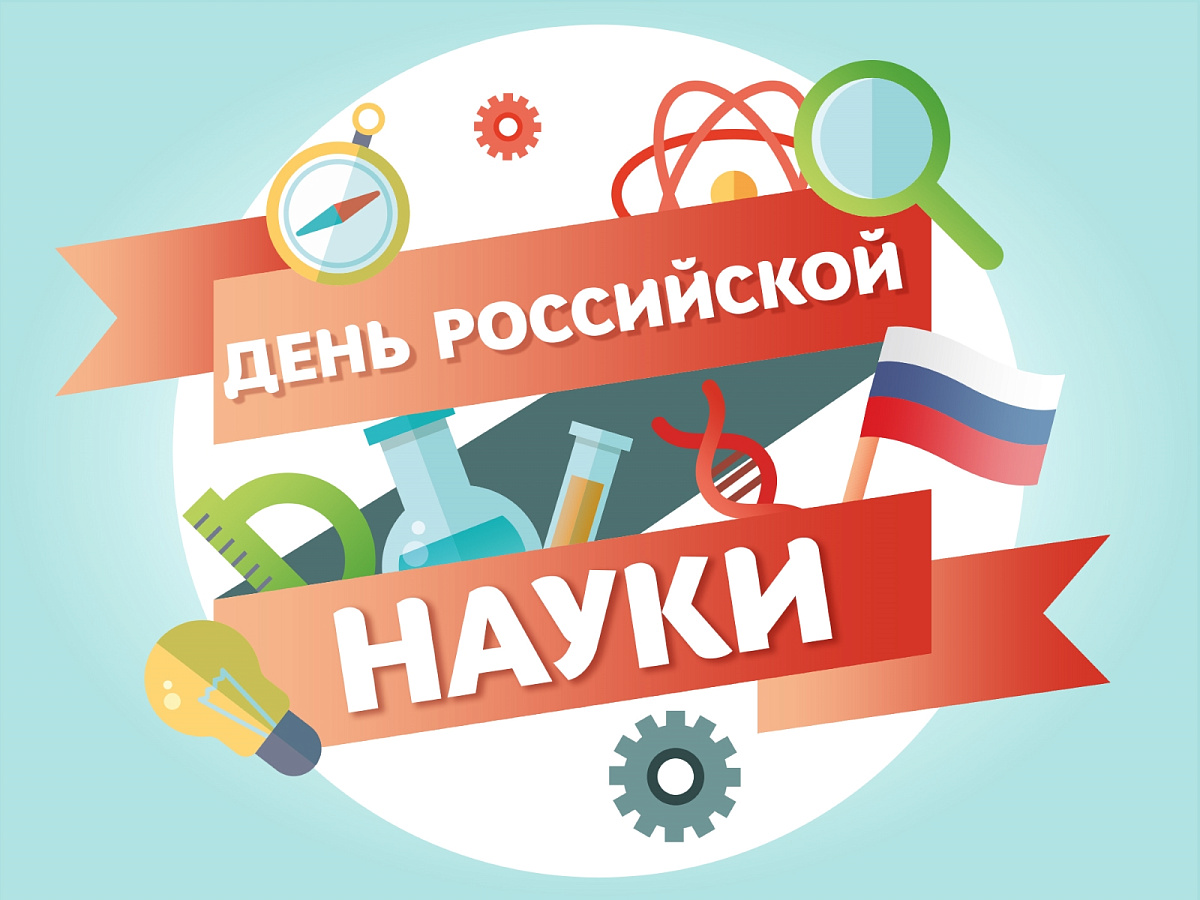
Day of Russian Science
On 8 February 2021 at 2 pm in the conference hall of the KRSU main building a round table «The role of KRSU scientists in the development and strengthening of relations between Russia and Kyrgyzstan» dedicated to the Day of Russian Science will begin.
Speakers, including researchers and university staff, will talk about the interstate innovation space – the foundation of cooperation between the CIS member states, the development of international relations between Russia and Kyrgyzstan, the Russian language in Kyrgyzstan, the experience and prospects for introducing a digital career, the prevention of extremism and much more.
At the end of the meeting, scientists, teachers and students will be awarded for scientific achievements.
Science is the main driving force of state development, the most important resource of the economy, medicine, education and social sphere. The economic growth and prosperity of the state, job creation and quality of life of people depend on the work of scientists. Therefore, every year on February 8, Russian scientists celebrate their professional holiday – Russian Science Day. This date did not arise by chance: By decree of the Senate, by order of Peter I in 1724, the Academy of Sciences was founded on this day.
In 1925, the Academy of Sciences was renamed the USSR Academy of Sciences and Science Day was celebrated on the third Sunday of April. This is due to the fact that in April 1918 V. Lenin drew up «An outline of a plan for scientific and technical work».
Considering the enormous role of Russian science in the development of the doctrine of the biosphere, the launch of an artificial Earth satellite, the construction of the world's first nuclear power plant and in commemoration of the 275th anniversary of the founding of the Academy of Sciences, by Decree of the First President of Russia B. Yeltsin (№ 717 of June 7, 1999) The USSR Academy of Sciences was renamed the Russian Academy of Sciences with a historical date of celebration Russian Science Day February 8.
Russia is proud of its scientists who have made a great contribution to world science: the law of conservation of mass (M. Lomonosov), the doctrine of reflexes (I. Pavlov), periodic table of elements (D.I. Mendeleev), theory of rocket motion (K. Tsiolkovsky), super fluidity of liquid helium (P. Kapitsa), nuclear energy (I. Kurchatov), rocket science (S. Korolev), etc. Many Soviet and Russian scientists have been awarded the Nobel Prize.
Currently, the Academy of Sciences has more than 55 thousand researchers, 463 academicians and 721 corresponding members. The structure of the Russian Academy of Sciences includes 13 departments in fields and areas of science, 15 regional centers, about 550 scientific institutions, including institutes, observatories, museums, libraries, archives, nature reserves and other organizations. The Academy of Sciences is the successor to the Russian Academy of Medical Sciences and the Russian Academy of Agricultural Sciences.
Today, Russian scientists are working on promising areas in science, developing the latest technologies, conducting research with a total funding of more than 800 billion rubles, developing fundamental research designed to expand knowledge about the development of nature, society, and man, contributing to the prosperity of Russia.
KRSU – university of two countries: Russia and Kyrgyzstan. Therefore, university scientists actively cooperate with Russian scientists in many areas of fundamental science, technology and technology.

.jpg)
.jpg)