KRSU Board of Trustees
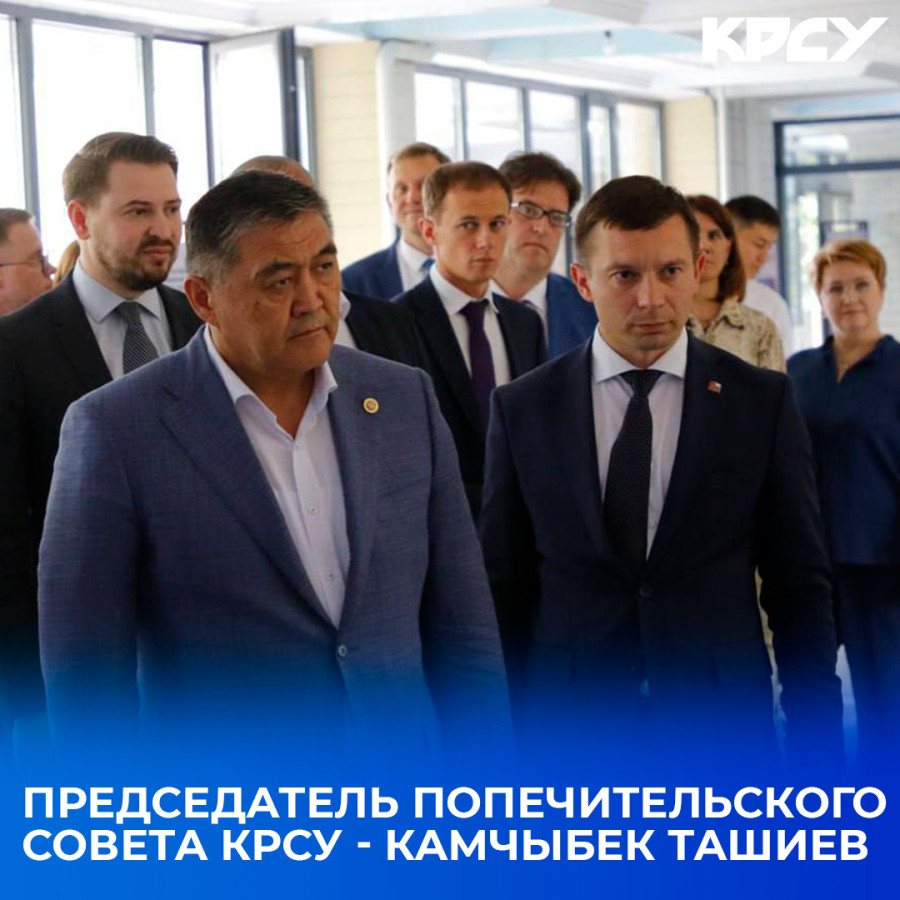
On June 26, 2025, the first meeting of the Board of Trustees of the Kyrgyz-Russian Slavic University took place. During the meeting, Kamchybek Kydyrshaevich Tashiev was elected Chairman of the KRSU Board of Trustees.
Kamchybek Tashiev — Deputy Chairman of the Cabinet of Ministers of the Kyrgyz Republic, Chairman of the State Committee for National Security of the Kyrgyz Republic, Colonel General. His election reflects the high level of government support for the university and emphasizes the strategic importance of KRSU in the country's higher education system.
Kamchybek Kydyrshaevich was born on September 27, 1968. He received his higher education at Tomsk Polytechnic University named after S. M. Kirov, as well as at the Kyrgyz State National University. His professional path includes experience in the business sector, regional and central government bodies, as well as in the parliament of the Kyrgyz Republic.
Over the years, he held the positions of director and head of commercial and production structures, worked in the public administration system, was a deputy of the Jogorku Kenesh of the Kyrgyz Republic, headed the committee on the fuel and energy complex and water resources, and served as Minister of Emergency Situations. Kamchybek Tashiev was also a member of the Security Council of the Kyrgyz Republic and chairman of the Coordination Council for Emergency Situations of the Collective Security Treaty Organization.
Since October 2021, Kamchybek Kydyrshaevich has served as Deputy Chairman of the Cabinet of Ministers of the Kyrgyz Republic — Chairman of the State Committee for National Security. In February 2024, he was unanimously elected President of the Kyrgyz Football Union.
The work of the Board of Trustees under his leadership is focused on supporting the strategic development of KRSU, modernizing infrastructure, implementing large educational and scientific projects, as well as strengthening the interaction of the university with state and public institutions.