ESG MONITORING OF INDUSTRY
Key laboratories carrying out the project are
– Educational and scientific laboratory «Environmental monitoring»
– Educational and scientific laboratory «Unmanned aerial vehicles»
– Educational and scientific laboratory «Artificial intelligence and cybersecurity»
Project description:
The project is aimed at creating a comprehensive digital environmental monitoring system for industrial enterprises, ensuring continuous monitoring of the impact of production on the environment and the formation of an objective picture of the environmental efficiency of the enterprise.
Current requirements in the fields of ESG transformation, carbon regulation and environmental reporting require enterprises to move from periodic laboratory measurements to continuous automated control systems. The proposed solution combines measurement hardware, digital data collection platforms, geographic information systems and artificial intelligence algorithms into a single environmental management ecosystem.
The project is carrying out a complete digital inventory of the plant's emission sources, creating an interactive map of environmental risks, and calculating the carbon footprint of production processes and products. The system provides real-time monitoring of emissions, automatic detection of deviations from standards and the formation of recommendations to reduce the negative impact on the environment.
Particular attention is paid to the use of vision and neural network analytics technologies to detect fugitive emissions, pollutant leaks and other environmental incidents that are often impossible to detect by traditional controls.
The project can be adapted for enterprises in the mining industry, metallurgy, energy, construction industry and other industries with a high level of environmental load.
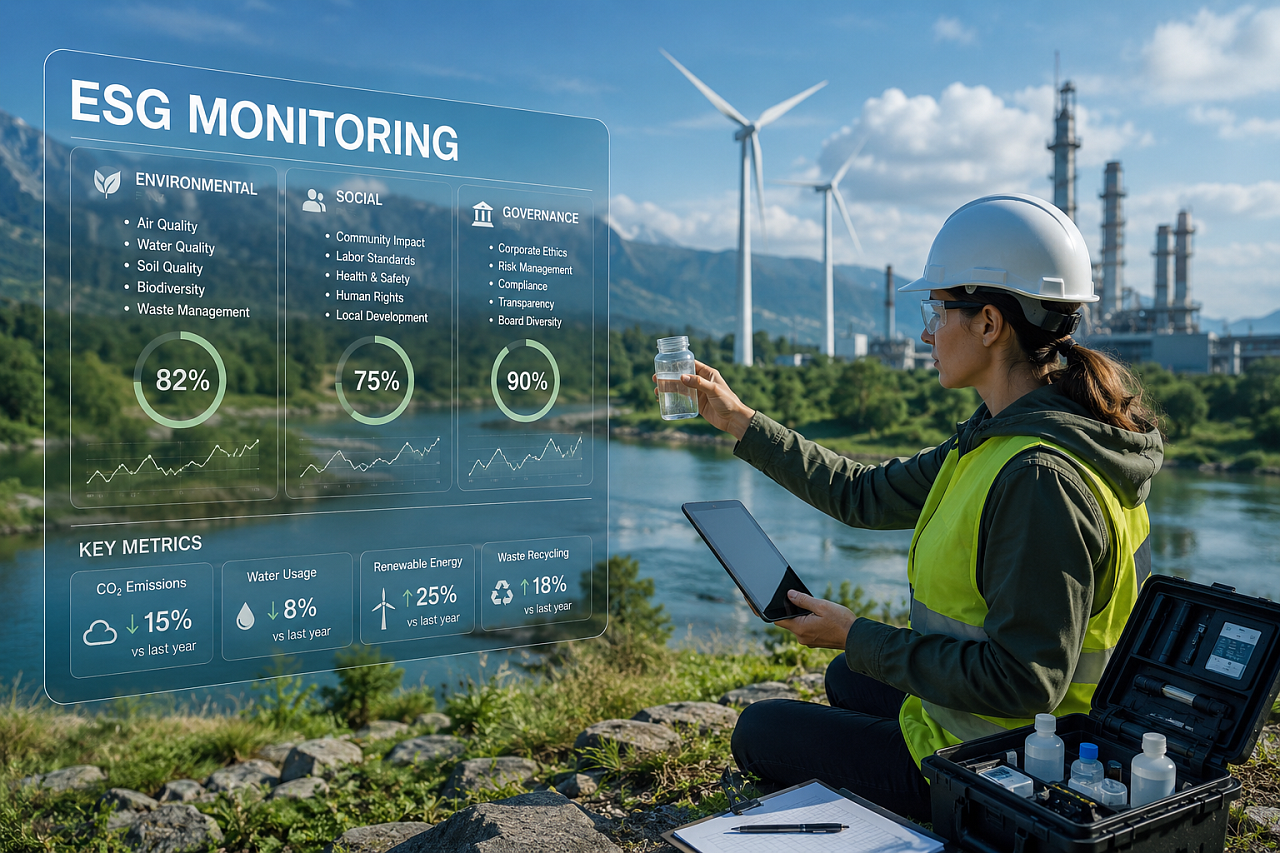
Key technology solutions:
· Calculating the carbon footprint of the plant and products;
· Generating a digital enterprise environmental map;
· Automated pollutant emission control;
· Online monitoring of ambient air conditions;
· Gas analysis and dust control systems;
· Predictive environmental risk analytics;
· Applying artificial intelligence and machine vision to process industrial emissions information;
· Digital ESG Dashboards and Analytical Control Panels.
Practical impact and results:
The implementation of the system makes it possible to ensure transparent environmental control of the enterprise, reduce the risks of violation of environmental legislation and significantly improve the quality of environmental management. The company receives a tool for preparing ESG reports, interaction with investors and financial institutions, as well as the ability to quickly identify sources of pollution and assess the effectiveness of environmental measures.
An additional effect is a reduction in environmental payments, a decrease in the likelihood of penalties and an increase in the investment attractiveness of the enterprise at the international level in the context of tightening environmental requirements.