Life of Russians in Semirechye
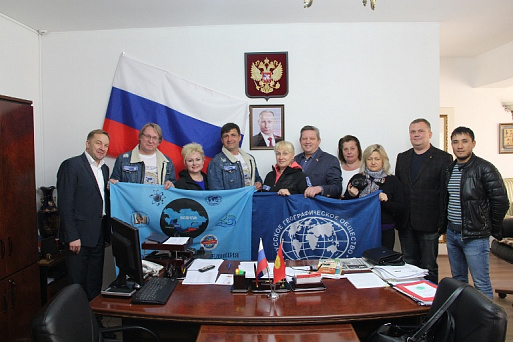
Information portal «Russian World». From Almaty, members of the expedition of the Penza regional branch of the Russian Geographical Society «Modern Ethnomir» went to neighboring Kyrgyzstan. Here, as in other Central Asian republics, they study the life of the remaining Russian population. Previously, Russian researchers visited Kazakhstan and Uzbekistan.
A little after midnight on April 19, we arrived in Karakol (formerly Przhevalsk). Getting to the city, we drove along a significant part of the coast of Lake Issyk-Kul, which is considered a real pearl of Kyrgyzstan. However, after lively and vivid impressions from the stay of our expedition in Kazakhstan, poverty and neglect were striking here from the very border. It would seem that around the Tien Shan mountain, nearby – a unique lake, the nature is simply wonderful, a real Eldorado for potential tourists, but...
However, local environmentalists are quite happy with this state of affairs, because, in their opinion, the current state of the same lake is much better than the one in which it would probably become polluted if an army of tourists appeared here. Perhaps they are right.
Our stay in Kyrgyzstan began with these thoughts. We have somewhat expanded our knowledge of the current situation in Karakol and its environs thanks to a round table that took place in one of the premises of the local Church of the Holy Trinity. In addition to representatives of the scientific world – teachers of Issyk-Kul University –, clergy and local Cossacks also took part in it. Our next interlocutor was also present – Ataman of the Semirechensk Cossack Army, military foreman Oleg Bazaev.
–In general, all the settlers came here mainly from Kuban, Ukraine, Voronezh and the central part of Russia, – he told about himself. – And when we arrived here, everything was covered in stones. My grandmother Salome Andreevna Nikitina was born here in 1895. My grandfather, who was a Cossack, came here under the program together with twenty-five thousand people in 1930 (twenty-five thousand people – these are workers of large cities sent to work in the village in the early 1930s – ed.). Subsequently he became the head of the fire department in the village of Teploklyuchenka. My mother was also born there. And my father is from Kuban, from the village of Ekaterininskaya, a hereditary Cossack. Grandfather – Mark Potapovich Bazaev – fought in a Cossack division, died in 1945. He was buried in Poland in a separate grave, like a hero. They found documents in the archives about awarding him the title of Hero of the Soviet Union. But no confirmation of this was found. He fought in the North Caucasus and liberated Crimea. Died at 28 years old. Two wars passed, also the White Finnish one.
I myself was born in Kazakhstan, my parents were in virgin lands. And then we returned here... Cossack – he is a Cossack at heart. He must live by this – both day and night. Cossack – is a way of life. As for songwriting, I can say that we recently created our own Cossack choir. Head Svetlana Shchelgachova – choirmaster by training, puts her whole soul into this matter. As they say, if only there was a Cossack, there would be a song. In Soviet times, singing Cossack songs was more difficult; it was not welcomed. And the old people tried to talk less, and the young people were not particularly interested in this. And there are many rituals, it takes a long time to list everything. For example, mounting a horse at three years old. Possession of a checker. Mandatory – flanking (with a checker).
A memorable point of our trip to Karakol was, perhaps, the main attraction of this town – the museum of the great Russian traveler Nikolai Mikhailovich Przhevalsky. We visited the museum itself, visited the monument to N. M. Przhevalsky and the grave, and met with employees. And in the morning we were already heading to the capital of the republic – Bishkek.
We began our acquaintance with the capital of Kyrgyzstan with contacts with a local journalist. However, Svetlana Lapteva, in addition to the position of newspaper columnist «Evening Bishkek», actively serves as a member of the city council of Russian compatriots in Kyrgyzstan (this is what residents of Kyrgyzstan call their republic today).
–We graduated from school in 1987, and then everything fell apart," she said, "As a matter of fact, it was a different country. It is clear that since 1991 this has taken shape legally, but after 1987 everything changed significantly. In 1996, she entered the St. Petersburg University and after graduation she worked and studied by correspondence in the specialty «journalism». Journalism – is a universal profession: a journalist studies the situation and all problems. When you write, and everything remains the same, the problem is not solved, then you look for answers to some questions, try to resolve the situation yourself.
Our meeting, which took place the next day at the Rossotrudnichestvo Representative Office by Irina Tsareva, deputy head of the representative office in Kyrgyzstan, also turned out to be interesting. From 2006 to 2018, she worked for Rossotrudnichestvo in Ukraine, first in Kyiv and then in Odessa. Therefore, she went through everything «the Maidans», and on March 23, 2018, she was expelled from the territory of Ukraine as persona non grata as part of a group of 13 more diplomats. After that, she was sent to Bishkek.
–The difference is still felt, – she told about her stay in a new place. – After all, this city is – historical. On the other hand, it developed little in the 90s. Therefore, the difference from European and even large Asian countries is felt. There is a shortage of cultural events, I really miss it here. Therefore, we are somehow trying to make up for this with our funds: if our artists come here, they work for free.
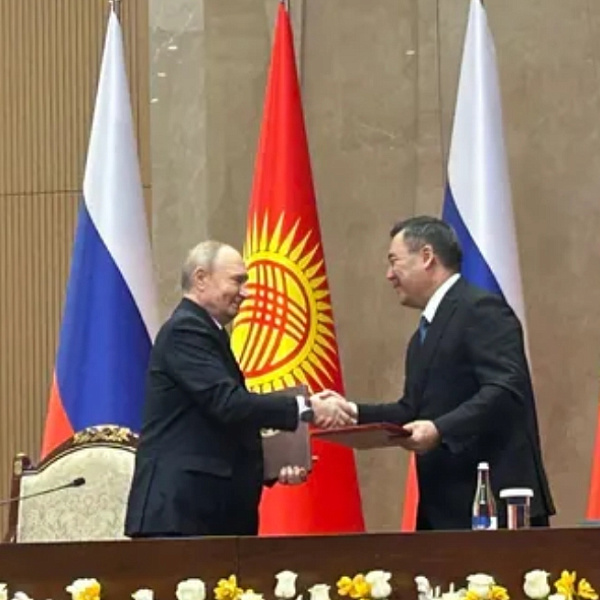
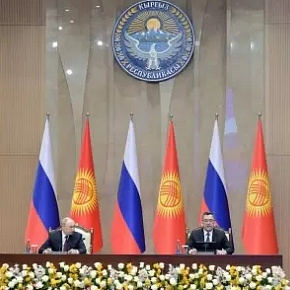
I would like to note that the recent visit of Vladimir Putin was also a positive development. After it there is great enthusiasm and upsurge on the part of our Kyrgyz brothers. Various Kyrgyz public structures and even local authorities began to make contact. We must believe in the best, always be positive, mutually study Russian and Kyrgyz culture – this is the path to common creation.
We talked with Bishop Daniel of Bishkek and Kyrgyzstan about how representatives of the Orthodox clergy feel here.
– The Kyrgyz are very close in mentality to the Russians, – he noted in the conversation. – The Kazakhs are somewhat arrogant. Of course, the Orthodox Church is the main island for the Russian-speaking population here. All our temples, shrines – they are for them. Why are there so many people in churches here? For example, in Russia there would be half a thousand people standing day or evening? No, this is unrealistic – 20-30 people, even in Moscow. In the evening there is practically no one at all at the services. Believe me, this is even in the Cathedral of Christ the Savior, unless, of course, this is a special service. After all, services usually start on Saturday evening. There is no such thing here, because here for people the temple – is a holy place!
We also visited the unique Kyrgyz-Russian Slavic University (KRSU) named after Boris Yeltsin. An agreement on cooperation between KRSU universities and Penza State University was signed here. KRSU Rector Vladimir Nifadiev spoke about the history of the university and touched upon current problems. We also learned about the activities of the Kyrgyz Geographical Society – this has its own difficulties. After all, in fact, all affairs here are handled by one person, but a great enthusiast of his work – Salamat Alamanov, head of the geography department, professor at the Research Center for Ecology and Environment of Central Asia, president of the Kyrgyz Geographical Society.
– Yes, it turns out that way, but conscience does not allow us to give up this business, – he said. – So we live, nevertheless we maintain written relations with the Russian Geographical Society, we help in organizing expeditions. There are also joint conferences at universities. Now we are preparing new textbooks for universities, where I also wrote my own section on hydrology and water resources. It must be said that the number of hours of teaching geography is being reduced everywhere. But the fact that this year we were able to achieve the inclusion of the geography of Kyrgyzstan in all curricula of absolutely all specialties – is a real achievement.
On the last day of our stay in Bishkek, we again visited the Representative Office «of Rossotrudnichestvo» in the Republic of Kyrgyzstan. Our joint concert took place here with the participation of local amateur groups and members of our expedition. On this day, we met with the head of the department of cultural projects and public events of the Russian Center for Science and Culture, Honored Artist of the Kyrgyz Republic Igor Vorontsov.
–I am a native native of the city of Frunze, born here in 1976, – he told about himself. – And I visit Russia quite often, including Moscow, since I am one of the jury members of the international competition «Romanciada». Also, every year, this year for the fifth time, I travel as part of the Kyrgyz delegation to the World Games of Young Compatriots. That's why Russia is always at heart with me. Your expedition – is a joy for us, it’s very cool! It emphasizes importance in our relationships and strengthens friendship.