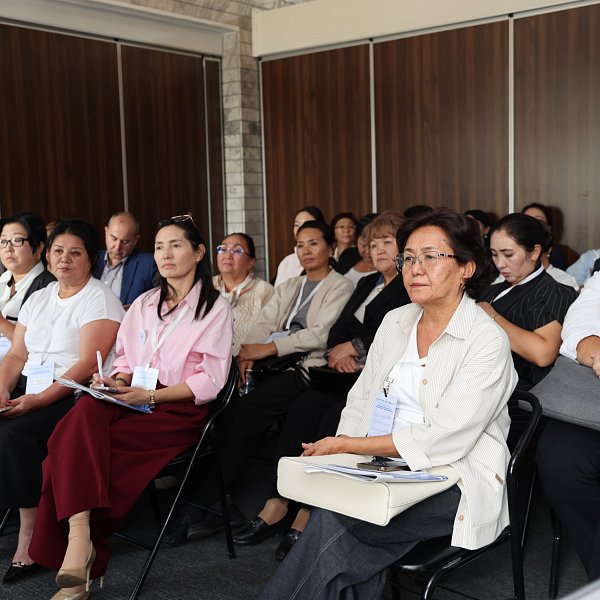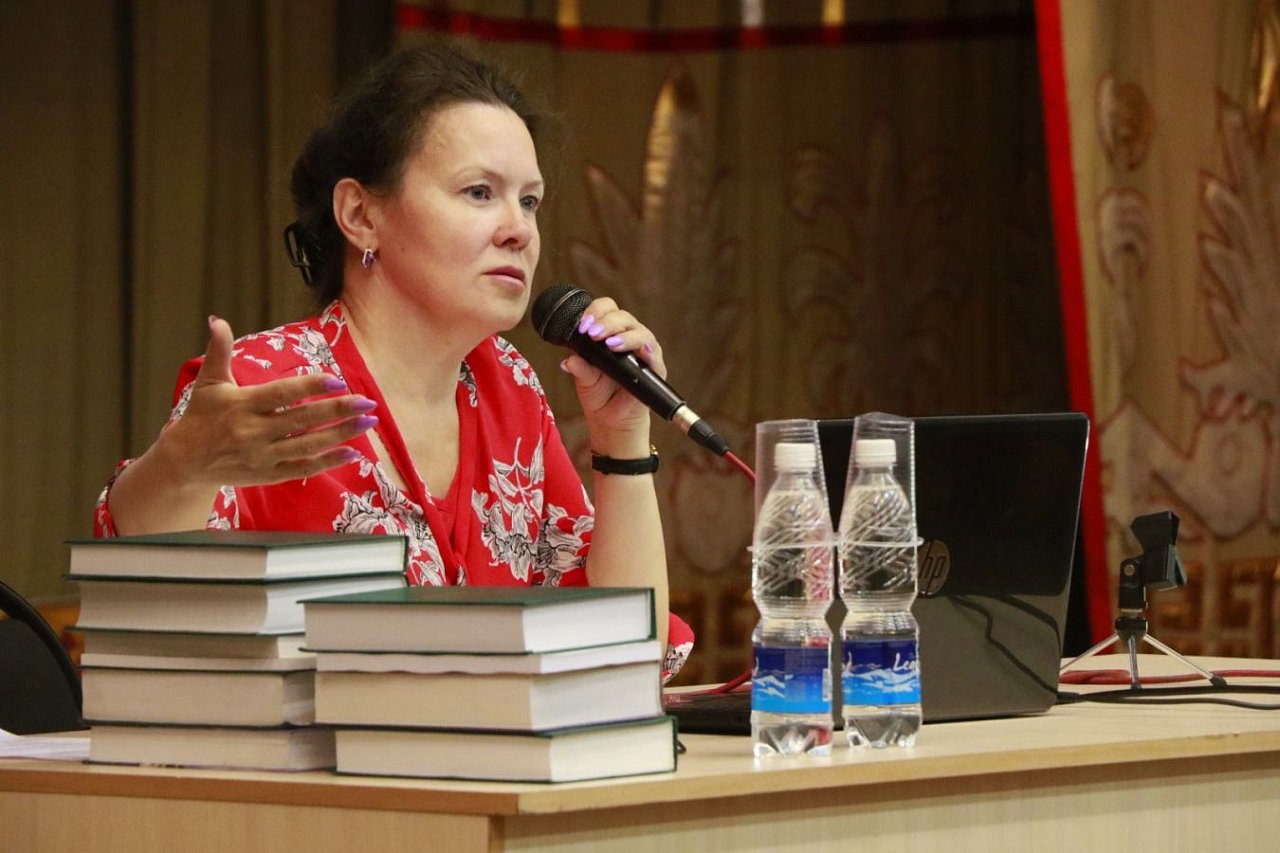

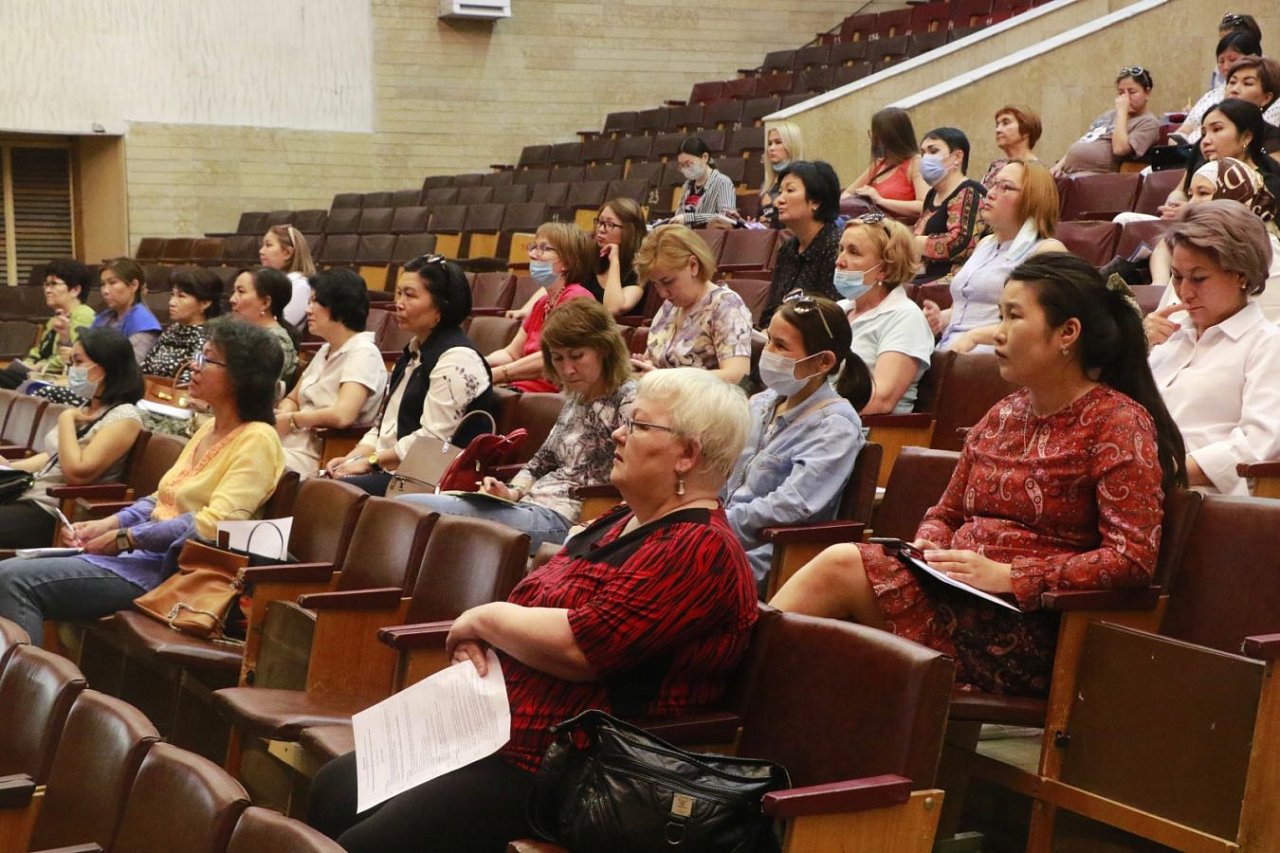
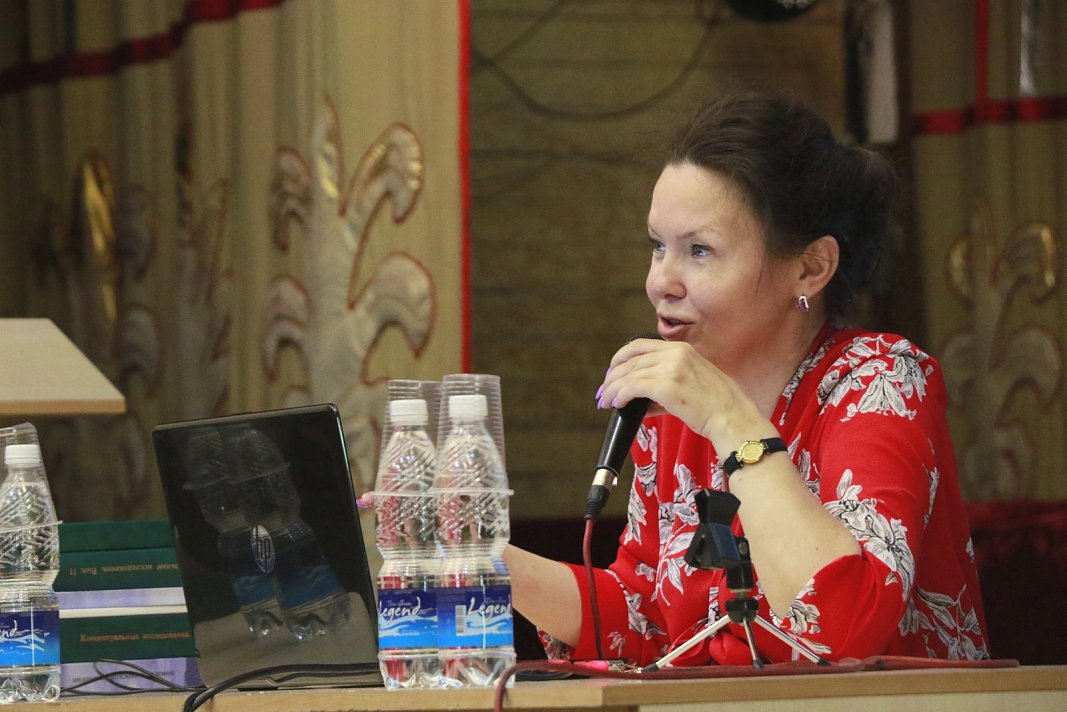
From May 31 to June 2, on the initiative of the Department of Foreign Languages, teachers of the linguistics departments of KRSU improved their qualifications as part of the course «Methodology for teaching foreign and native languages for university teachers», conducted by Doctor of Philology, Professor, Honorary Doctor of VA MTO, Rector of the Institute of Foreign Languages (St. Petersburg) Marina Pimenova.
For the first time in many years, KRSU linguists came together to discuss the importance of cross-curricular links, so necessary for improving the teaching methods of both native and foreign languages. This problem is gaining relevance in the context of the confrontation between the national cultures of peoples who were once part of a single cultural space, the aggressive offensive policy of globalism, promoting the ideas of learning English as the only necessary language, the imposition of a single Western culture and Western values, as well as the displacement of ethnic languages and cultures. Teachers engaged in scientific activities, unfortunately, often «get hung up» on their narrow scientific issues, not noticing the unity of the complex and contradictory diversity of the world around them.
The program prepared by M. Pimenova for teachers of KRSU amazed with the variety of historical and linguistic-cultural aspects of modern philology. Students were offered lectures and presentations: «Methodology of teaching a foreign language in the aspect of history and linguistic and cultural studies», «Humanization of education in the 21st century: modern pedagogy and Manas studies», «CLIL methodology and conceptual methodology in teaching languages and cultures», «Stereotypes in language and culture», «Folklore and national culture», «Turkisms in Russian» and «Turkisms in English». There was more behind these familiar philological themes, namely, the expansion of the framework of traditional Romano-Germanic philology, the revision of traditional methods and techniques of language teaching in close connection with the study of the culture of the languages studied, especially oral folk art.
M. Pimenova is concerned about «blank spots» in the history of mankind, in particular the history of the Slavs and their relations with neighboring peoples. She is trying to make up for the lack of reliable written sources with in-depth research in the folklore of the peoples of the CIS. Epic tales and fairy tales, historical songs, proverbs and sayings, linguistic pictures of the world – all this is not a complete list of topics that need to be studied.